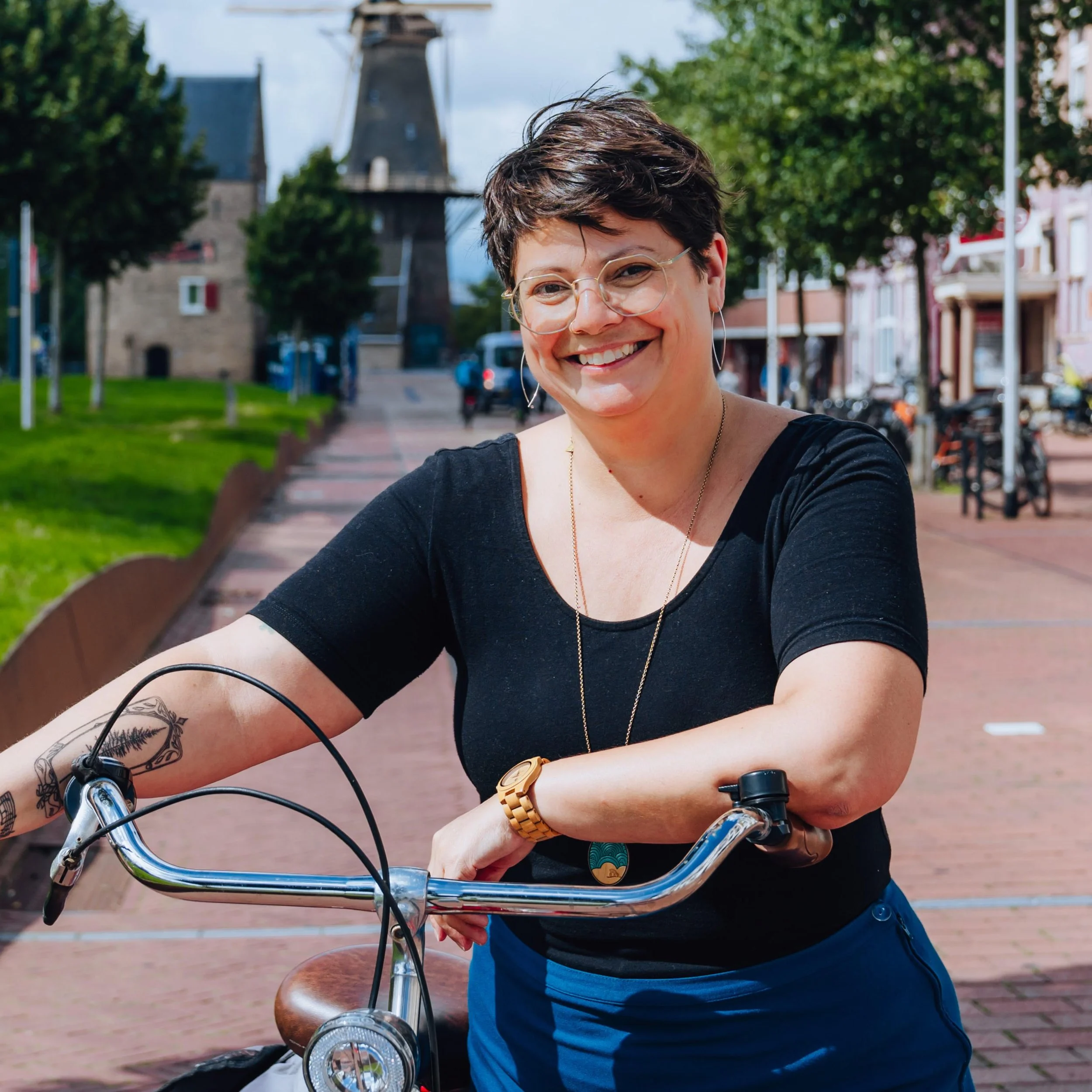
Melissa Bruntlett with her bike in Delft Netherlands. Source: Modacity Creative.
Around the world, women are challenging traditional approaches to urban planning and reimagining how our cities can better serve the people who live in them.
On September 24, 2026, Women in Urbanism Canada (WiUC) hosted a free webinar with Melissa Bruntlett, co-author of Women Changing Cities: Global Stories of Urban Transformation. Held in celebration of Gender Equality Week, the event explored how women are championing more equitable, inclusive, and sustainable cities through leadership, community advocacy, and gender-responsive urban design.
From transforming public spaces to making transportation more accessible, Melissa shared inspiring stories from around the world that demonstrate what's possible when women are empowered to lead change.
Meet Melissa Bruntlett and the Women Changing Cities
Melissa Bruntlett is a Dutch-Canadian urban mobility advocate, author, and founder of Modacity Creative, based in Delft, the Netherlands. Through storytelling and community engagement, she works with advocates, practitioners, and city leaders to advance more equitable and sustainable mobility.
In October 2025, WiUC joined VoorLabs, SFU Urban Studies, and Women Transforming Cities to celebrate the Vancouver launch of Women Changing Cities. Almost a year later, we were delighted to welcome Melissa back for a deeper conversation about the book and the lessons readers have taken from its stories.
Co-authored with Chris Bruntlett, Women Changing Cities amplifies the voices of 19 women transforming 10 cities around the world. From Barcelona to Bogotá, Kampala to Montréal, the book celebrates women whose leadership and advocacy have reshaped transportation, public spaces, and urban life.
During the webinar, Melissa shared the inspirations behind the book. Through her work in the transportation sector, she had encountered countless women leading remarkable initiatives whose stories deserved greater recognition. She and Chris brought these stories together in hopes of inspiring more women to see themselves as changemakers and recognize the limitless possibilities of their own leadership.
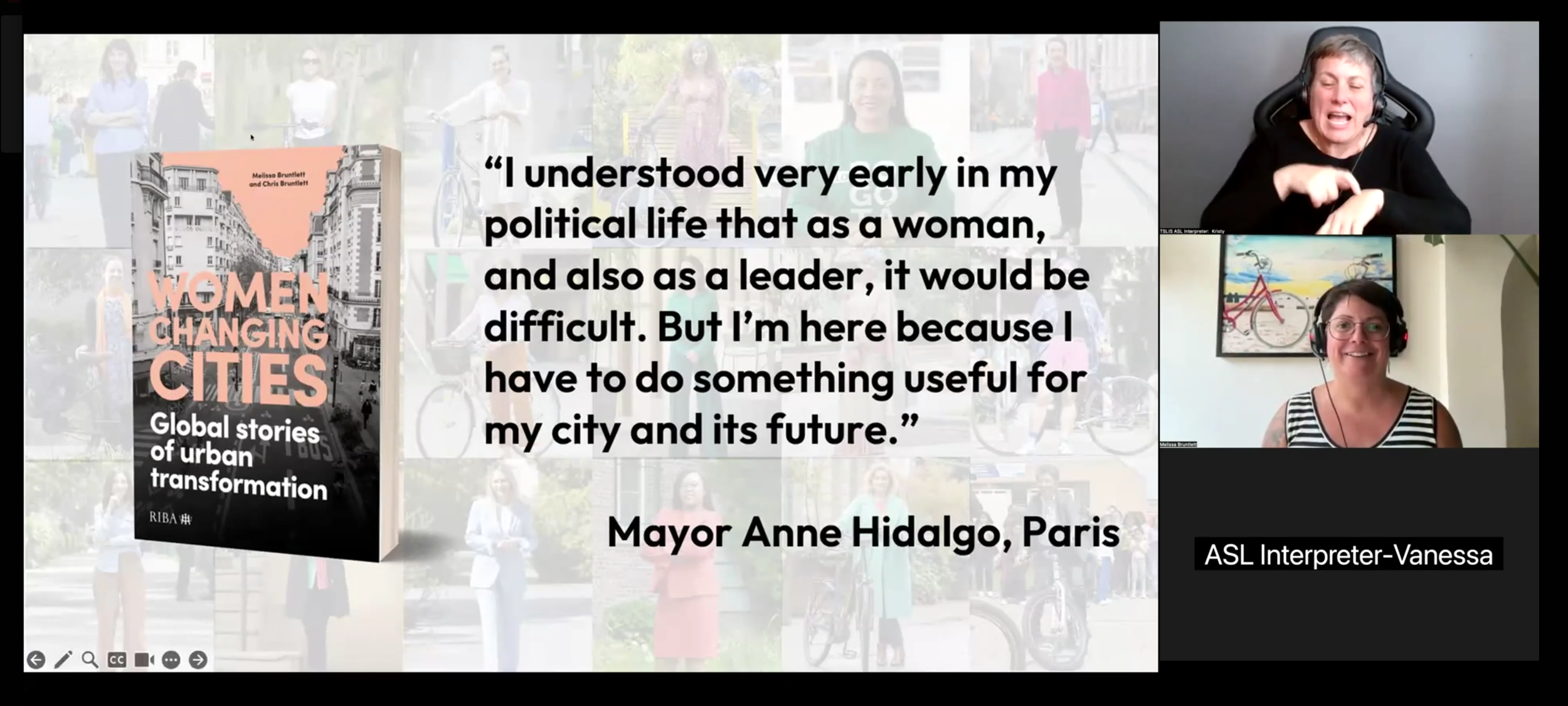
Zoom screenshot of Melissa presenting a quote from the Women Changing Cities Book at the webinar on September 24, 2026. Supported by ASL interpreter, Kristy from Toronto Sign Language Interpreter Service Inc.
Lessons from Women Transforming Cities Around the World
Melissa’s presentation took participants on a journey across cities where women are leading innovative approaches to urban transformation. Each city faces its own unique challenges, but they all share one thing in common: when designed around people's lived experiences and everyday needs, cities become better places for everyone.
Reimagining public spaces for everyone
In Barcelona, the Superblocks program has transformed streets previously dominated by vehicles into vibrant public spaces for residents to gather, socialize, and play.
Melissa highlighted how gender-responsive urban design has informed Barcelona's approach, including considerations such as lighting, seating, accessible pathways, and the elimination of dark or isolated corners.
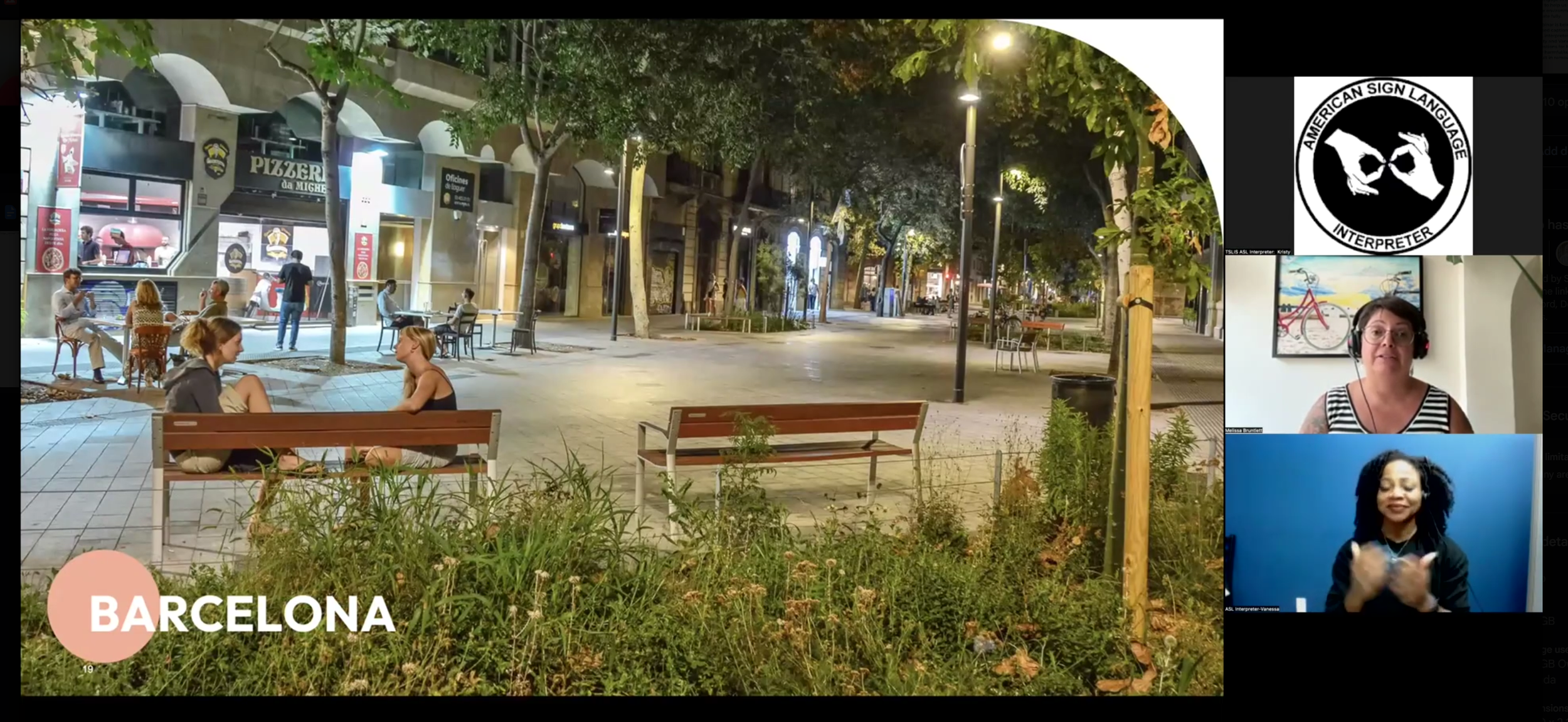
Zoom screenshot of Melissa presenting inclusive public space design examples in Barcelona, Spain, as highlighted in the book. Supported by ASL interpreter, Vanessa from Toronto Sign Language Interpreter Service Inc.
Similarly, Paris has expanded its school streets program to create safer, more welcoming environments for children and families. These initiatives demonstrate how rethinking the allocation of public space can make cities more accessible across ages and abilities.
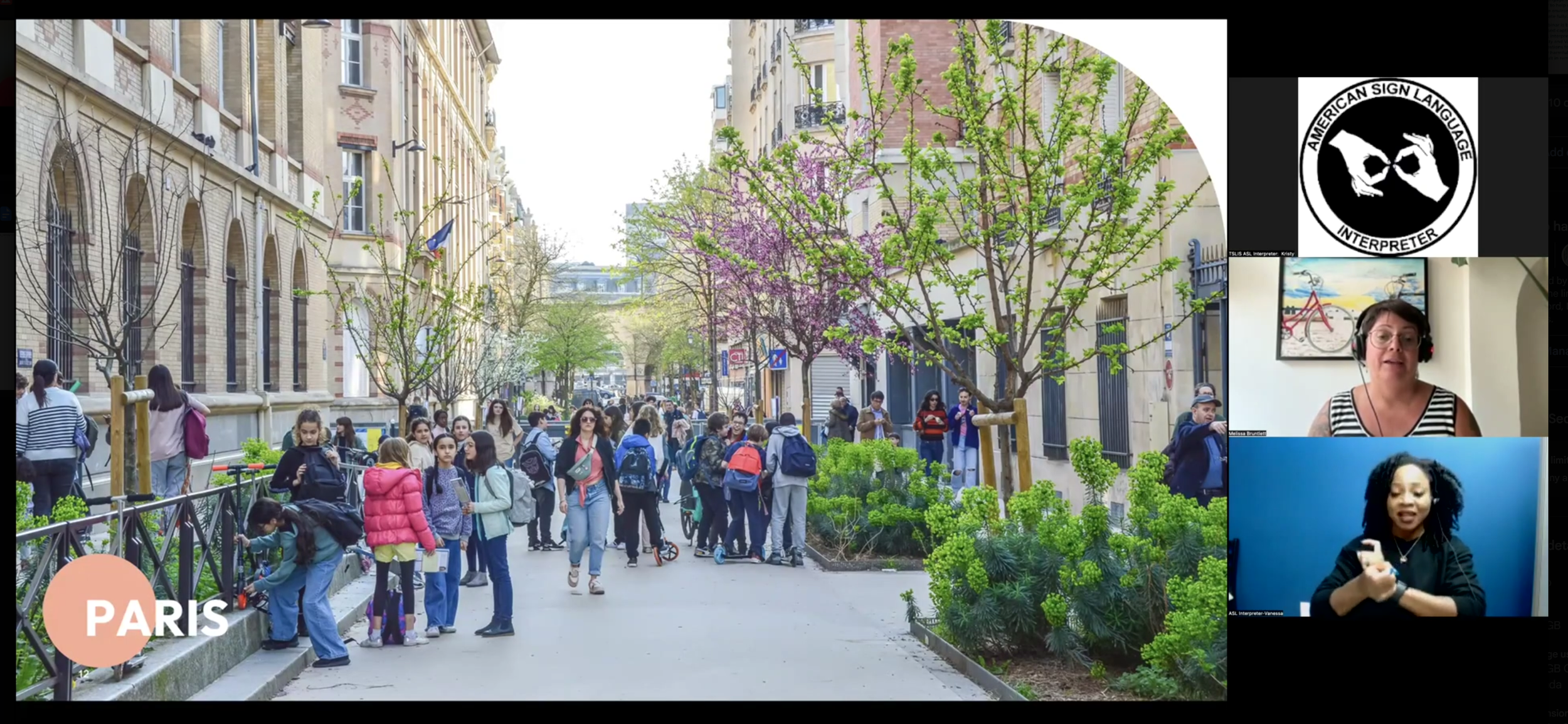
Zoom screenshot of Melissa presenting the school streets program in Paris, France, as highlighted in the book. Supported by ASL interpreter, Vanessa from Toronto Sign Language Interpreter Service Inc.
Putting care at the centre
In Bogotá, Colombia, the city's approach to mobility recognizes that everyday journeys involve much more than commuting between home and work.
Women often carry a disproportionate share of caregiving responsibilities, requiring trips between schools, grocery stores, workplaces, and other essential services.
Through its expanding cycling network and Care Blocks, Bogotá is making it easier for residents to access transportation alongside childcare, education, and other community services.
These initiatives demonstrate why urban planning must recognize and support care work as an essential part of city life.
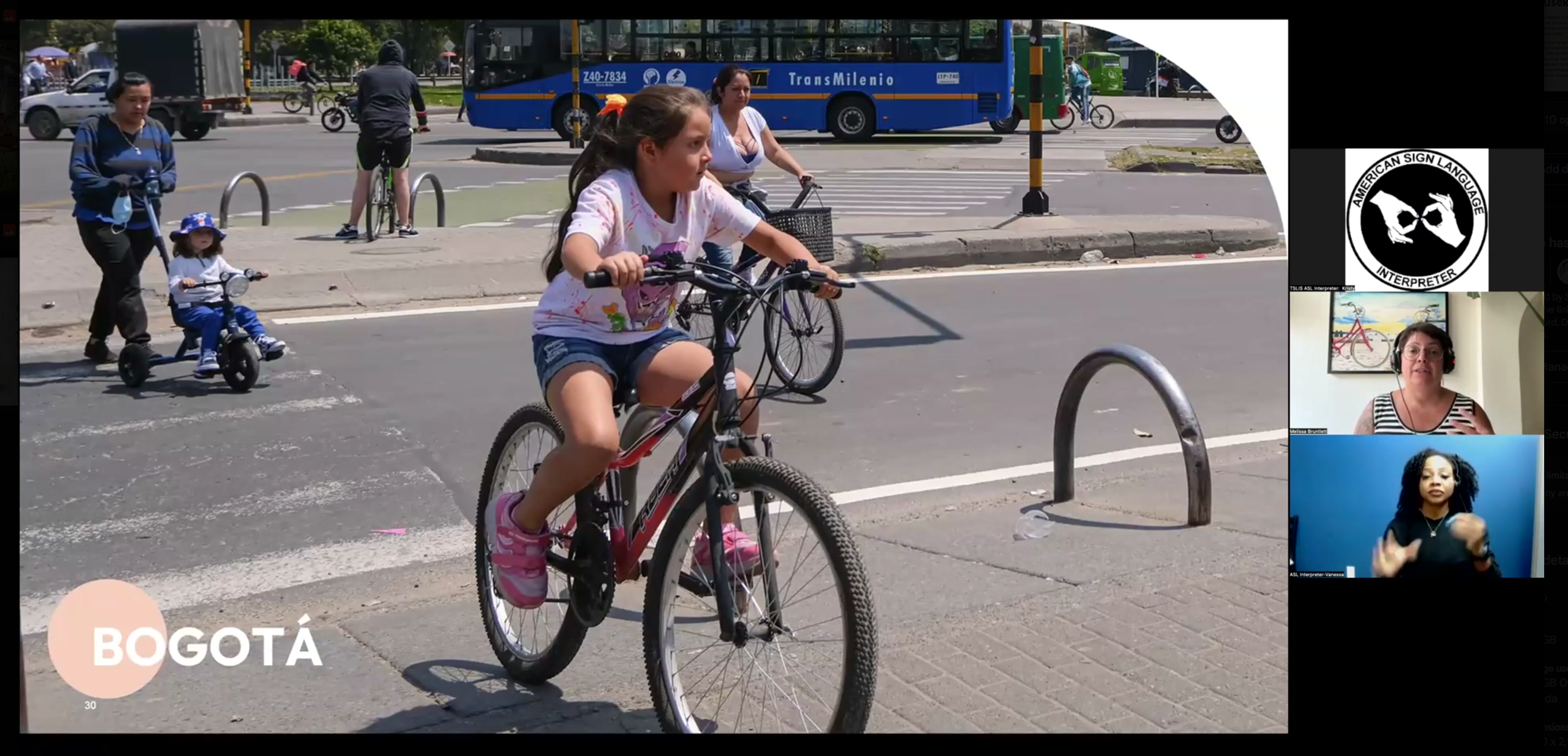
Zoom screenshot of Melissa highlighting mobility and caregiving initiatives in Bogotá, Colombia, as featured in the book. Supported by ASL interpreter, Vanessa from Toronto Sign Language Interpreter Service Inc.
How grassroots advocacy can spark change
Not all urban transformations begin with elected officials or city planners. In Manila, Philippines, Melissa highlighted the work of Keisha Mayuga, whose advocacy emerged from the everyday transportation challenges faced by residents.
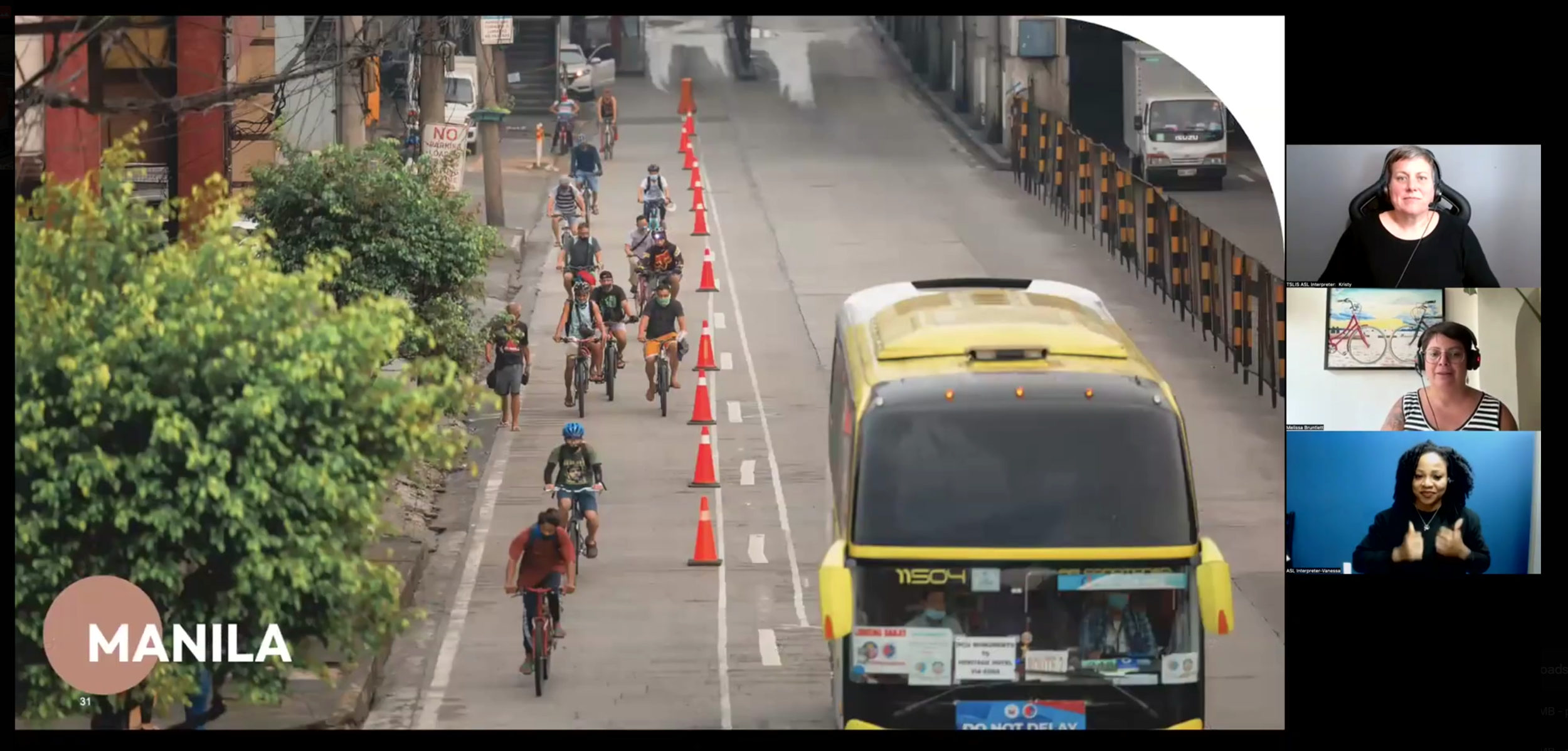
Zoom screenshot of Melissa presenting transportation challenges in Manila, Philippines, as highlighted in the book. Supported by ASL interpreters, Kristy and Vanessa from Toronto Sign Language Interpreter Service Inc.
The suspension of public transportation during the COVID-19 pandemic left many essential workers walking for hours to reach their workplaces. Recognizing the urgent need for accessible transportation, Mayuga and fellow advocates organized bicycle lending initiatives and piloted a pop-up bike lane. Their efforts helped spark a broader movement advocating for safer and more sustainable transportation across the country.
Her story reminds us that meaningful change can begin with people who recognize a problem in their communities and organize to address it.
From Inspiration to Action
Zoom screenshot of an audience poll led by webinar host, Shama Saleh. Supported by ASL interpreter, Kristy from Toronto Sign Language Interpreter Service Inc.
After the presentation, participants joined an engaging Q&A session and considered how lessons from Women Changing Cities could be applied in their own communities.
Attendees hailed from across Canada, as well as from the United States and Europe.
One participant asked how cities could address financial and educational barriers that prevent women from cycling, particularly those who cannot afford bicycles or have never learned to ride.
Melissa pointed to initiatives in Bogotá and the Netherlands that offer adult cycling lessons, refurbished bicycles, and community-based support. She also emphasized the importance of sustained funding to ensure these programs can continue serving their communities.
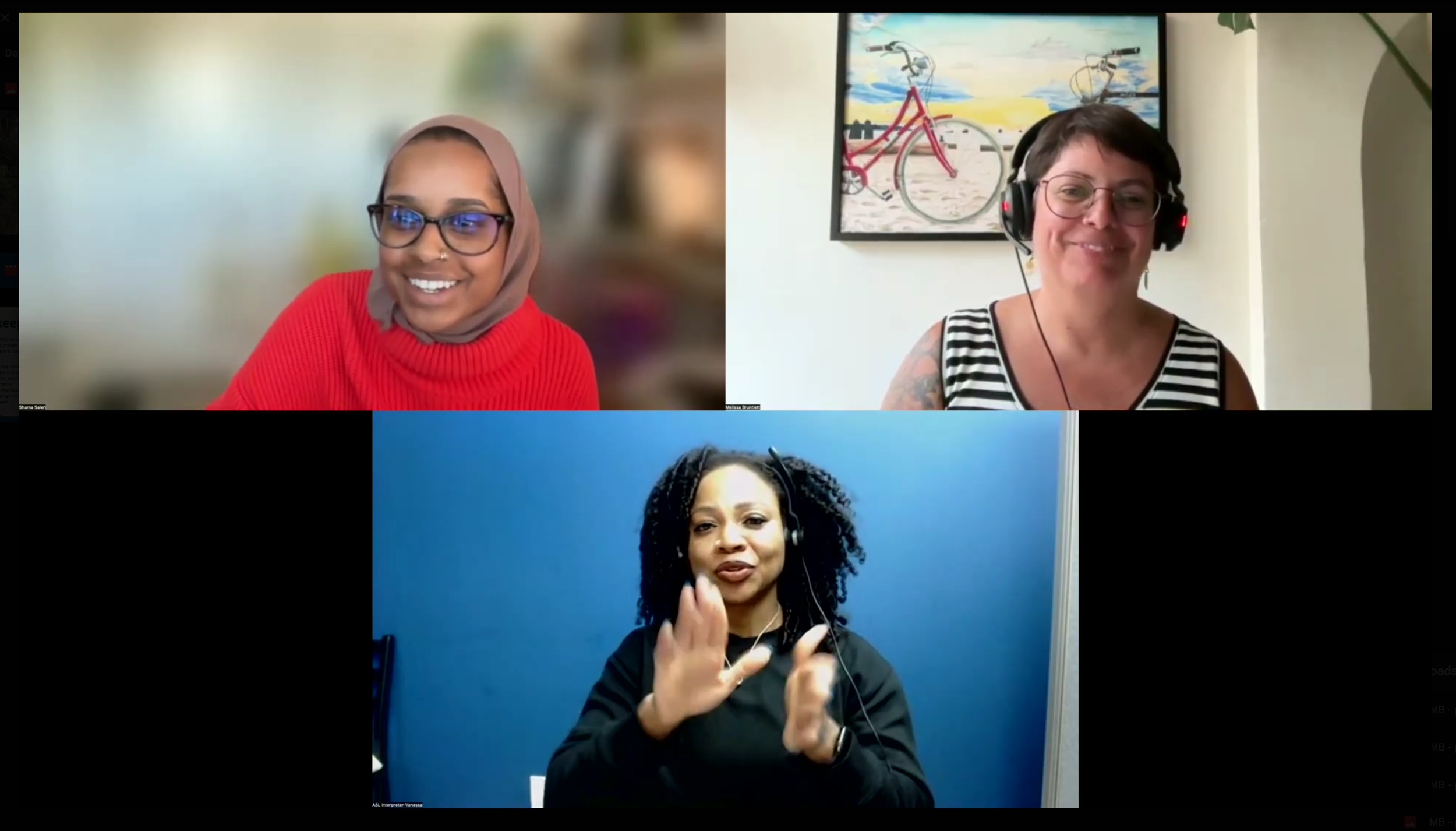
Zoom screenshot of Melissa responding to audience questions, moderated by webinar host Shama Saleh. Supported by ASL interpreter, Vanessa from Toronto Sign Language Interpreter Service Inc.
Another question explored how women could shape urban mobility without holding traditional leadership positions.
Melissa highlighted the importance of networks like Women in Urbanism Canada in creating opportunities for people to exchange knowledge, build relationships, and advocate collectively for change.
She reminded participants that you don't need professional credentials or a formal leadership title to see how cities could better serve their communities.
The conversation reinforced the importance of collective action, mentorship, and ensuring diverse voices are represented in decisions that shape our cities.
Stories that Shape our Cities
The stories shared throughout the webinar reminded us that urban transformation is not simply about building new infrastructure. It's about understanding who our cities serve, whose needs have been overlooked, and how we can work together to create more inclusive communities.
At Women in Urbanism Canada, we're committed to advancing intersectional feminist approaches to urban design by raising awareness, exchanging knowledge, and mobilizing a national network of changemakers.
We extend our heartfelt thanks to Melissa Bruntlett for sharing these inspiring stories and insights, to our ASL interpreters Vanessa and Christy, and to everyone who joined us and contributed to the conversation.
To learn more about Melissa's work, visit Modacity Creative or connect with her at melissa@modacitylife.com.
Interested in joining a growing community advancing gender equity in urbanism? Become a Women in Urbanism Canada member.
Here's to celebrating the women changing cities today and empowering the next generation of urban changemakers!