How Hostile Architecture Harms Women
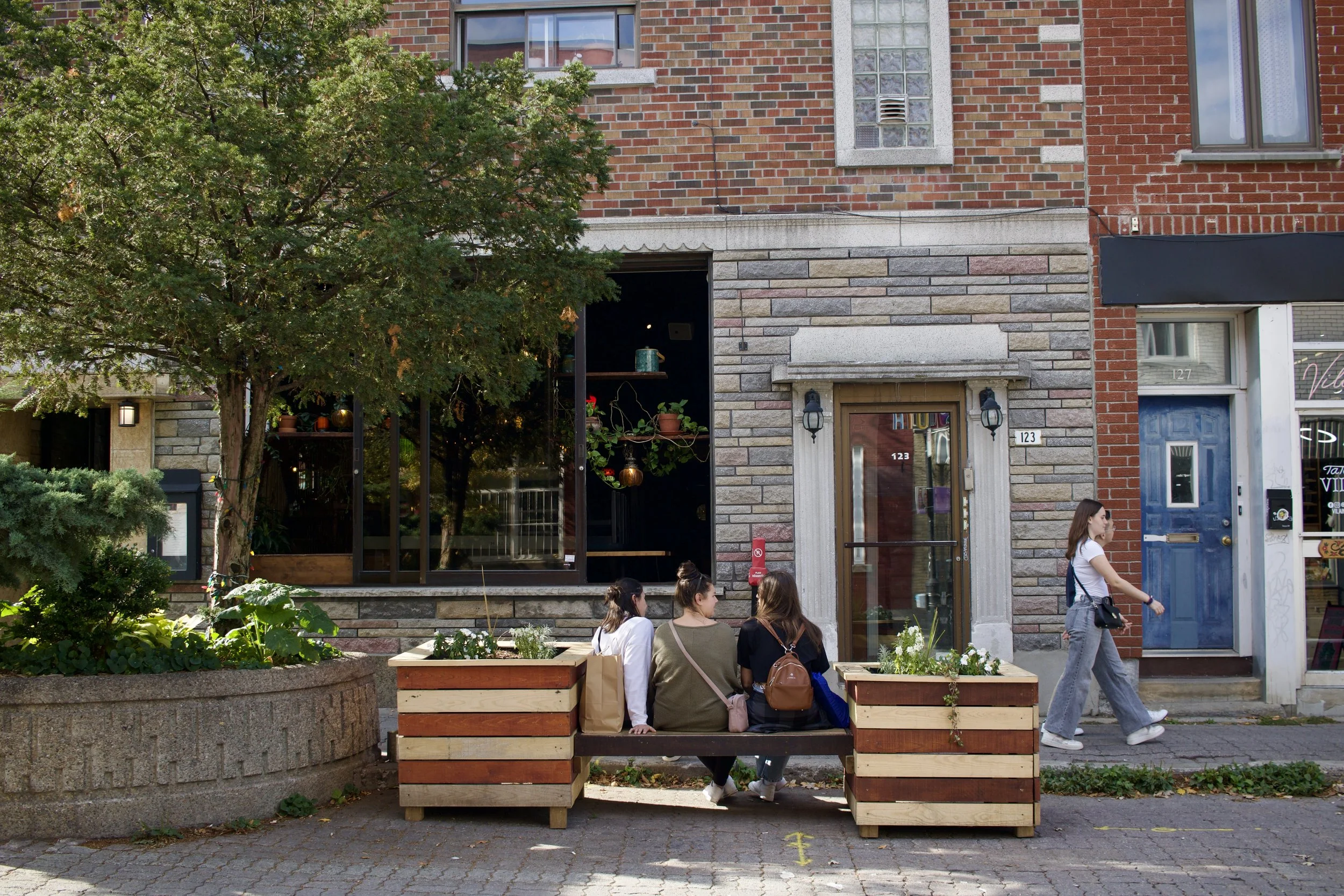
Women sharing a small bench on a pedestrianized street. Photo taken by Nicole Roach in Montreal, QC.
Design has the power to create public spaces that are inclusive, welcoming, and comfortable. However, if done poorly—or with malice intent—urban design can be harmful to people. In Canadian cities, we get to witness the full spectrum of design, ranging from the good to the ugly.
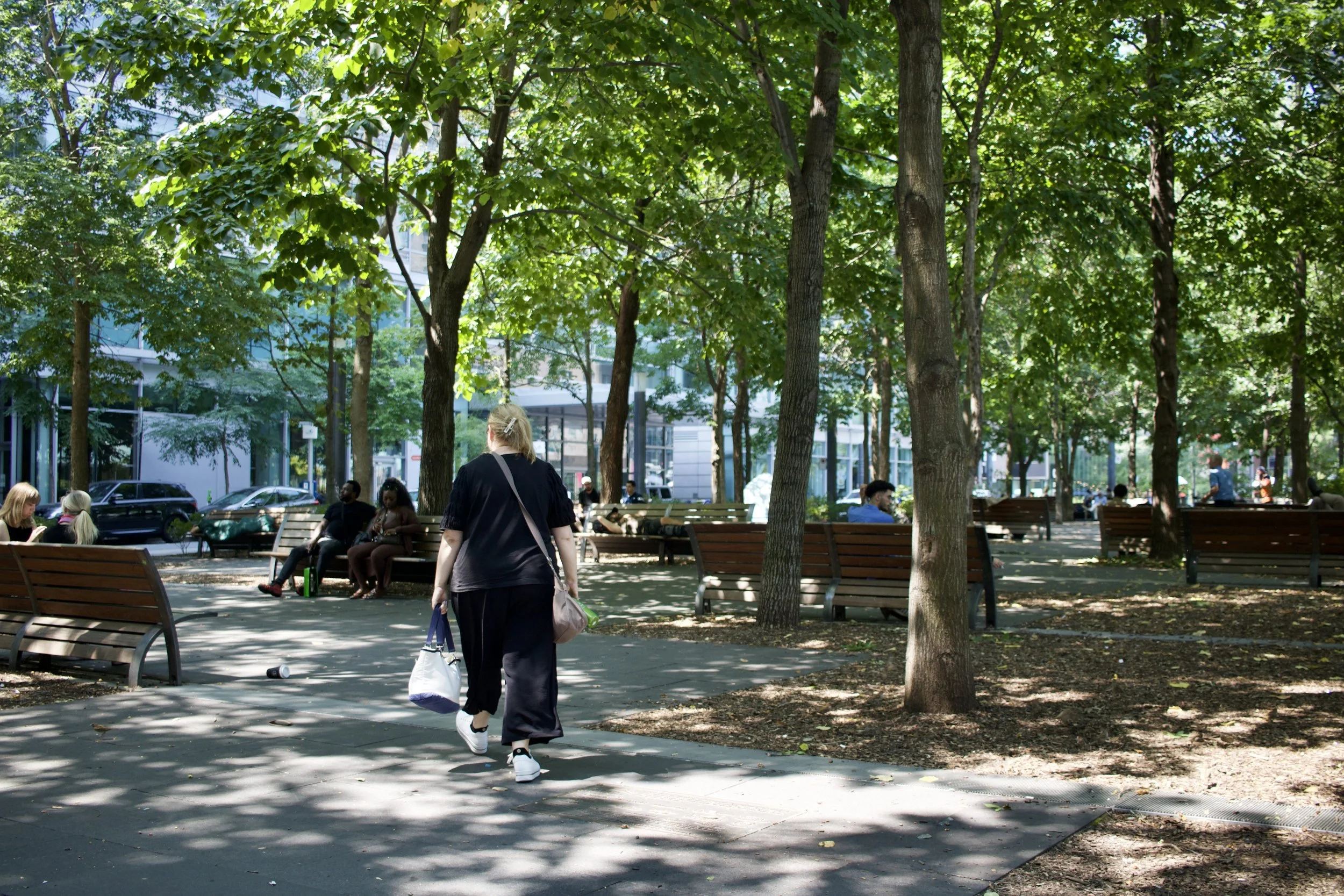
A park with a series of benches. Photo taken by Nicole Roach in Montreal, QC.
In this article, we’re going to talk about the ugly, and that which was made intentionally so. This phenomenon has many names; its most commonly called “hostile architecture”, but may also be referred to as “defensive infrastructure" or “exclusionary design”. This is an urban design approach in which spaces and structures are used to prevent certain activities or restrict a particular group of people from using them. Many of the exclusionary elements have taken aim at those experiencing homelessness or living rough, such as spikes, dividers, uneven surfaces, harsh lighting, and noise, creating harm to those vulnerable communities.
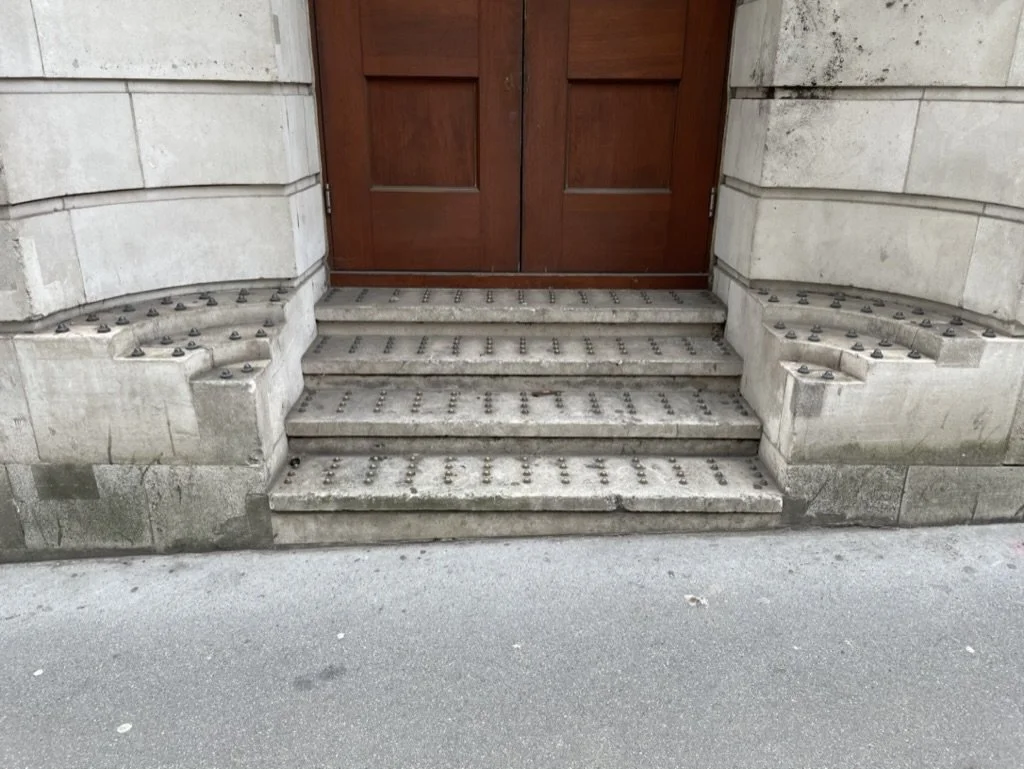
Anti-linger spikes on a building entrance. Photo taken by D. O’Reilly in London, UK.
Hostile architecture not only makes life much harder for unhoused people, it makes public spaces much less welcoming to everyone. For women, girls, and gender-diverse people, in particular, these designs can significantly impact their access and comfort, especially when seeking public seating.
This photo essay will explore the most common types of hostile architecture, breaking down how each one impacts the most vulnerable communities in cities.
No Seating
Arguably, the most common form of hostile architecture is the glaring absence of a facility in a public space. This is known as a “ghost amenity”, a term coined by researcher Cara Chellew, for something that “disproportionately affects a lot of people who are vulnerable”. This hostile tactic is so common because there is a pervasive perception in urban planning that the creation of public seating is welcoming unhoused populations. This perception follows from the concern that they’ll “take over” the space, leading to increased crime, litter, and social “disorder”. While there may be some examples to support this, public spaces are for everyone, and everyone deserves to access and enjoy them. These examples highlight the many compounding crises facing Canadian cities today—housing crisis, mental health crisis, affordability crisis, climate crisis, and more. Restricting public seating is surely not the solution to any of these crises.
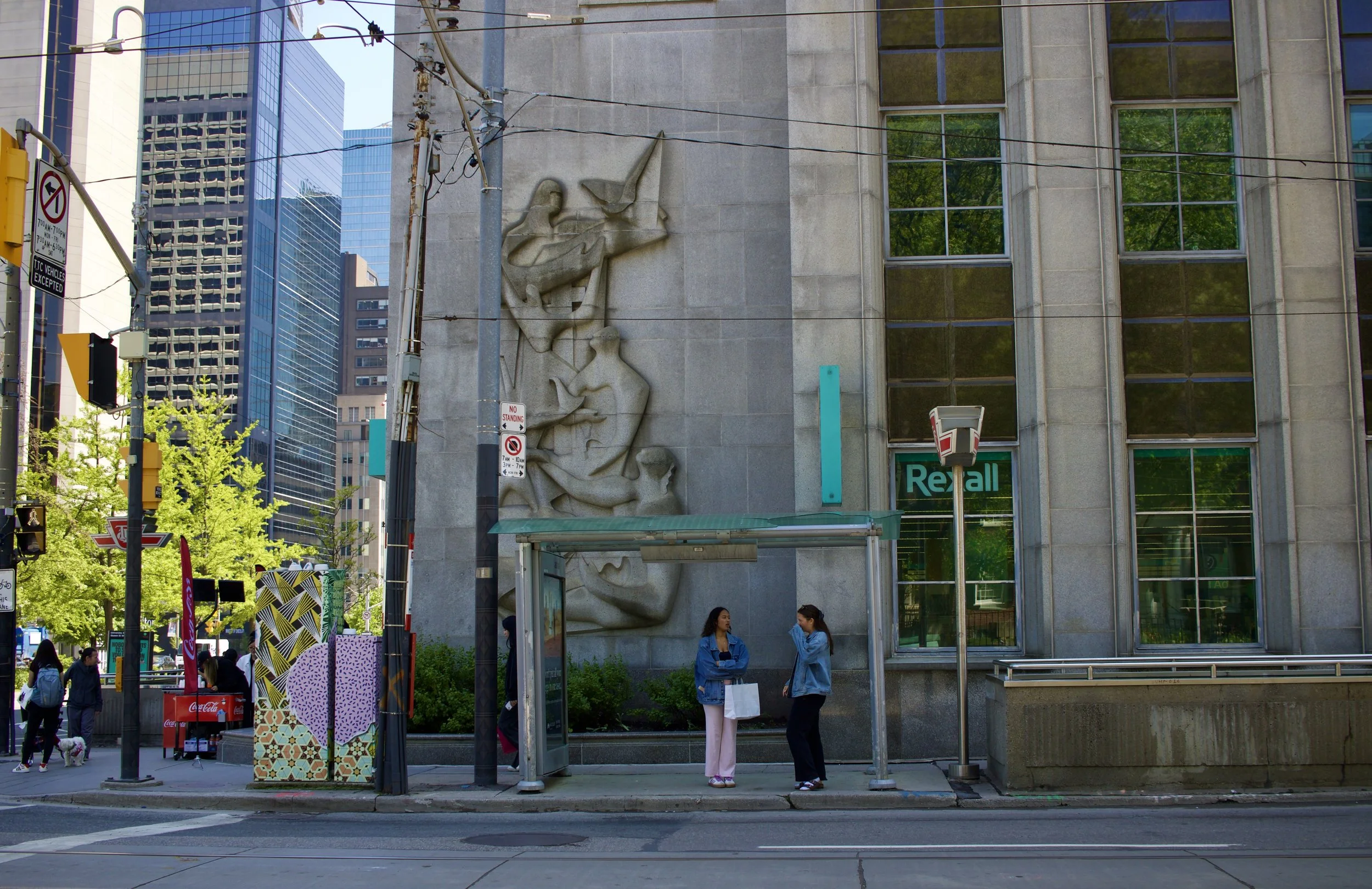
Women standing at a bus stop with no available seating. Photo taken by Nicole Roach in Toronto, ON.
The availability of public seating is crucially important for elderly women, women with disabilities, unsheltered women, and women who are pregnant, breastfeeding, or otherwise caring for young children. These groups of women may require more frequent rests, and while some can make do sitting on the ground or a curb, many require more intentional seating options. When there is no seating, some women can seek alternatives, some suffer through the discomfort, and others simply aren’t able to make the trip.
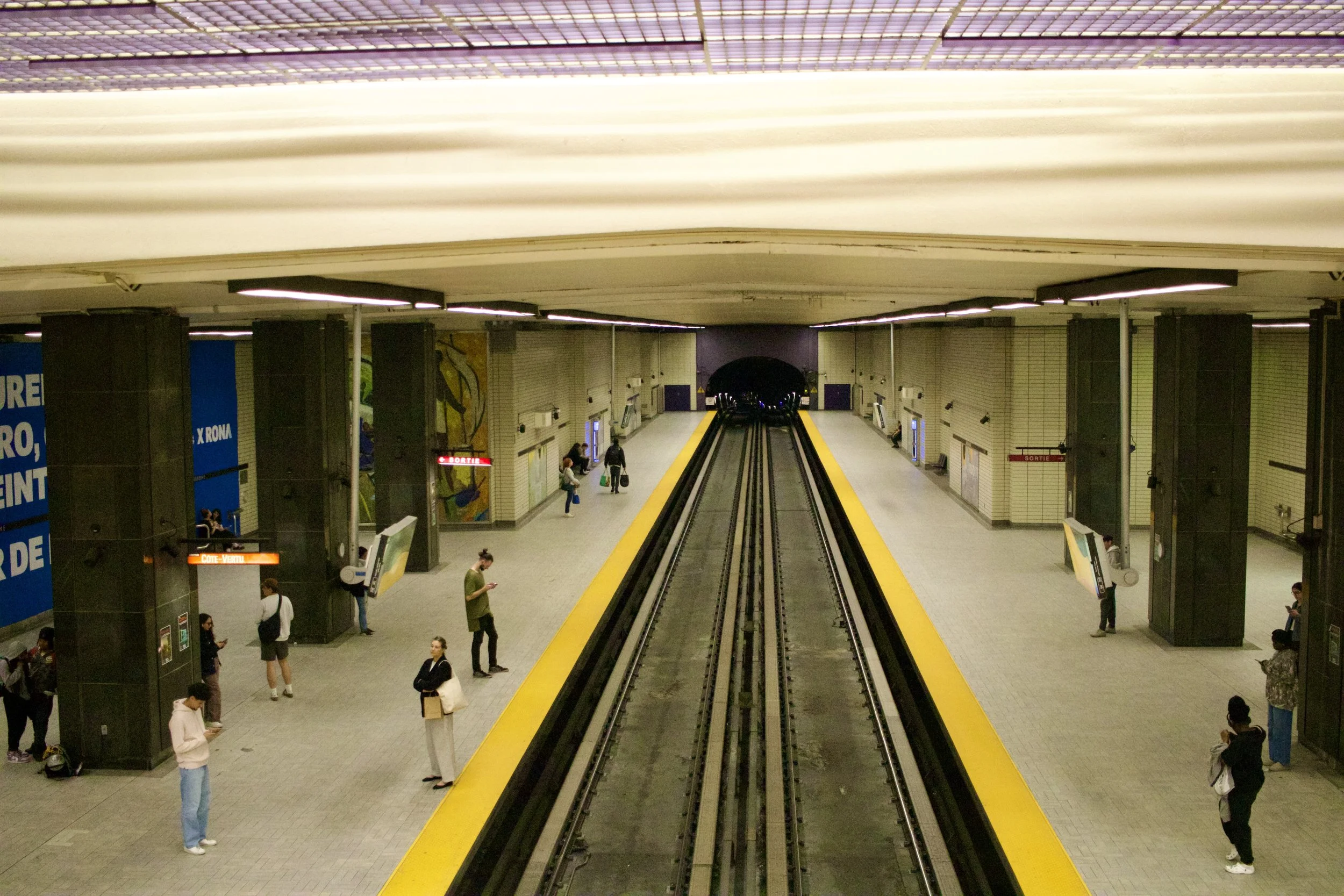
People standing at a subway platform with no visible seating. Photo taken by Nicole Roach in Montreal, QC.
Lean “Seating”
A form of hostile architecture that has grown in popularity recently, especially at transit stations and bus stops, is a structure that isn’t a seat or a bench, but rather something to simply lean against. This approach targets unhoused populations because people can’t sit or fully relax on them, only lean. Designers will argue that these are installed when they are amongst other seating options, such as benches, and can serve as helpful respite for young, able-bodied individuals to take a bit of weight off their feet or to rest a heavy backpack on. While there may be some groups that will choose these even when given multiple options, they are sometimes the only type of “seating” available at transit stops.
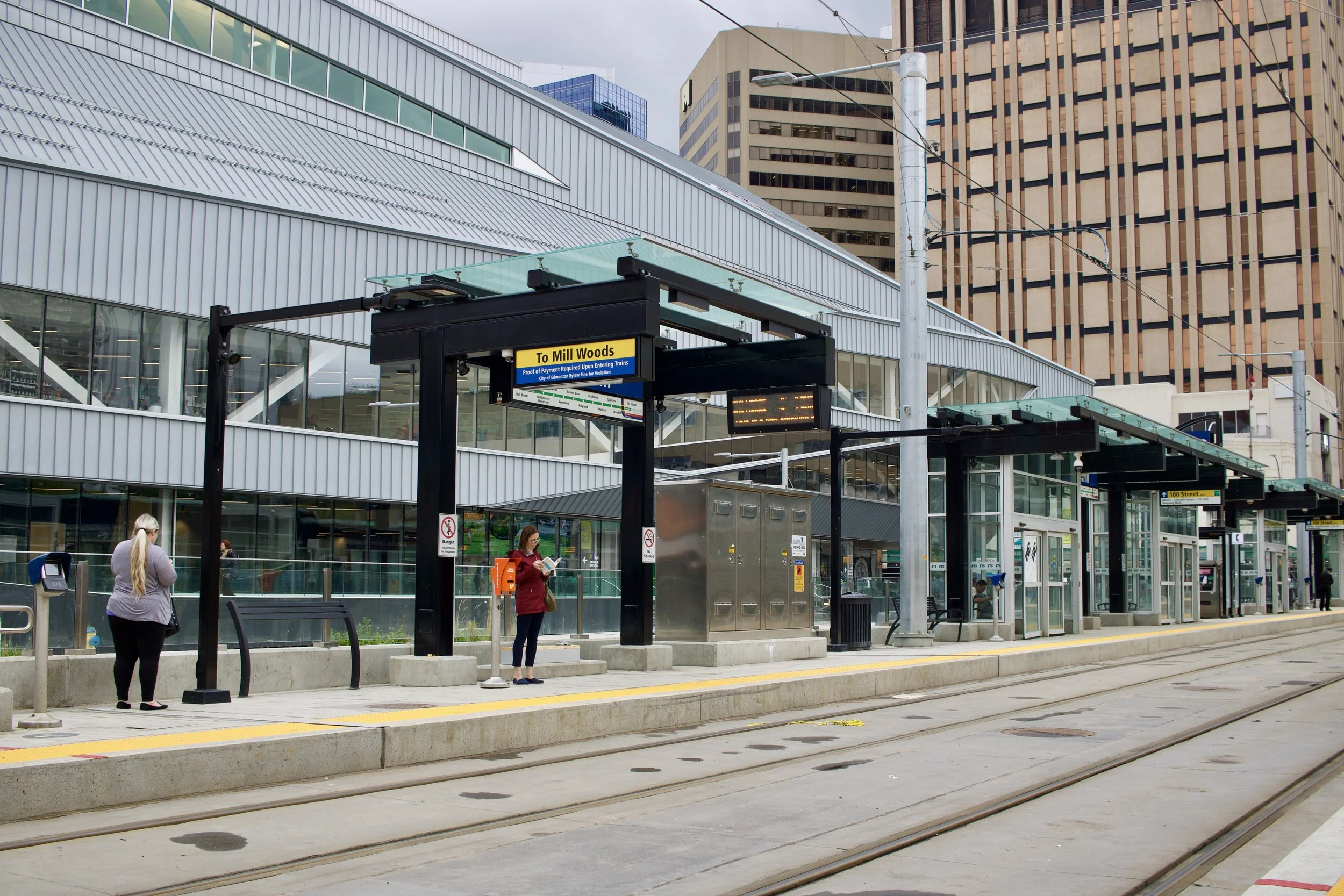
Lean “seating” at an LRT stop. Photo taken by Nicole Roach in Edmonton, AB.
Women make up the majority of transit users, and depending on the frequency of service, they may be waiting at a stop for a significant length of time. If they aren’t provided with an actual seat, these waits can be very difficult to sustain, especially for elderly women and those with disabilities. Women may also be wearing attire—such as high heels—that can make standing for longer durations challenging, especially at the end of a long day. Furthermore, women tend to be carrying more items with them than men, such as purses, bags, groceries, diapers, and other items. This type of infrastructure means that women need to keep holding things on their person, or put them on the ground and deadlift them up to carrying level later on. Depending on the weight of what women are carrying, this difference of a few centimetres can make a big difference.
Divided Seating
The classic example of hostile architecture is benches with dividers (this category could also include spaced out individual seating). Dividers are typically placed strategically so that people can use the bench to sit, but not lay down. This design is purposefully targeted at unhoused people who may rely on a city bench to sleep at night, forcing them to look elsewhere for a place to rest. Some may argue that this type of design helps ensure that the benches aren’t being monopolized, allowing more people to use them as seating when they need them. This approach may also be justified by enabling strangers to feel more comfortable sharing a bench if there is a divider between them, claiming more personal space for each user. The dividers can especially help women to feel more comfortable sharing space with men, who are known to “manspread” and encroach on others. And finally, some have argued that these bench dividers are actually there to help elderly people, those with disabilities, and women breastfeeding to have an arm rest to help them sit down and rise up from low benches.
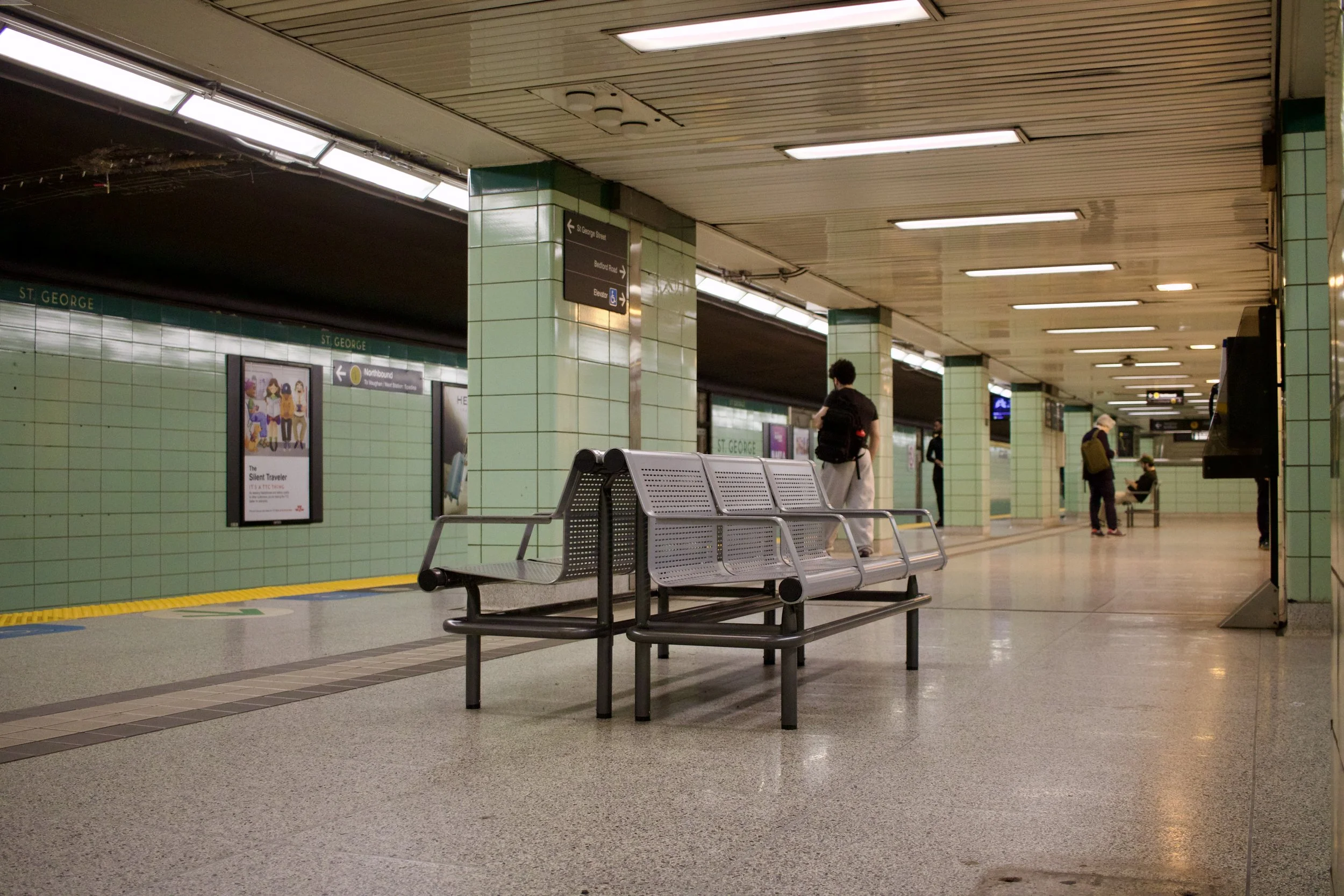
A “bench” divided by a series of armrests at a subway platform. Photo taken by Nicole Roach in Toronto, ON.
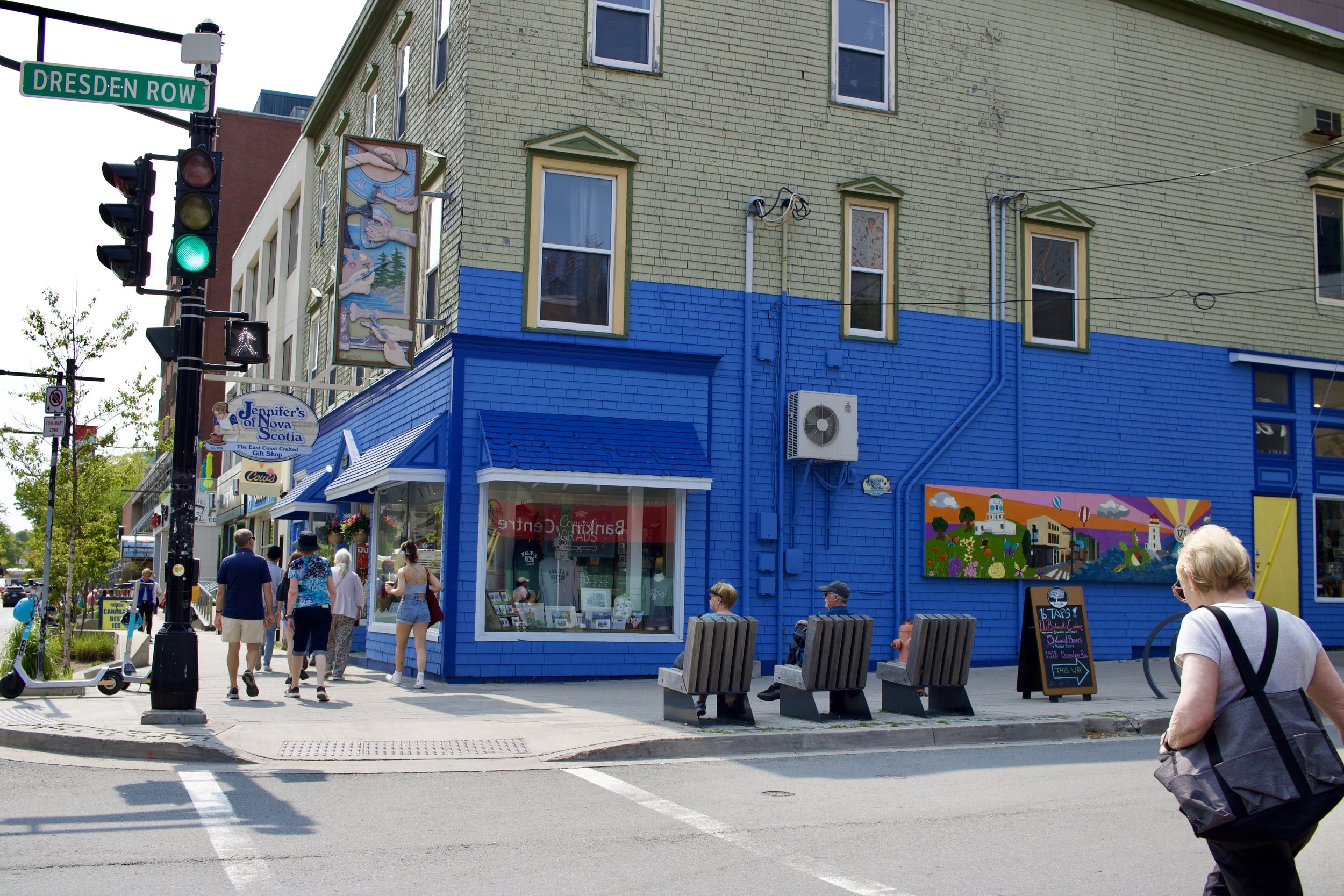
Individual, spaced out seats on a sidewalk. Photo taken by Nicole Roach Halifax, NS.
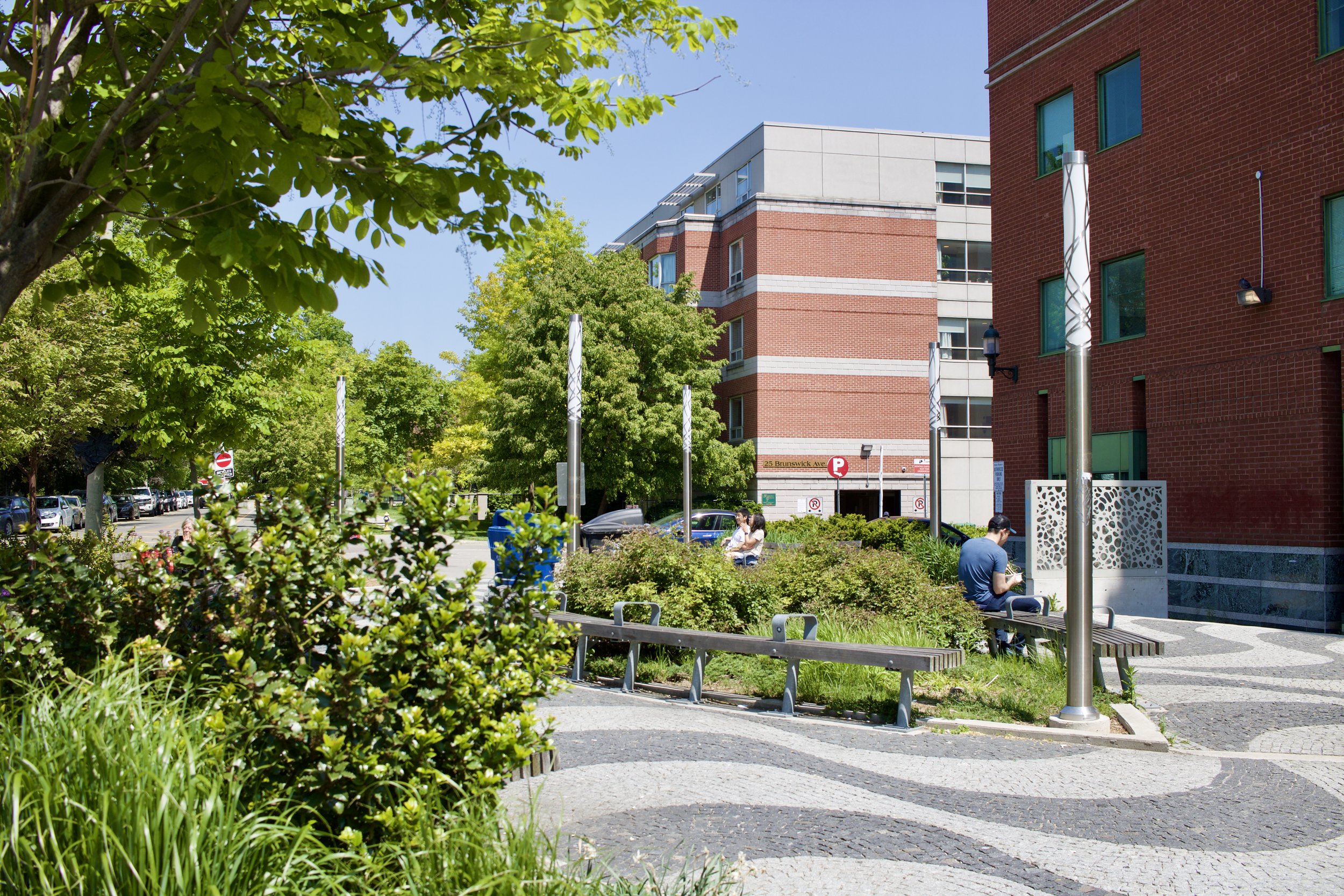
Wavy benches with steel dividers. Photo taken by Nicole Roach in Toronto, ON.
While there may be some justification, and even potentially some benefits for certain groups of people, the intent of restricting people from laying down is recognized as the primary objective of these dividers. This targeted design can affect older women who like to stretch their legs flat while sitting on a bench, and can create even more unsafe conditions for unhoused women. These women living rough may prefer seeking rest in areas that are relatively visible to passerbyers for some sense of safety, however, if benches in these areas cannot accommodate lying down, they may be forced into alley ways, dark corners, and other places. In these secluded spots, they may be more hidden from some dangers, while the threat of gender-based violence may become more acute.
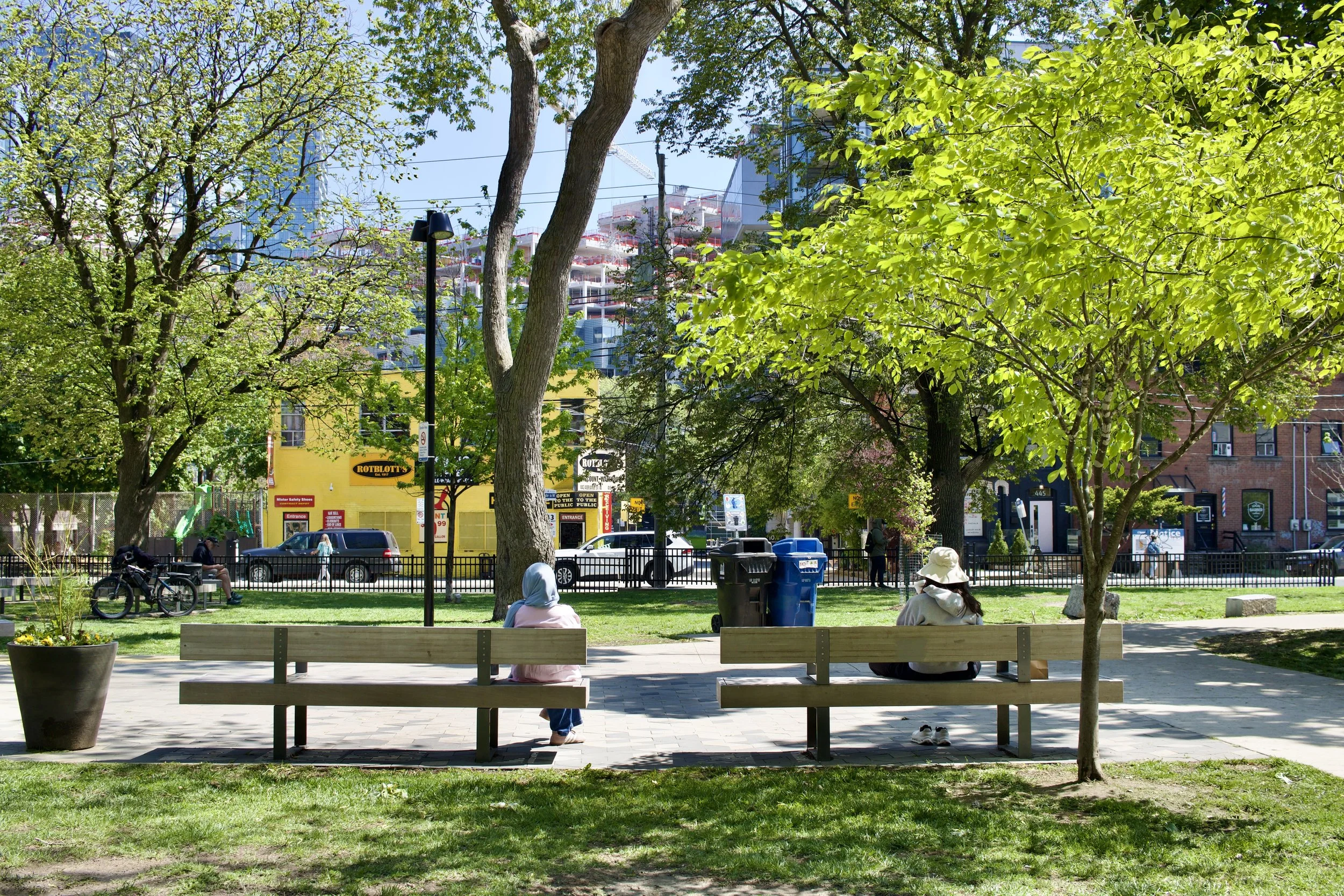
Park benches with dividers that narrow the available seating areas. Photo taken by Nicole Roach in Toronto, ON.
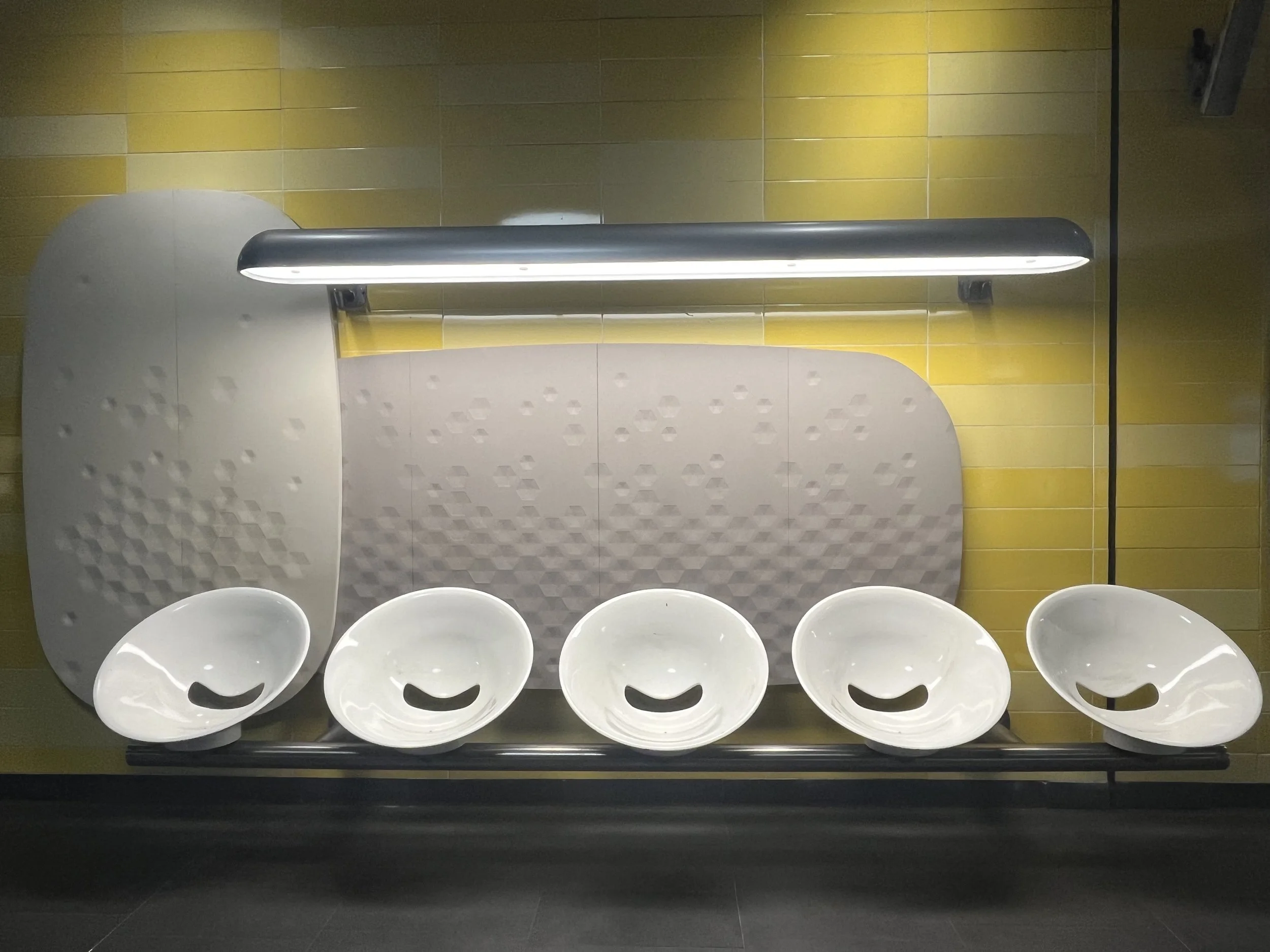
Individual, rounded seats at a subway platform. Photo taken by D. O’Reilly in Paris, FR.
Backless Seating
In many cities, we’re seeing a diverse range of seating types being used in an effort to provide more public seating. Many of the types emerging are less intentional forms of seating and can be dual-purpose, such as concrete blocks and rocks, planter boxes, and stumps or low bollards, many of which also serve as hostile vehicle mitigation measures. While this approach is increasing the overall supply of available public seating, which is good, this type of seating without a backrest isn’t very comfortable, can’t be enjoyed for long durations, and can be too short to enable full relaxation.
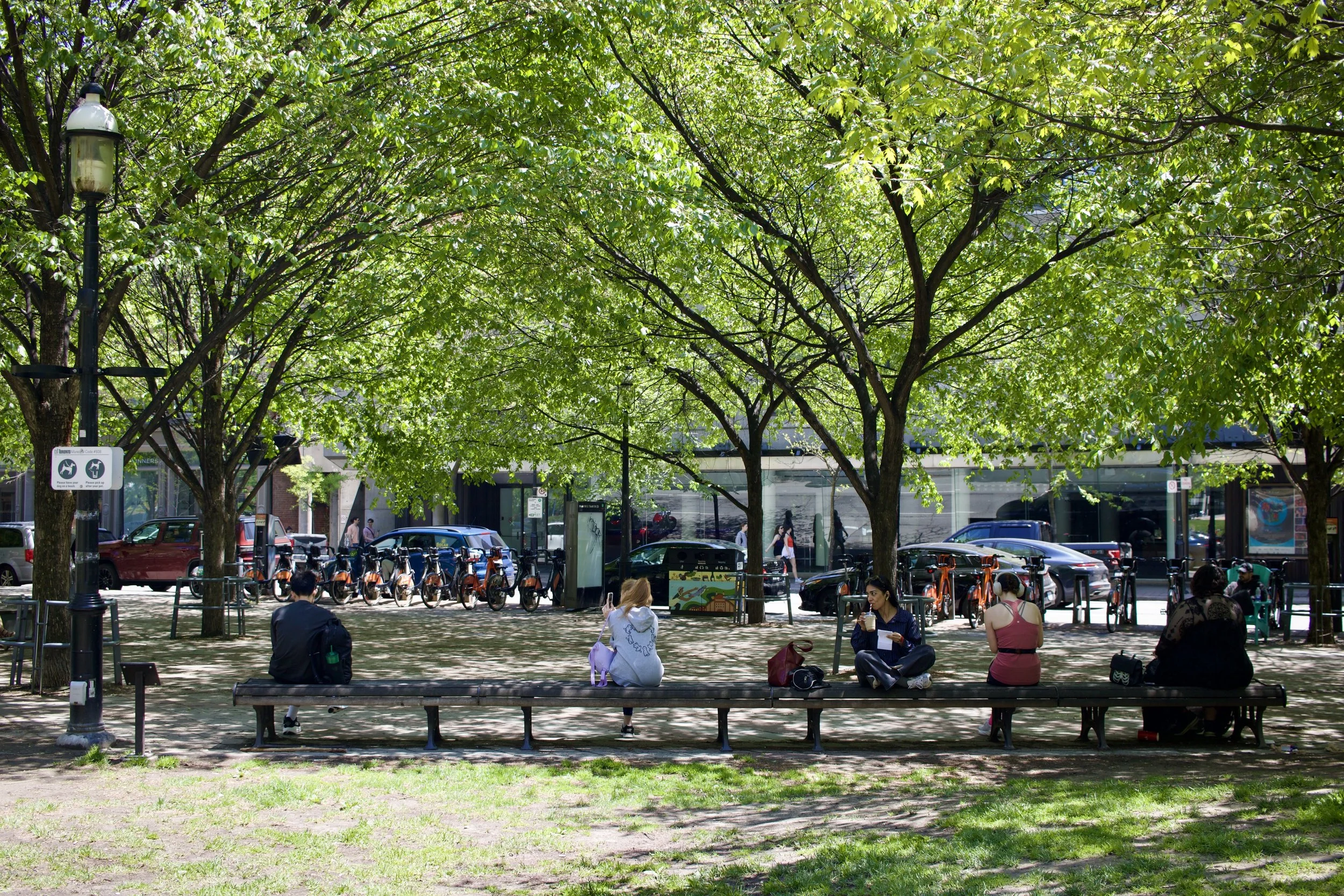
Backless park bench. Photo taken by Nicole in Toronto, ON.
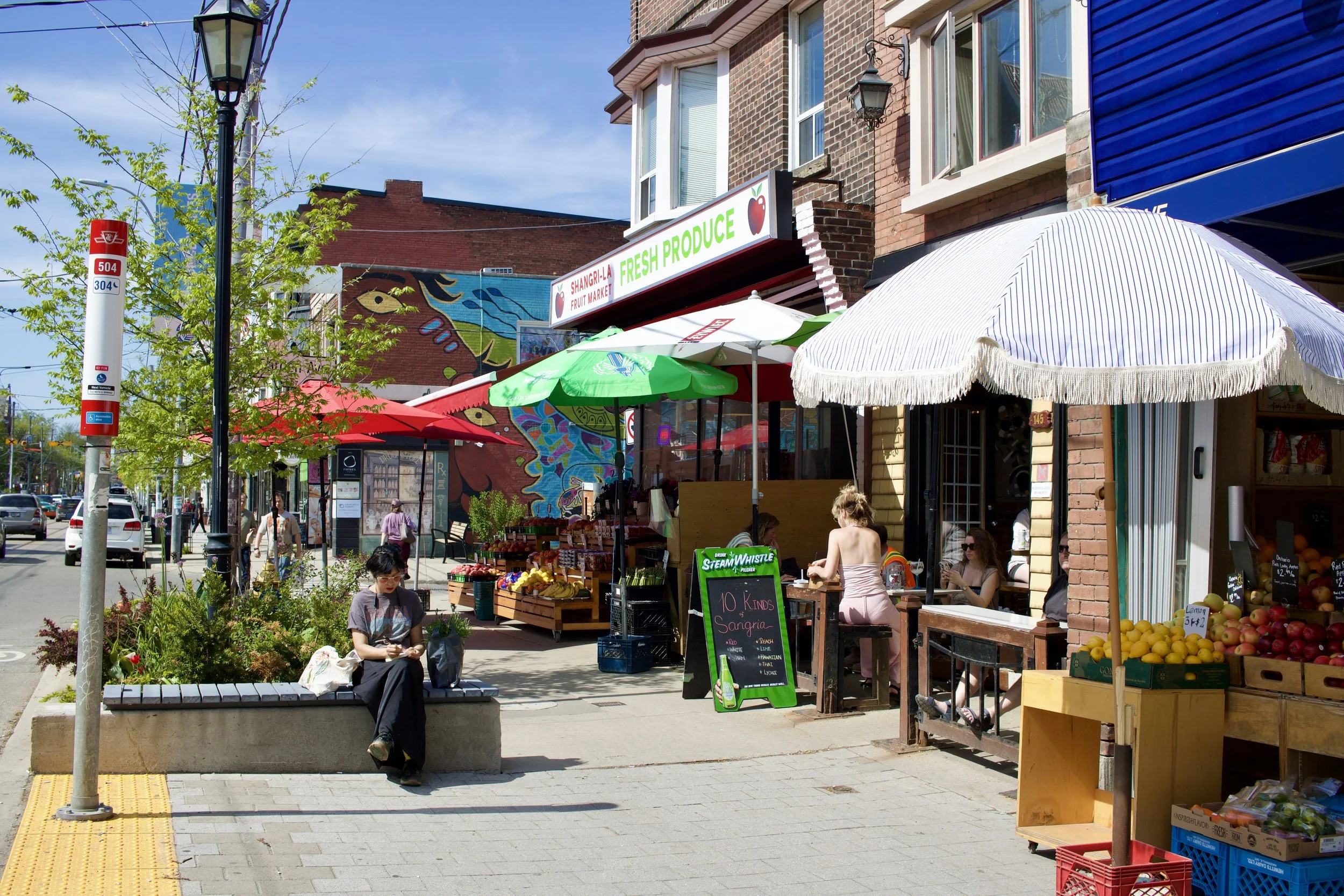
Backless bench at a streetcar stop. Photo taken by Nicole Roach in Toronto, ON.
Women who require more frequent rests typically also need those resting spots to be somewhere that they can comfortably lean back, without the ongoing strain on their back. This is especially crucial for women breastfeeding in public spaces, who need to lean back to support the weight of their baby for the full length of the feeding. The lack of backs can also make women feel more exposed and potentially vulnerable to unwelcome approaches or attacks from behind, making some feel uneasy and requiring more frequent checks and scans of their full surroundings.
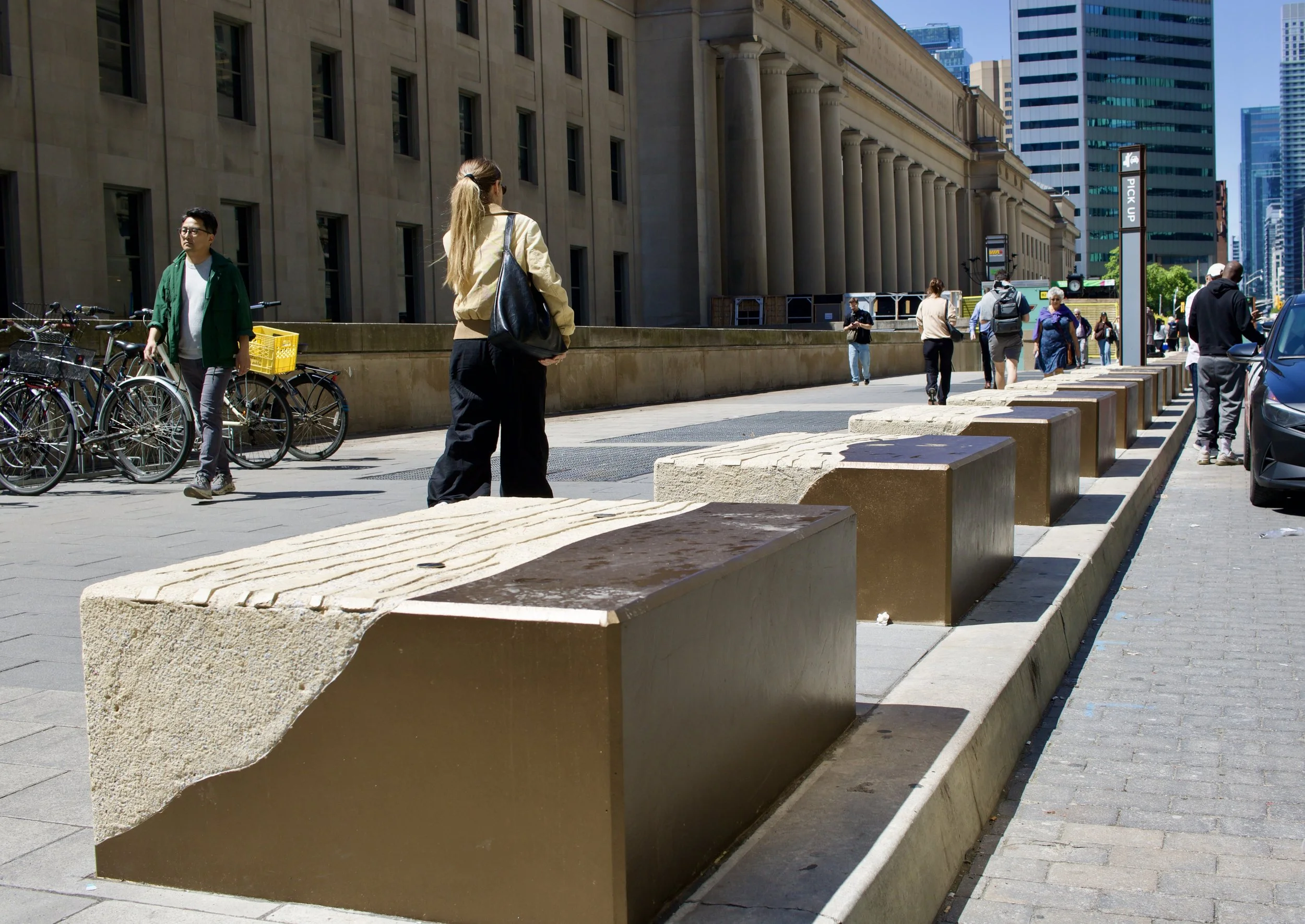
Row of concrete blocks outside of Union Station. Photo taken by Nicole in Toronto, ON.
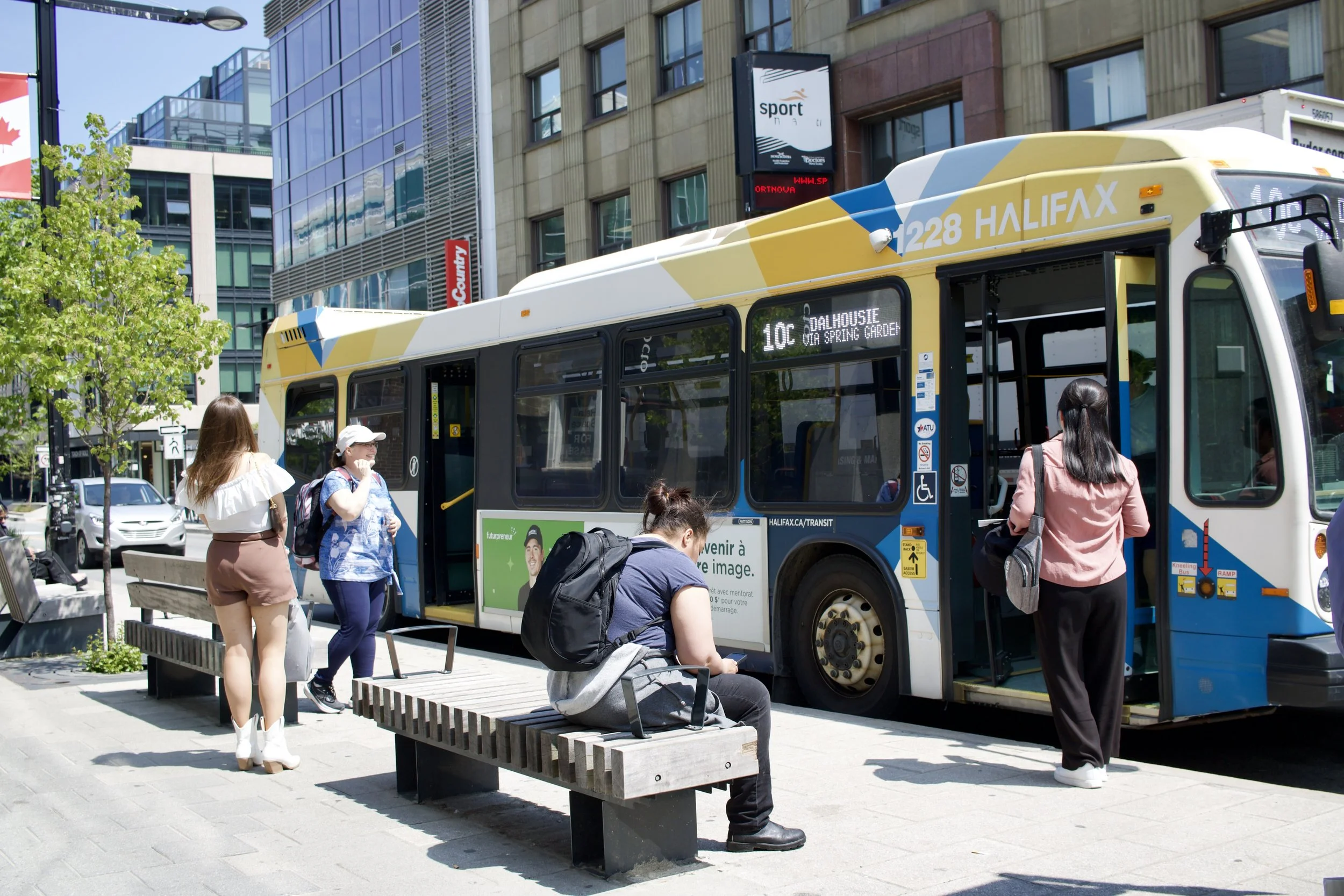
Backless bench at a bus stop. Photo taken by Nicole Roach in Halifax, NS.
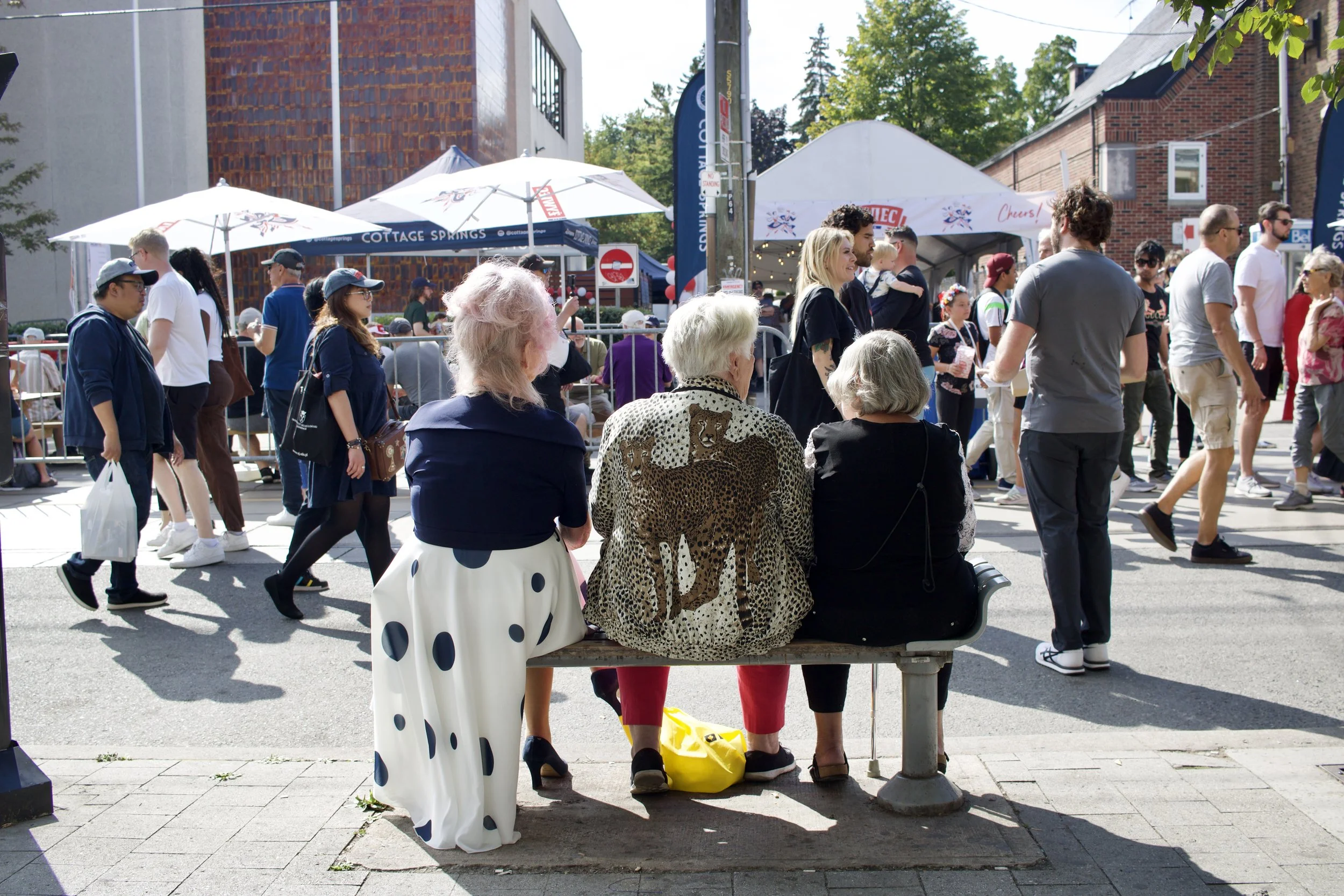
Backless bench on the sidewalk during an open-street festival. Photo taken by Nicole Roach in Toronto, ON.
Grooved, Curved, and Spiked “Seating”
Some “creative” public seating incorporates elements with waves, grooves, and other textures that restrict the spaces that people can actually sit. Depending on how this is done, these grooved seats can exclude people of a certain size, and almost always restrict the ability to lay down. Some seats can also incorporate textures or designs that can be regarded as public art, such as leaves, animals, and plaques, while also restricting access for some people. These forms of hostile architecture can be subtle, whereas the use of spikes make the cruel design intentions perfectly clear. Spikes can be used on seats, or even on sidewalks or somewhat enclosed areas that could be seen as a safe place to rest.
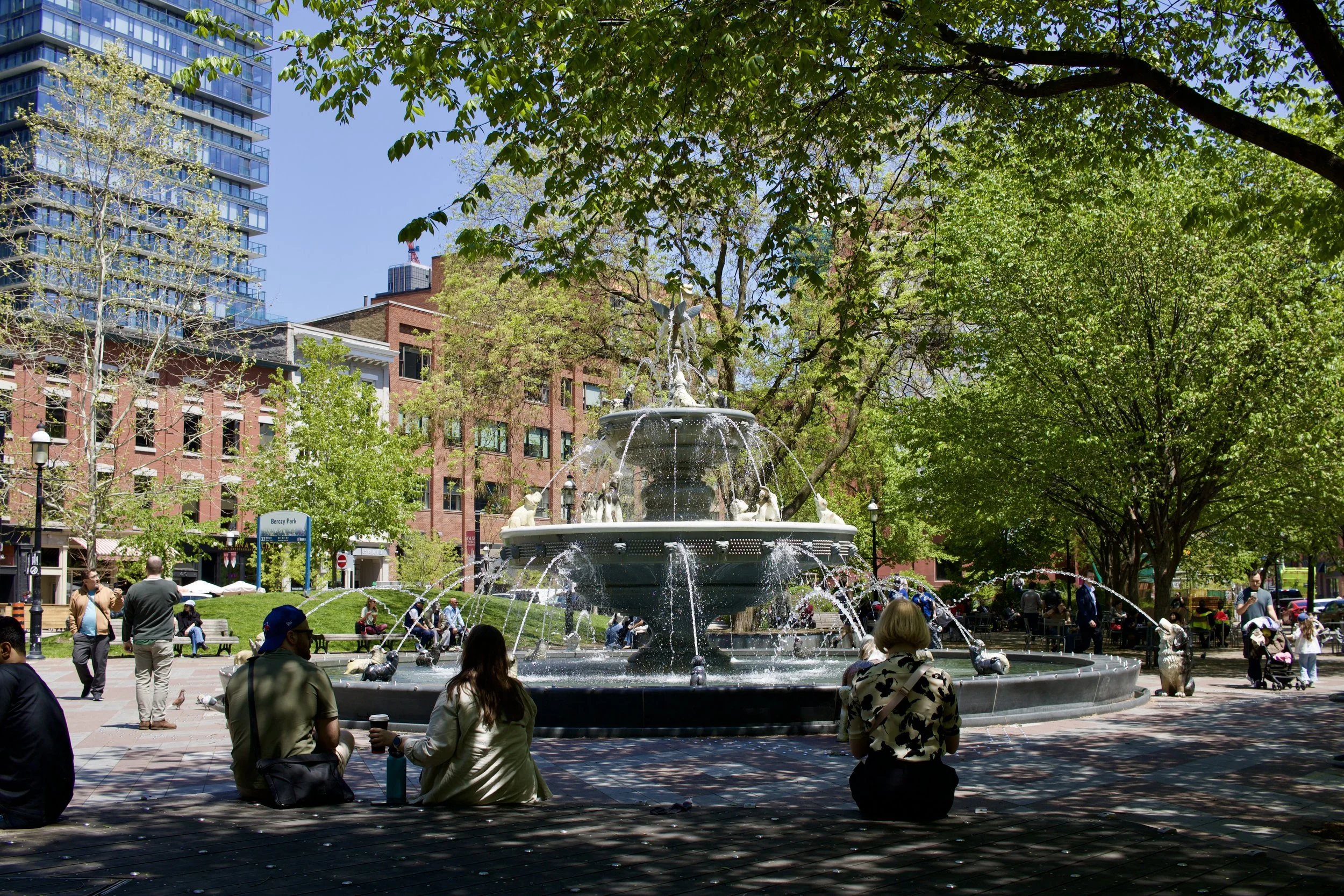
Platform seating with small, metal features. Photo taken by Nicole Roach in Toronto, ON.
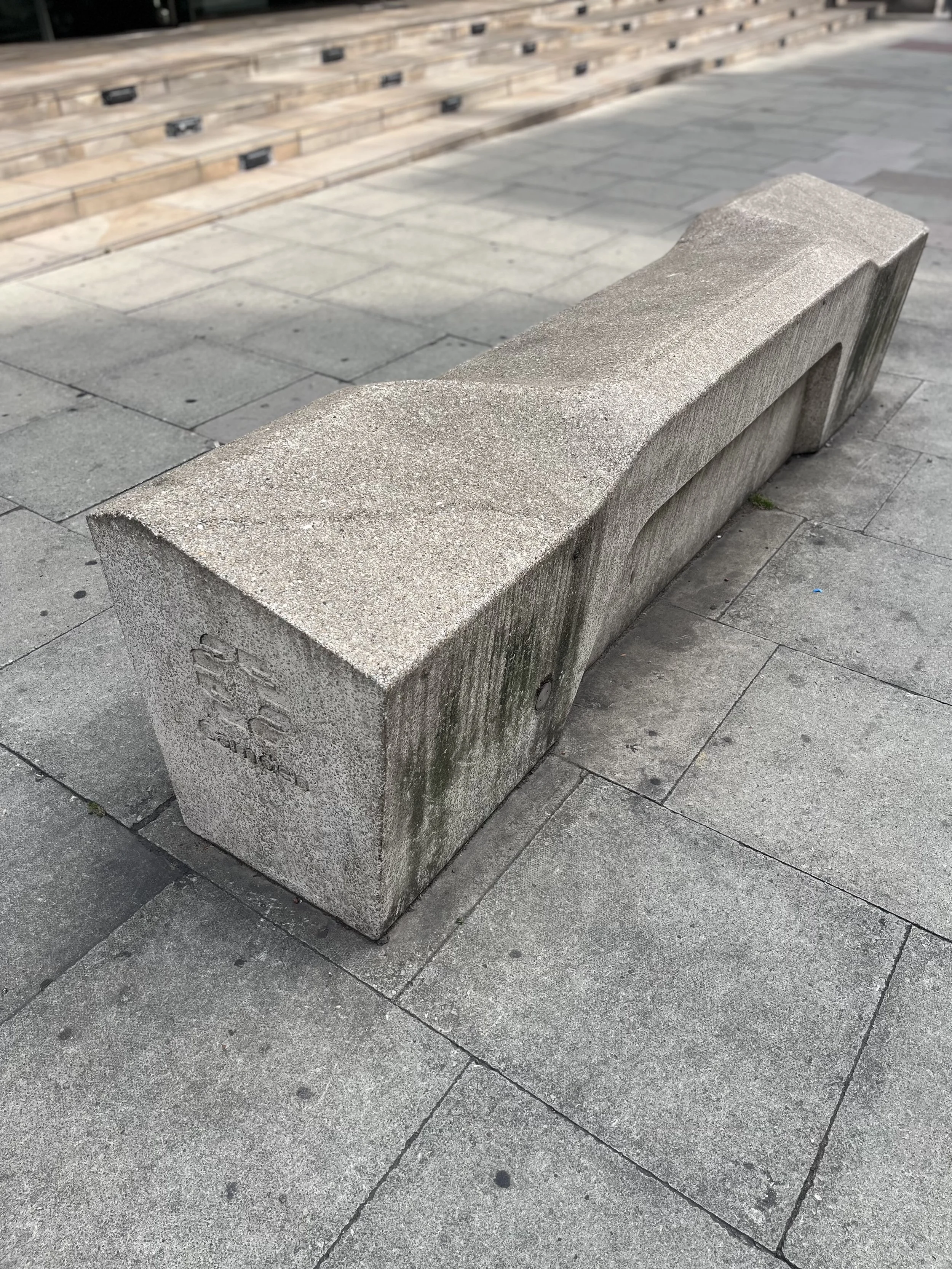
Grooved concrete bench, known as the Camden bench. Photo taken by D. O'Reilly in London, UK.
These tactics can make it so that many groups of women cannot sit or fully relax in such public spaces, impacting any woman who needs a comfortable place to rest, and especially unhoused women. This intentional exclusion may go unnoticed in some instances, especially when disguised as art, but the designed divide of who is welcome and who isn’t, is incredibly clear to those who are personally harmed by it.
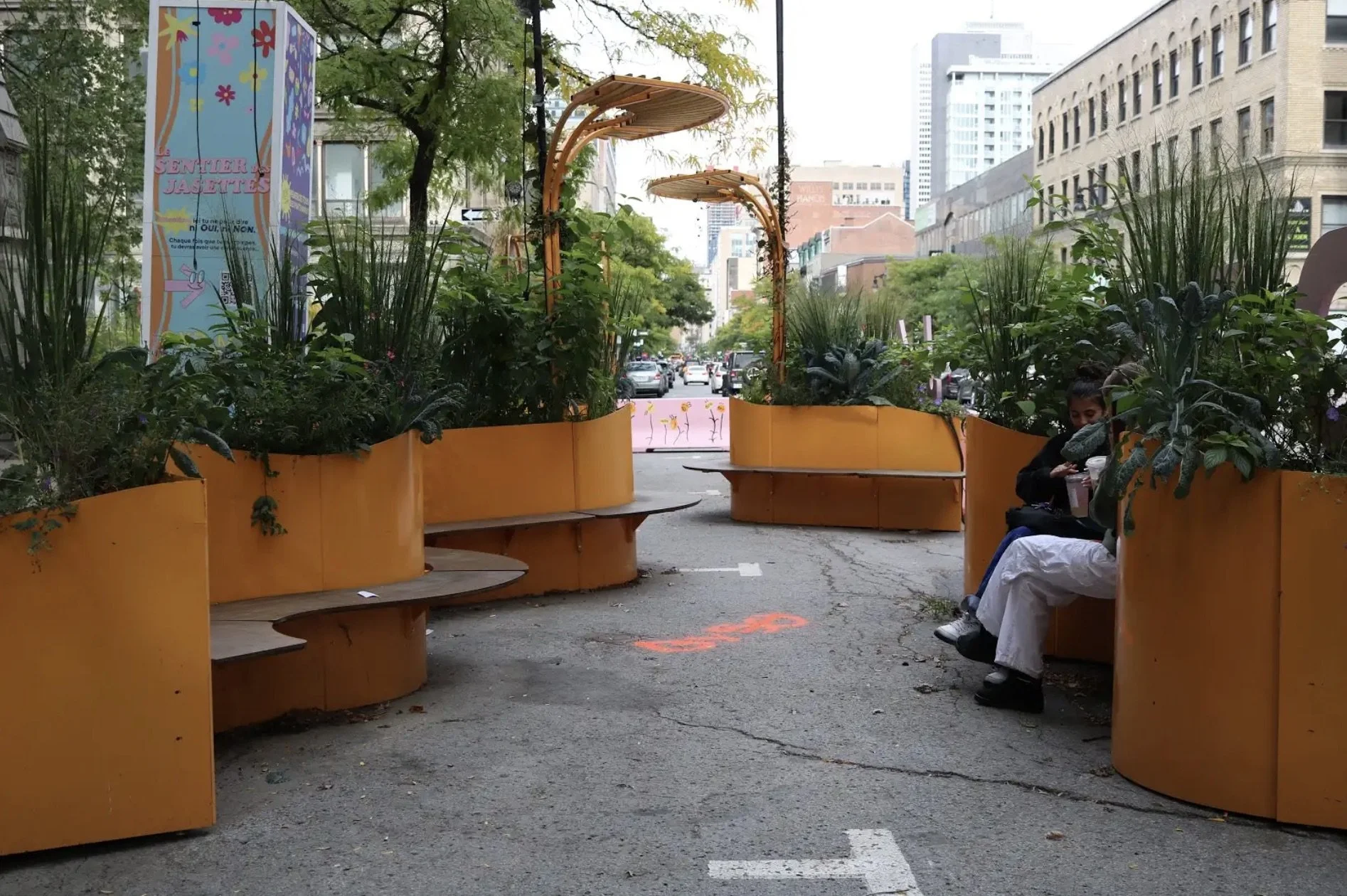
Curved bench seating in on-street parkette. Photo taken by Nicole Roach in Montreal, QC.
Other Tactics
Most of this essay has focused on forms of seating, but there are other design tactics that can be equally hostile and harmful. Lighting is frequently cited as an important safety measure in cities, especially for women, however, light can also be weaponized. Sometimes strobe lights and harsh overhead lighting are used in areas that may be desirable for unhoused people to seek shelter at night. Some cities have also weaponized noise, blasting music or high-frequency white noise under bridges and/or near homeless encampments. These tactics are very clearly being used to make sleep even more uncomfortable for these vulnerable people, and in many cases, impossible.
Weaponizing light and sound is undoubtedly cruel to unhoused people, especially women who have so few “safe” places to sleep outdoors in cities that are designed to force them further and further away from the public eye. These tactics also harm anyone living nearby these sites, including animals, who are forced to endure the conditions trying to keep people from sleeping. Sleep is, of course, essential for everyone, but it is especially crucial for women to get as much sleep as possible, and even more so for those with babies and young children who are already sleep deprived.
Towards Inclusive Design
Unhoused people can be seen as a public safety risk to others and their presence is regarded as an uncomfortable, visible reminder of the pervasive social inequalities being experienced in Canada. In response, there have been decades of intentional design efforts to keep them out-of-sight, pushing many unhoused people to seek shelter in even more dangerous, secluded areas, which is especially harmful to unhoused women. Designing the most vulnerable people in society, out of our society, is obviously cruel, and that is enough reason on its own for us to oppose hostile architecture. But it goes much further than that. These tactics can make anyone feel unwelcome and excluded from their own communities, especially women who face compounding inequalities, such as elderly women, women with disabilities, women with children, low-income women, and many more.
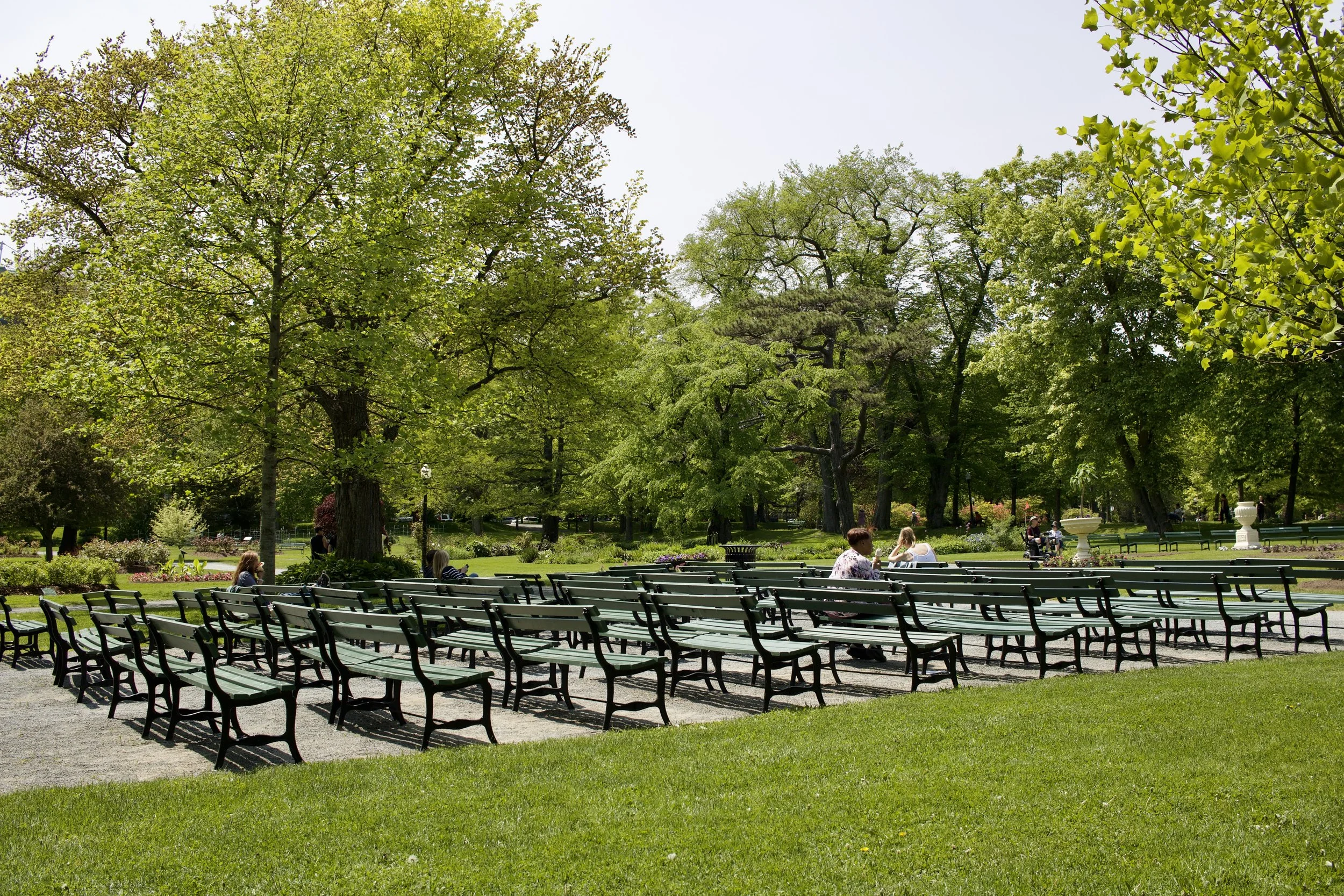
Rows of park benches. Photo taken by Nicole Roach in Halifax, NS.
Exclusionary design does not help solve any of these pervasive societal problems, but merely pushes them away, so that they can be more easily ignored by those in positions of power. We must reject this form of “problem-solving”, because it simply doesn’t work, it harms.
Women, especially those who are white, able-bodied, and earning high-incomes, must not allow hostile architecture tactics to continue, especially when they are being justified for the sake of our safety. We must speak out against this harm for the most vulnerable, and ensure our communities are designed for all of our fellow women, and fellow humans, alike.