Event Recap: Jane’s Walk 2026
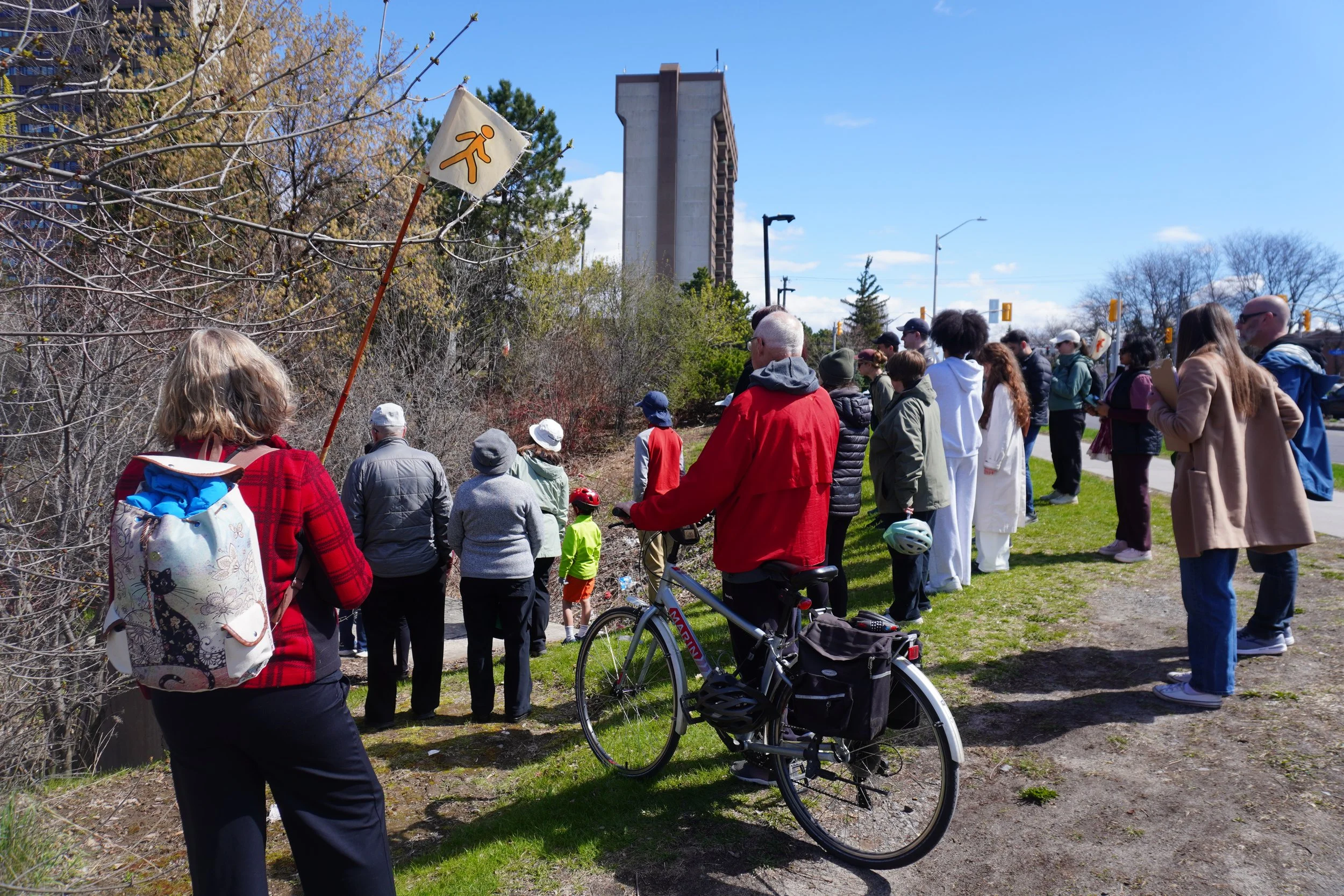
Participants appreciate little pockets of urban greenery that need better access via pedestrian infrastructure. Photo taken by Sahara Shrestha at Ottawa, ON.
This year, four members from the Women in Urbanism Canada (WiUC) team attended the Jane’s Walk Festival across different cities. Nicole attended a mobility-themed walk in Edmonton, Shama attended a housing-themed walk in Kitchener, and Sahara and Firdous attended two walks together — one on transit-oriented development and the other on third spaces — in Ottawa.
In this blog, we take you along each walk, highlighting the emerging themes and key takeaways that align with our mission at WiUC.
Edmonton: Prioritize Whyte Ave
Nicole Roach
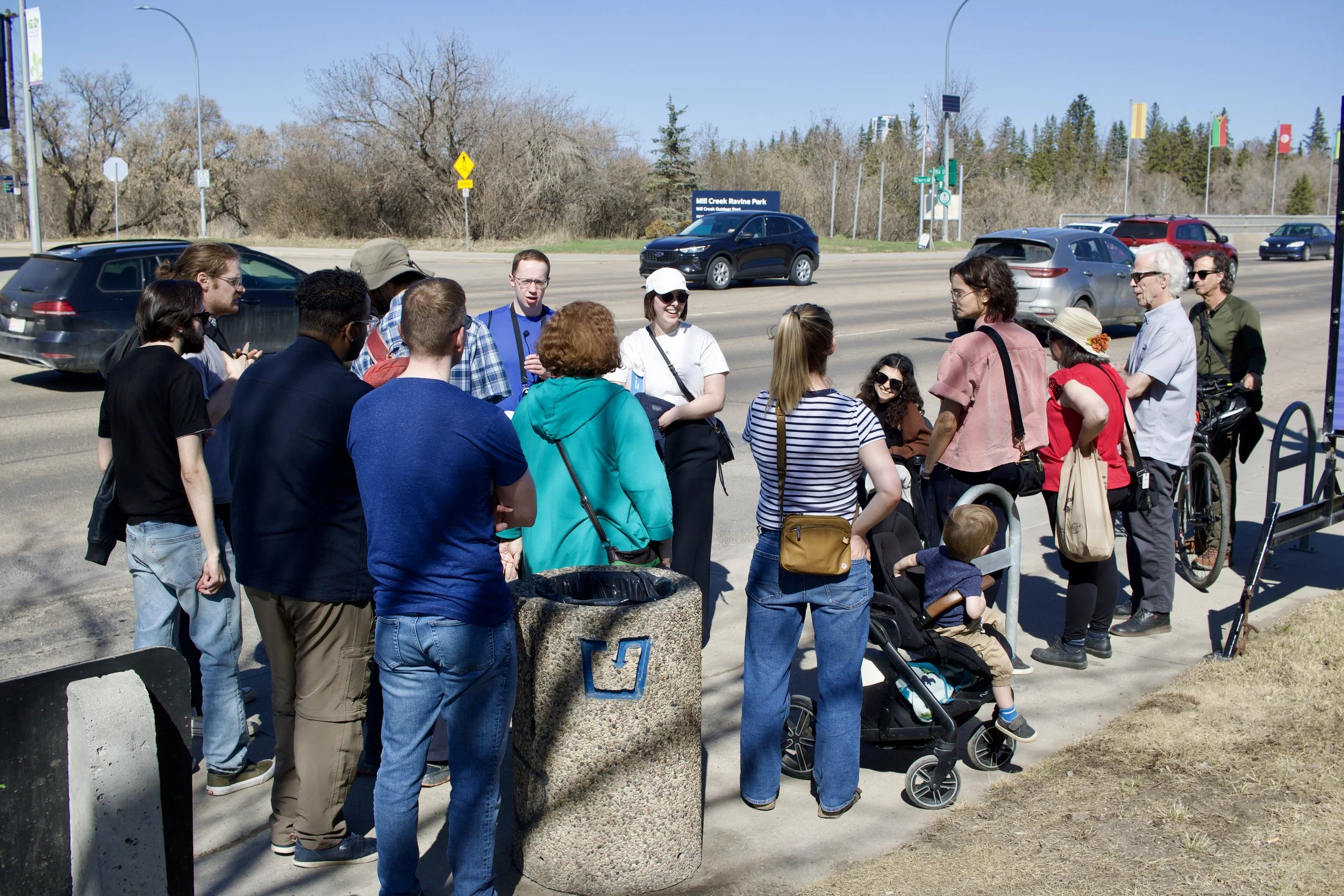
Group discussion along Whyte Ave in the French Quarter next to Mill Creek Ravine Park. Photo taken by Nicole Roach at Edmonton, AB.
I attended my first-ever Jane’s Walk this year! I joined the “Prioritize Whyte Ave!” walk, led by members of the grassroots coalition, Prioritize Whyte Ave, made up of Paths for People, Edmonton Transit Riders, Old Strathcona Business Association, and the French Quarter Business Association. Co-hosts, Ryan Jacques and Jade Charlery Vidmar, led the group down Whyte Ave, from 106 to 101 St., to reflect on redevelopment opportunities in the public realm.
I chose to join this walk because I regularly visit the Whyte Ave area for my weekly trip to the Farmer’s Market. During my visits, I have been frustrated by the vast amount of traffic lanes, while marveling at the potential to improve the public realm for the many pedestrians, cyclists, and transit users. This walk explored just that!
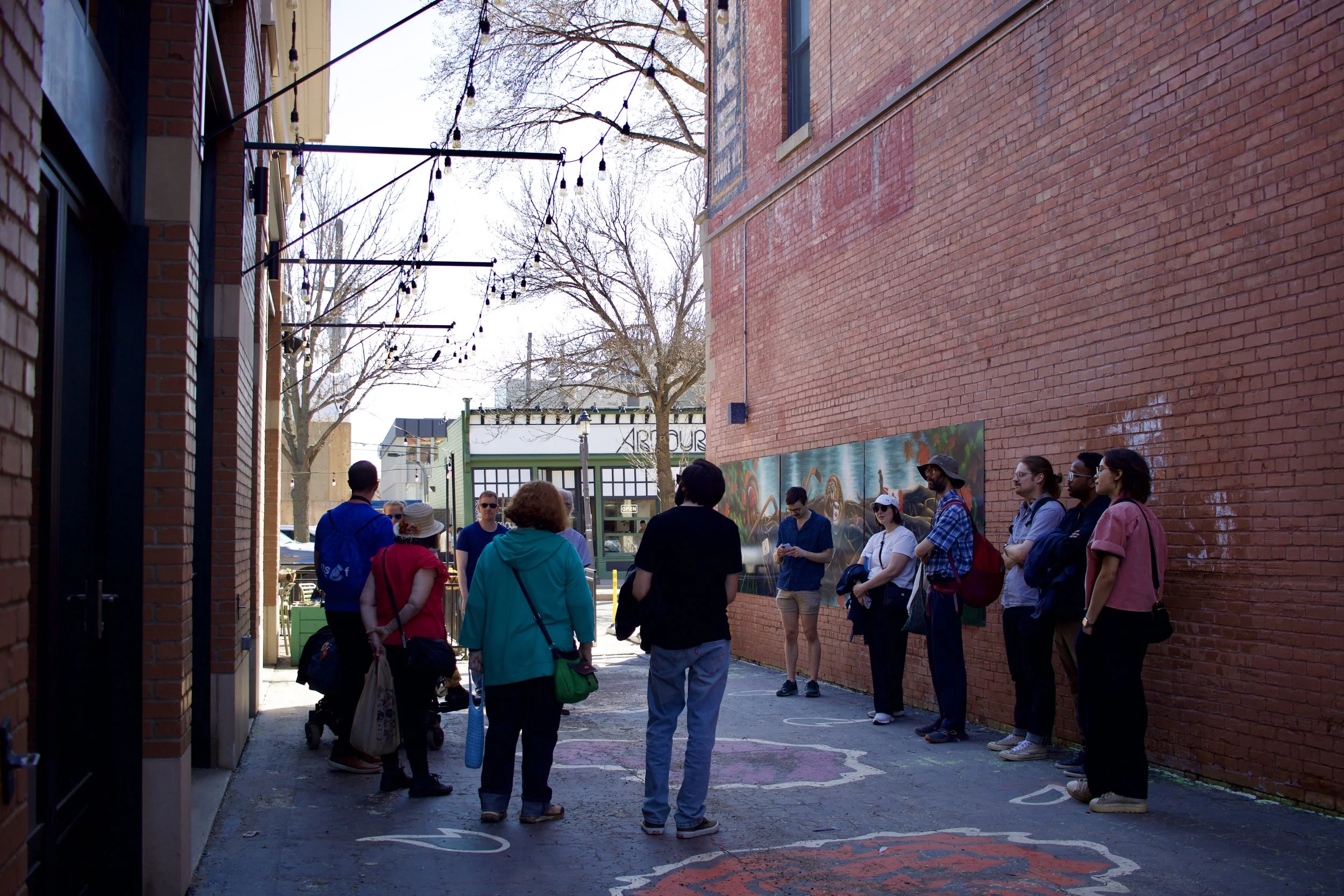
Participants gathered in an alleyway along Whyte Ave to discuss different ways of activating public space. Photo taken by Nicole Roach at Edmonton, AB.
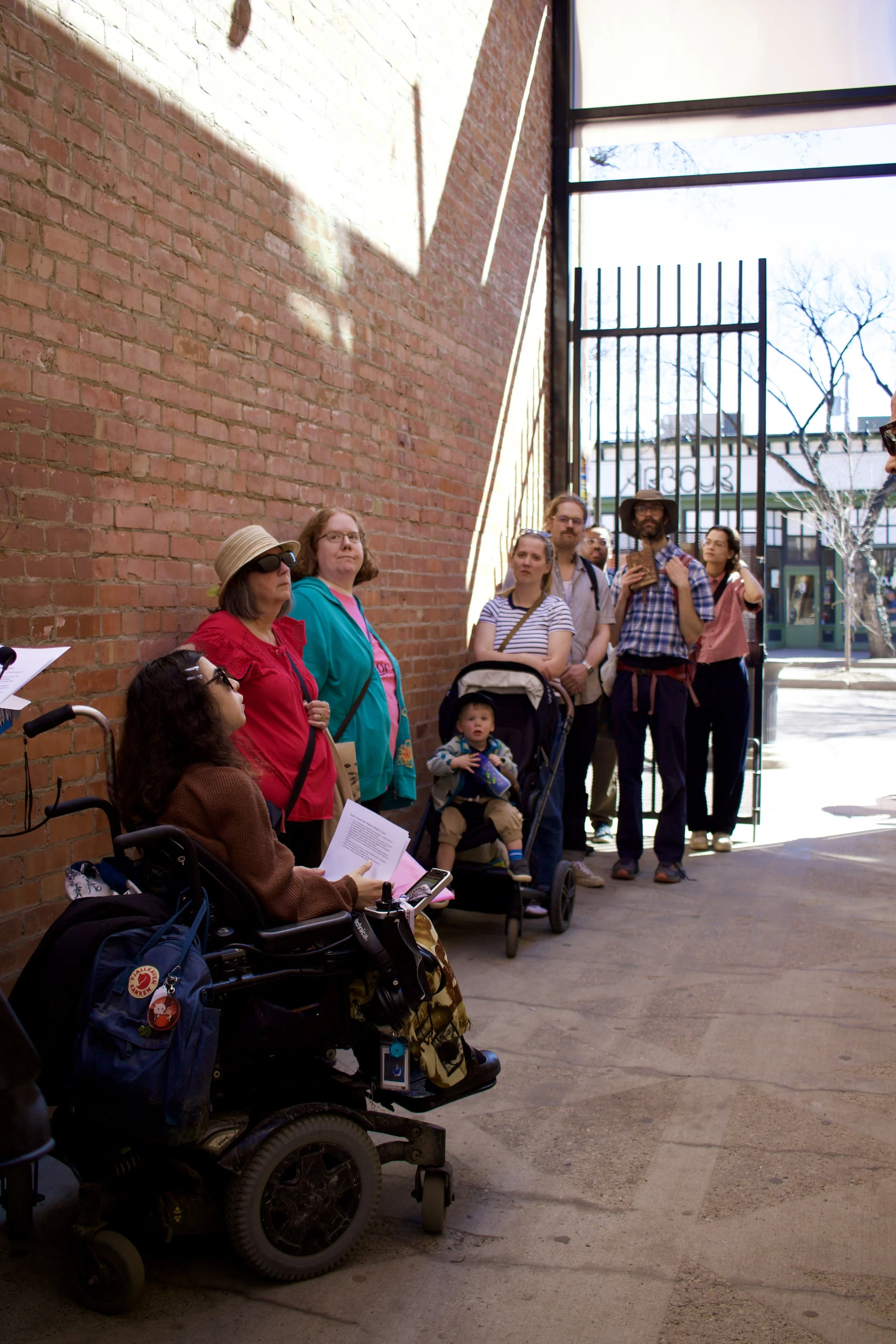
Participants access shade in another alleyway along Whyte Ave. Photo taken by Nicole Roach at Edmonton, AB.
On the walk, I observed many familiar things, but I also learned some new things that I hadn’t noticed on my own before. For example, the cobblestone sidewalks are bumpy and difficult to navigate for those in wheelchairs or pushing strollers. I also learned the background of the temporary plazas that were installed along the street. And throughout the walk, we were all reminded of just how loud fast moving vehicles can be, and how difficult it is to have a conversation with others, especially as a group.
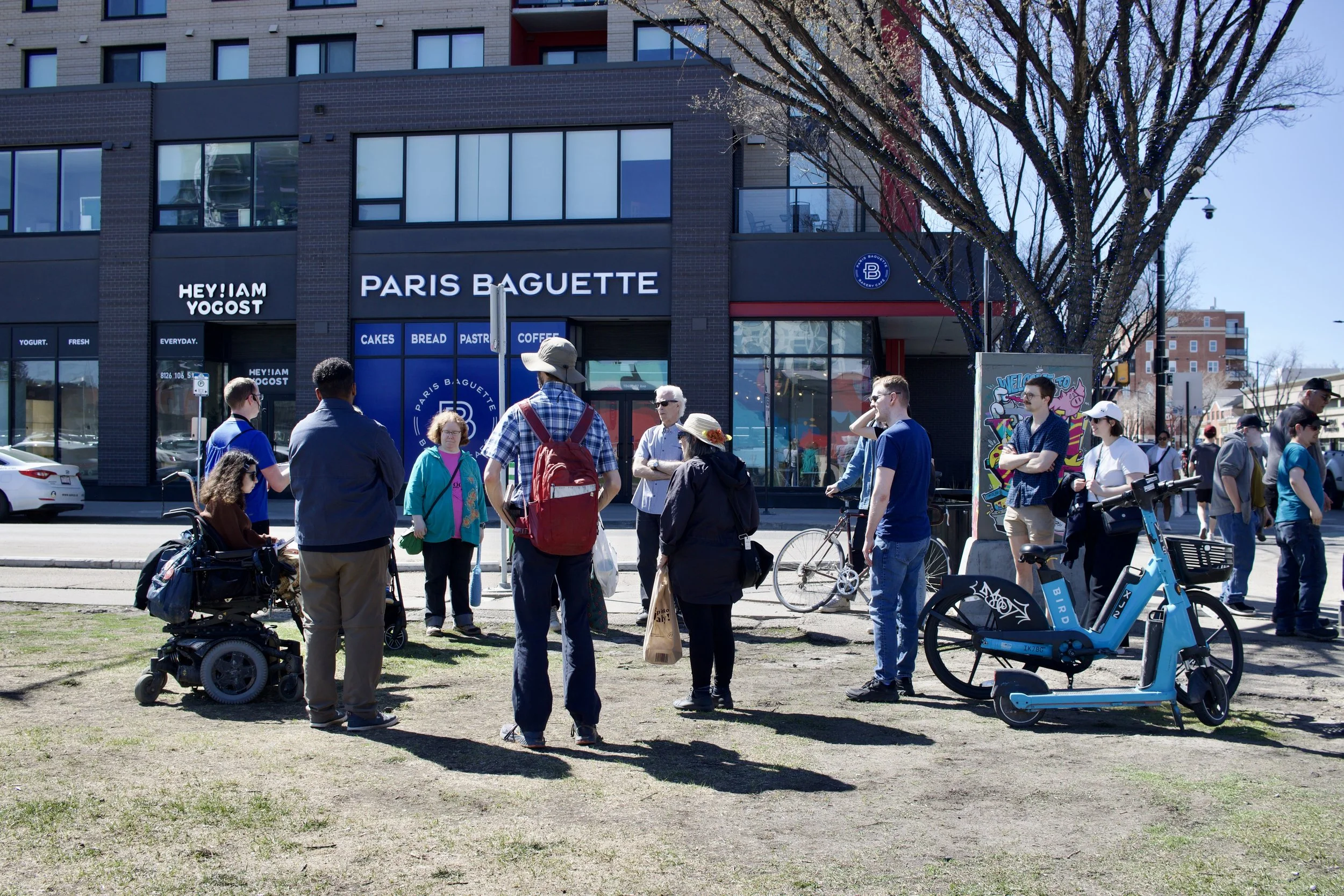
Participants gathering before the Jane’s Walk along Whyte Ave. Photo taken by Nicole Roach at Edmonton, AB.
I really enjoyed my first Jane’s Walk, experiencing a familiar place with others who also see the many opportunities to make it better. Prioritize Whyte Ave is currently soliciting feedback on their survey, to help make some of our desired changes a reality.
Kitchener: Housing Evolution in Downtown Kitchener
Shama Saleh
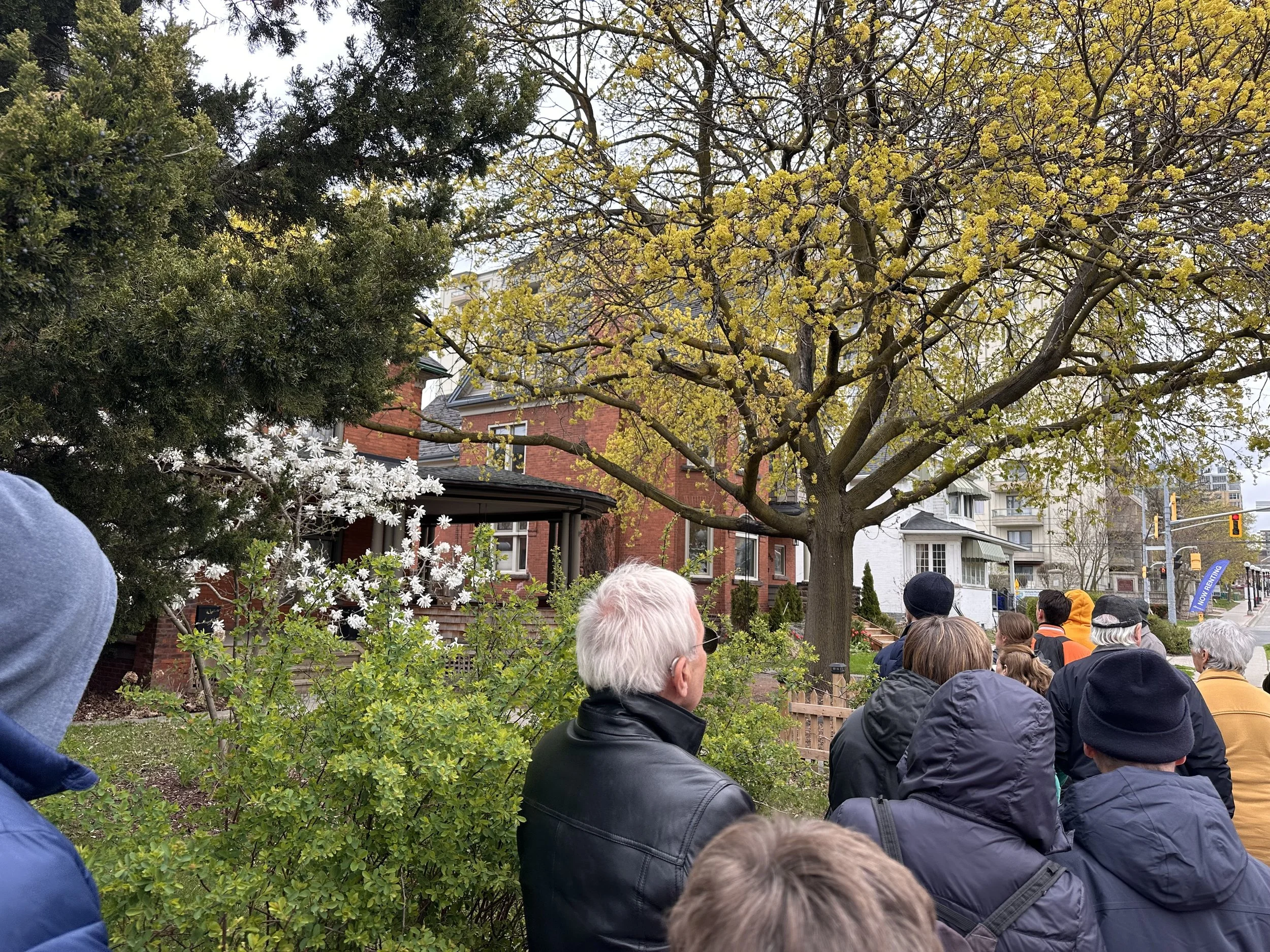
Participants gathering in front of a home on Queen St S. Photo taken by Shama Saleh at Kitchener, ON.
I had the opportunity to join my first ever Jane's Walk, “Housing Evolution in Downtown Kitchener”. Born and raised here, I figured it would be a chance to see the city through a different lens. The walk was led by Divya Dhingra, a local architect who’s been leading it for a few years.
We started at Joseph Schneider Haus, just outside of Downtown Kitchener, a place I'd always passed but never stepped inside. It's a nationally designated historic site, tied to the migration of Pennsylvania-German Mennonites into Waterloo County in the early 19th century and the homes they built when they got here. Part of me wishes it were in the heart of downtown but with its sweeping lawn and mature trees, I understand why it isn't.
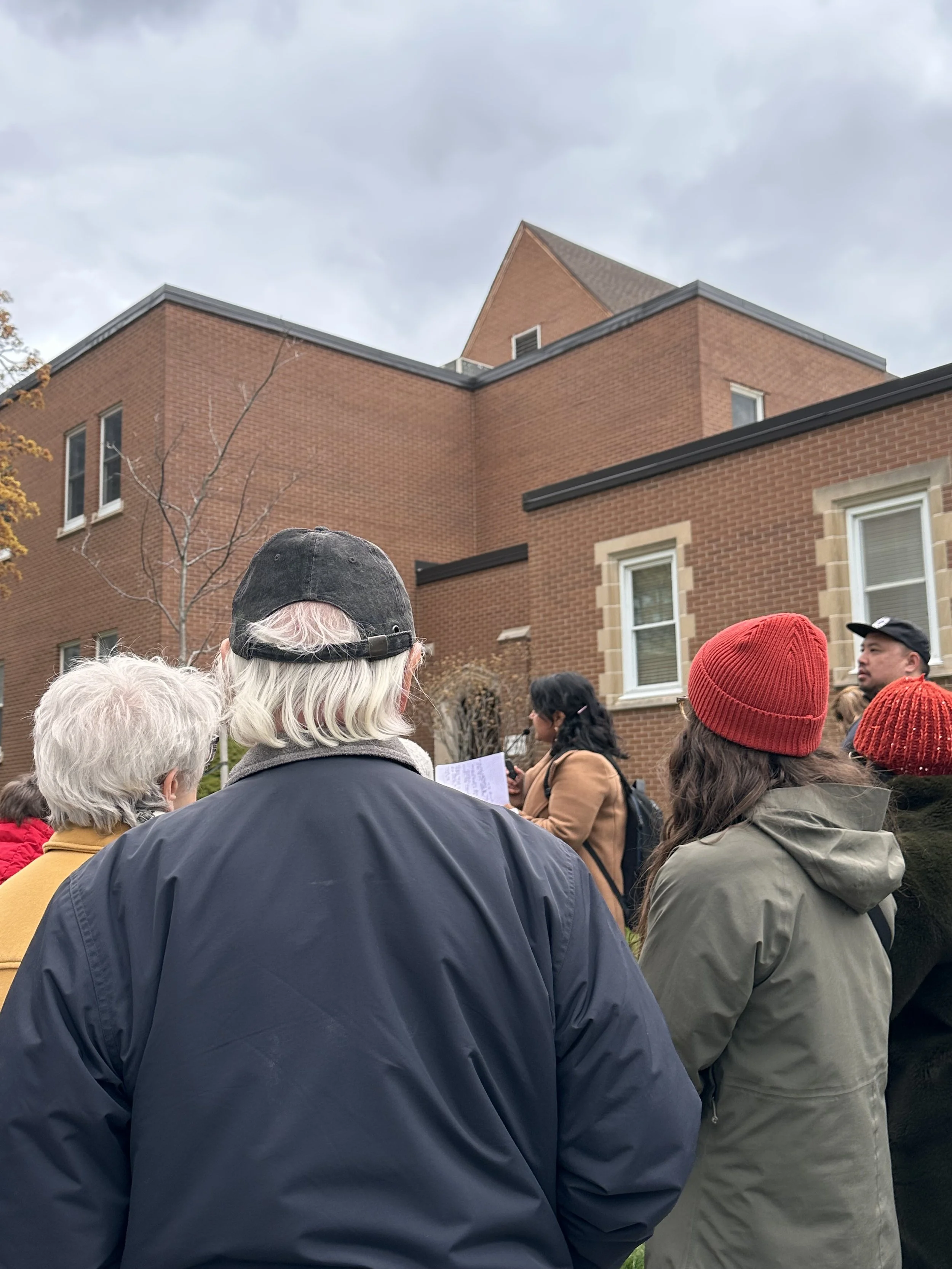
Participants gathering in front of a Baptist Church on Benton St. Photo taken by Shama Saleh at Kitchener, ON.
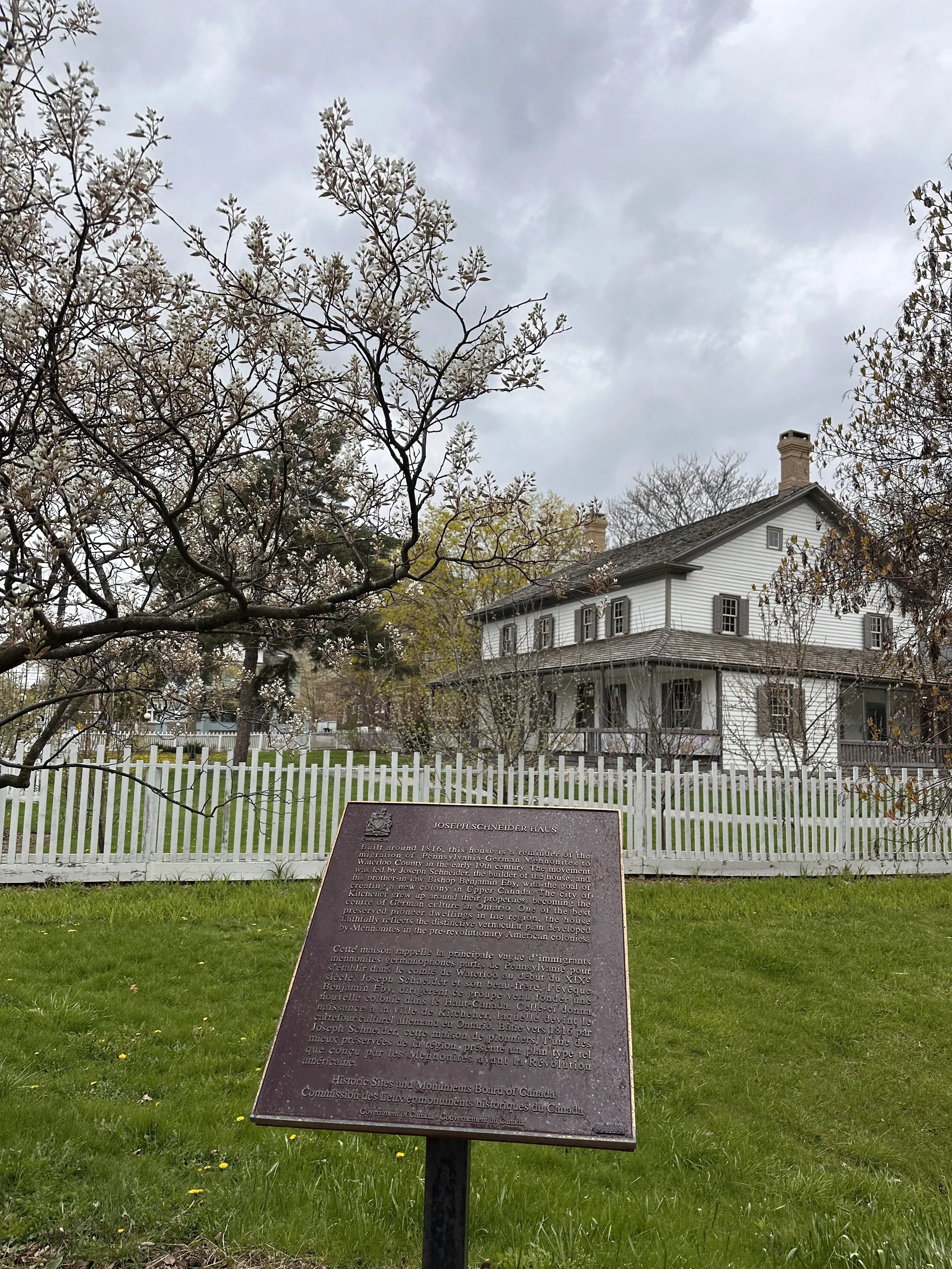
Picture of the famous Schneider Haus National Historic Site on Queen St. Photo taken by Shama Saleh at Kitchener, ON.
From there, we visited a home that now operates as an insurance building. The first thing I learned was that large front lawns were a signal of elite status, this one even had a fountain so it was no modest residence. What was harder to appreciate was the condo built right beside it, really uncomfortably close. It's a pattern I find frustrating where developers squeeze buildings onto every available inch until the older homes around them are simply pushed out.
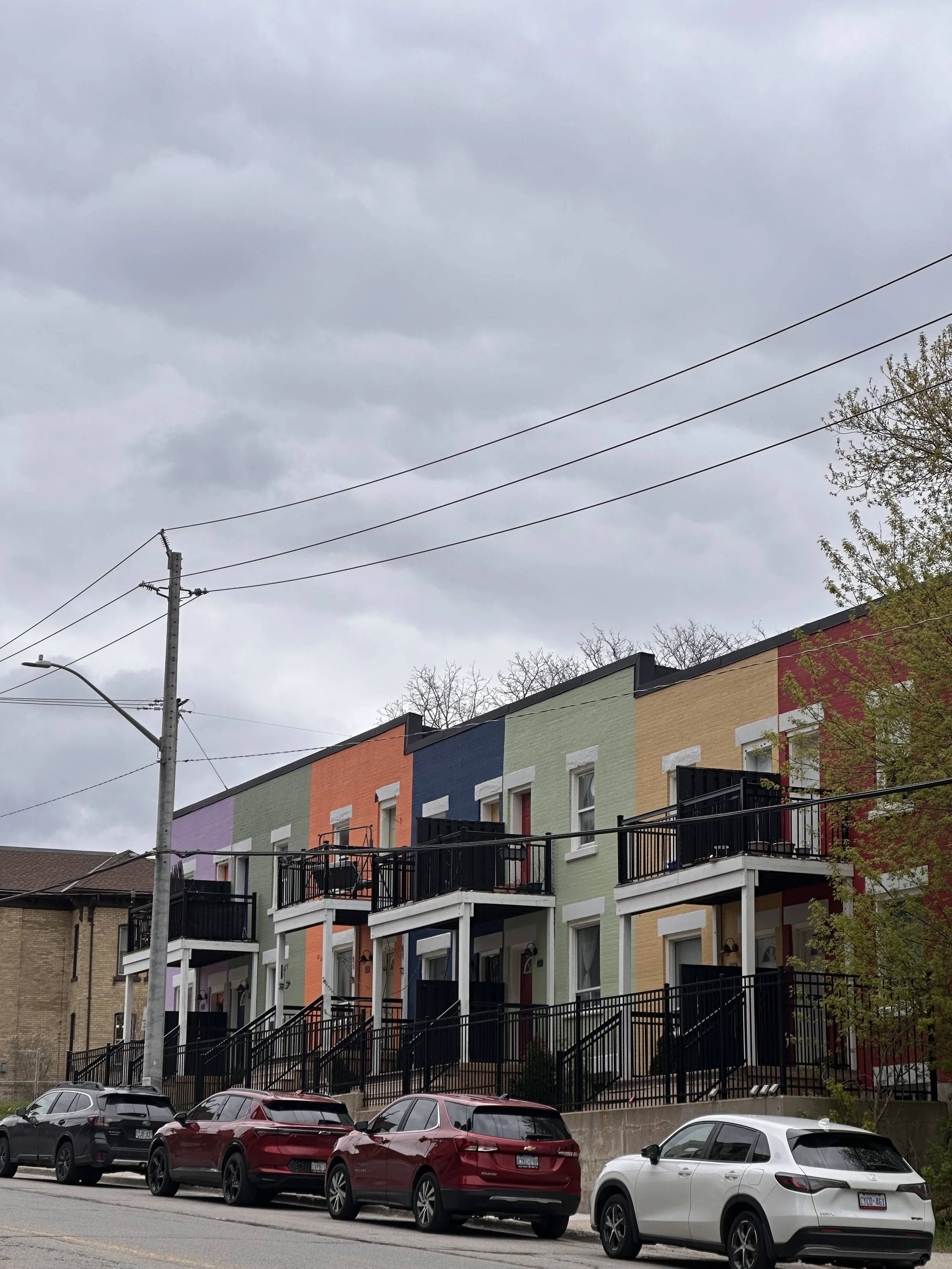
Colourful homes on Benton St with cars parked on the side street. Photo taken by Shama Saleh at Kitchener, ON.
We then came across apartments that were once factories. Apparently, working in Kitchener back in the day came with an almost unspoken promise of a home nearby and beside many of these former factories stood rows of brownstone-style row houses where workers actually lived. People still live in them today and they stand out beautifully from everything around them.
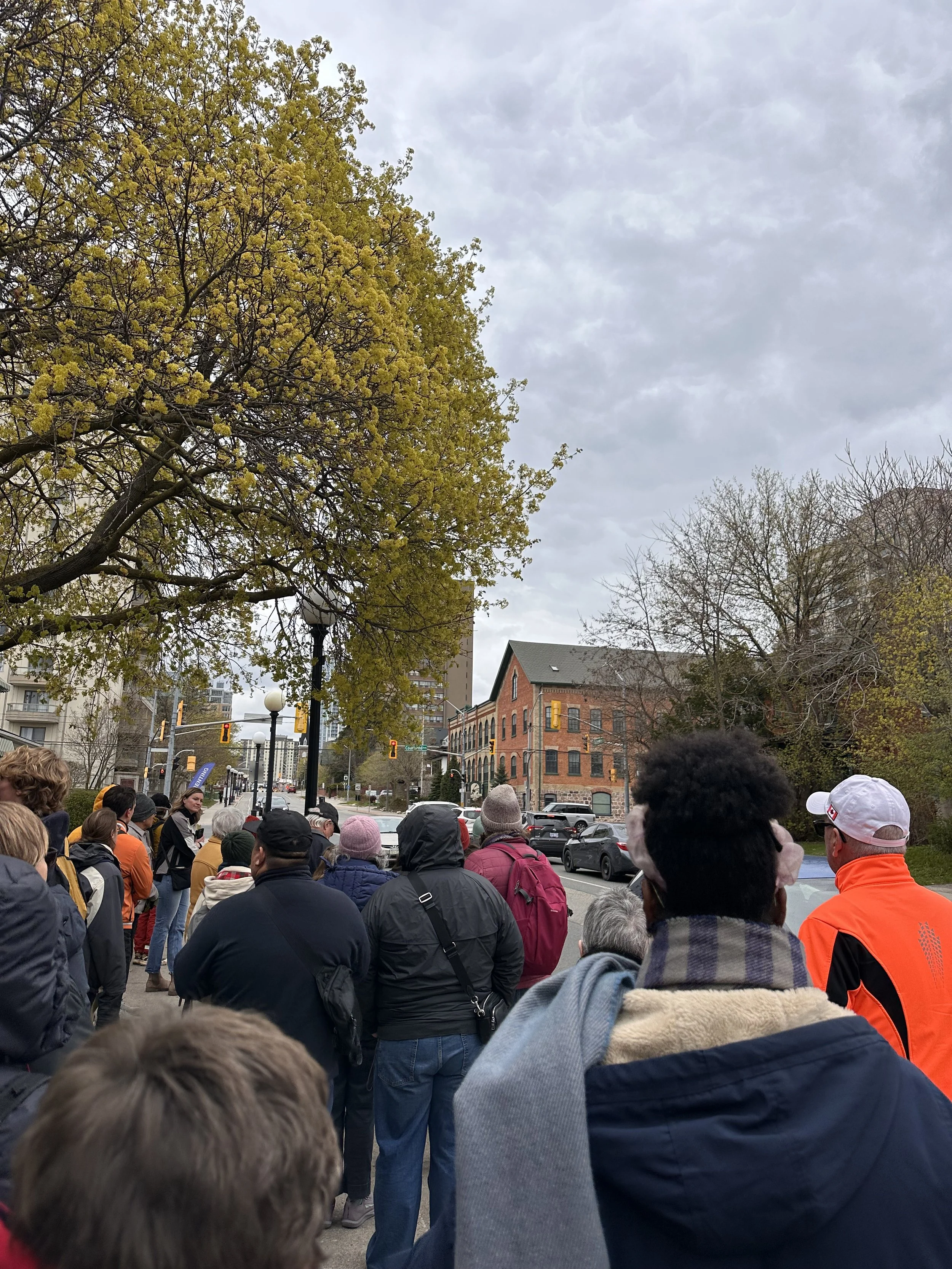
Participants discussing amongst each other as they continue walking on Queen St S. Photo taken by Shama Saleh at Kitchener, ON.
What I enjoyed most was the sheer variety…each home so distinct, full of character, some even with ornate Italian-style detailing. It made me realize just how many of these homes have been preserved over the years. I can only hope that as Downtown Kitchener continues its revamp and leans further into its little Silicon Valley identity, the city and its developers leave these homes alone. They're the history of this place and that's worth protecting!
Ottawa: Imagining a Better South Keys Centre
Sahara Shrestha & Firdous Nizar
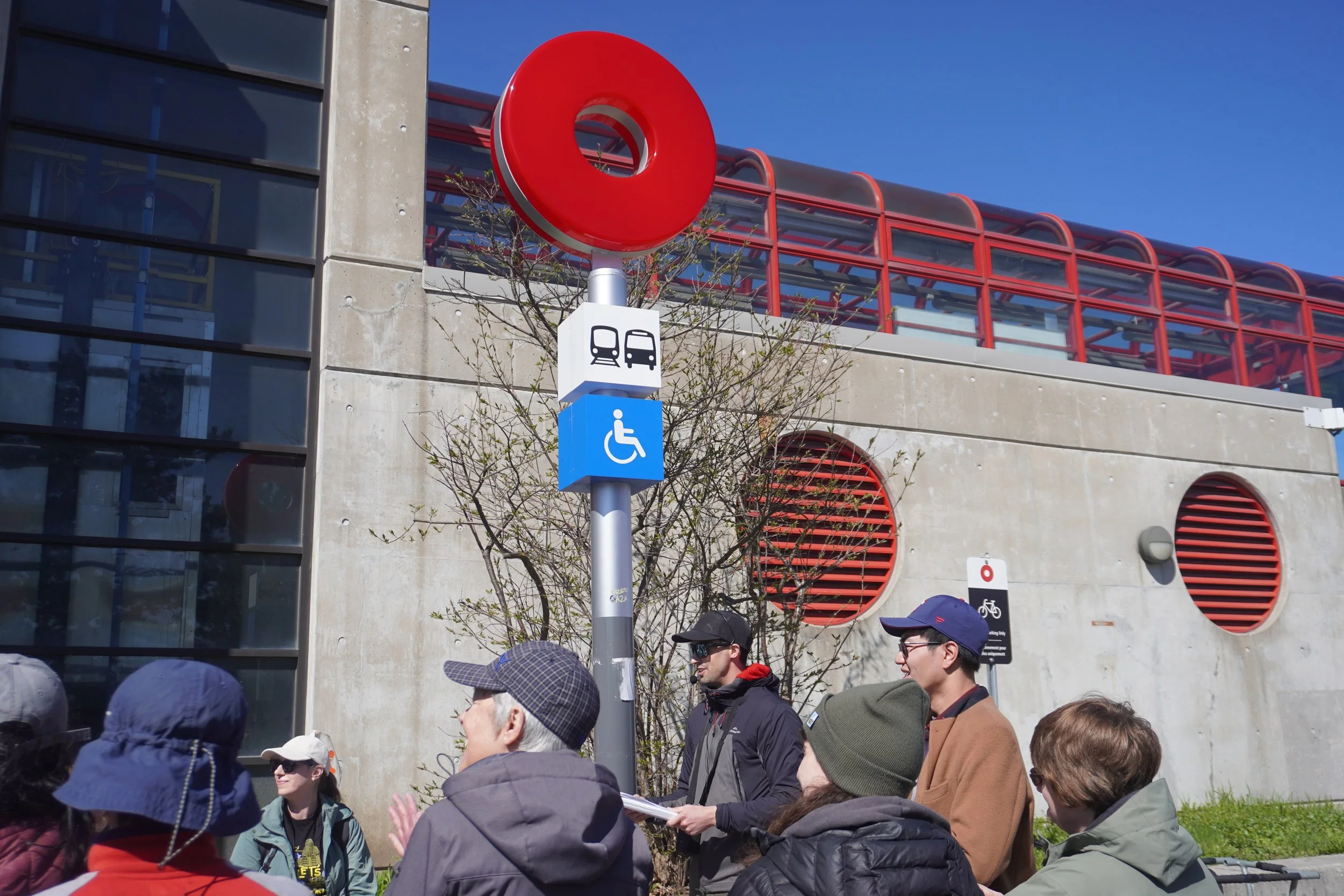
Walk leader Matt Pinder going over the agenda for the walk, standing in front of the South Keys LRT station. Photo taken by Sahara Shrestha at Ottawa, ON.
Firdous: Looks like we’re all attending our first ever Jane’s Walk this year! Sahara and I reached out to each other regarding the event, and decided to experience the joy of walking together among like-minded people and sharing our vision for better cities.
We attended a total of two walks together, pretty much back-to-back on the Sunday of the festival! Our first walk, “Imagining a Better South Keys Centre,” explored a more walkable future for the neighborhood and reflected on the challenges of shifting a “stubbornly car-dependent” zone into mixed-use developments. Led by Matt Pinder, transportation engineer and leader of the local community group, Better South Keys Centre, the walk focused on the lack of accessibility to housing and services within walking distance from the South Keys Ottawa LRT, aka “O-Train,” station. Using the station as the starting point, we walked along fragmented sidewalks, appreciating the bike paths and urban greenery, and stopped at the Airport Parkway Bridge which is a pedestrian and cycling pedestrian fraught with design and legal complications.
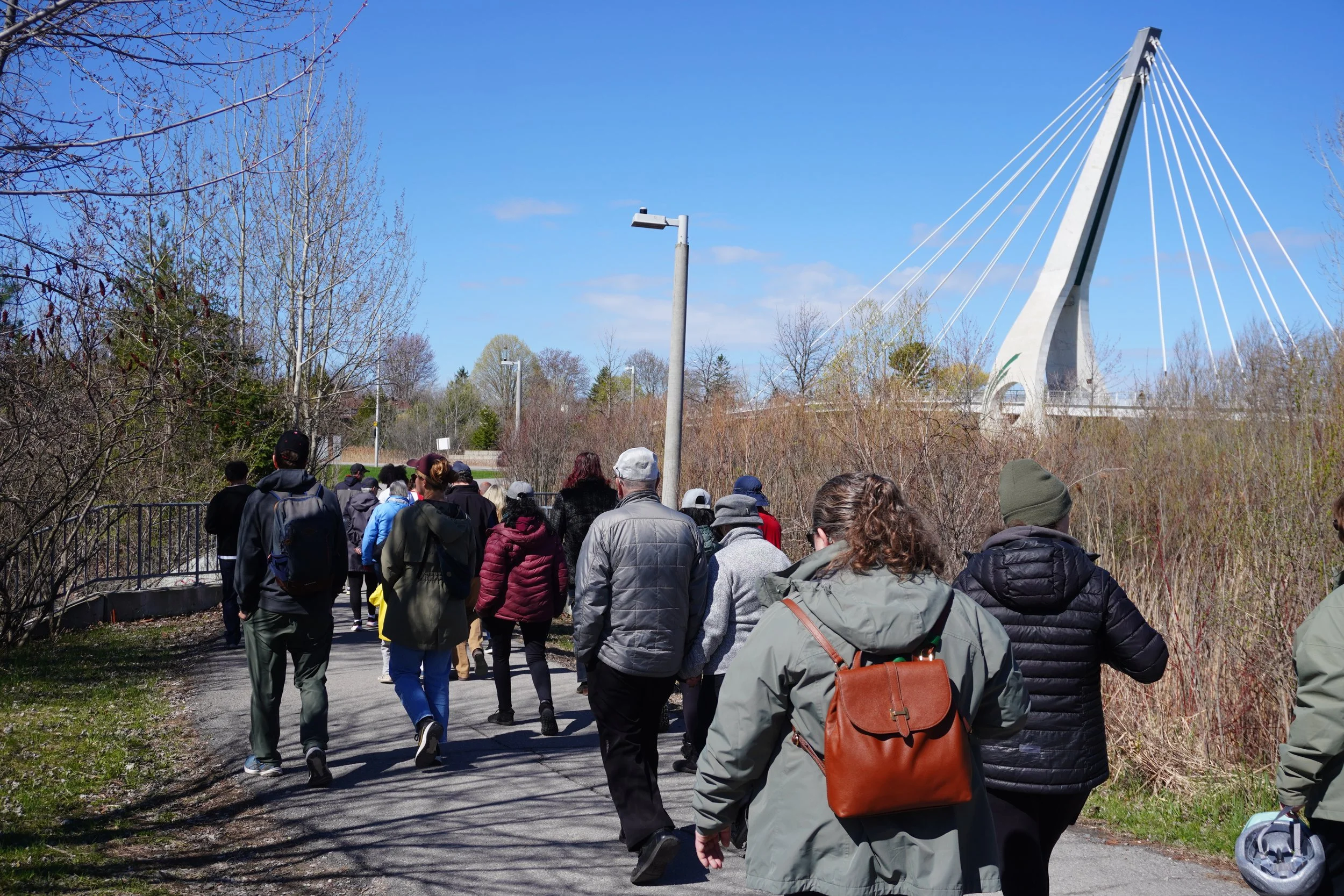
Participants walking along the bike and pedestrian path toward the Airport Parkway Bridge. Photo taken by Sahara Shrestha at Ottawa, ON.
Walking back to the station, a local youth artist shared the exciting news of a mural that will make one of the bare concrete walls more inviting and tied to the unity and diversity of the communities in the neighbourhood. We were also accompanied by Councillor Jessica Bradley who gave us more context on the various stages of the procurement process and how the City hopes to build a truly vibrant community. Facing the expansive parking lot in front of the station, the group passed around drawings and 3D renderings of upcoming development projects which could be built in the upcoming future: a 21-storey mixed-use building, a new public plaza, public art, and improved walking and cycling connections.
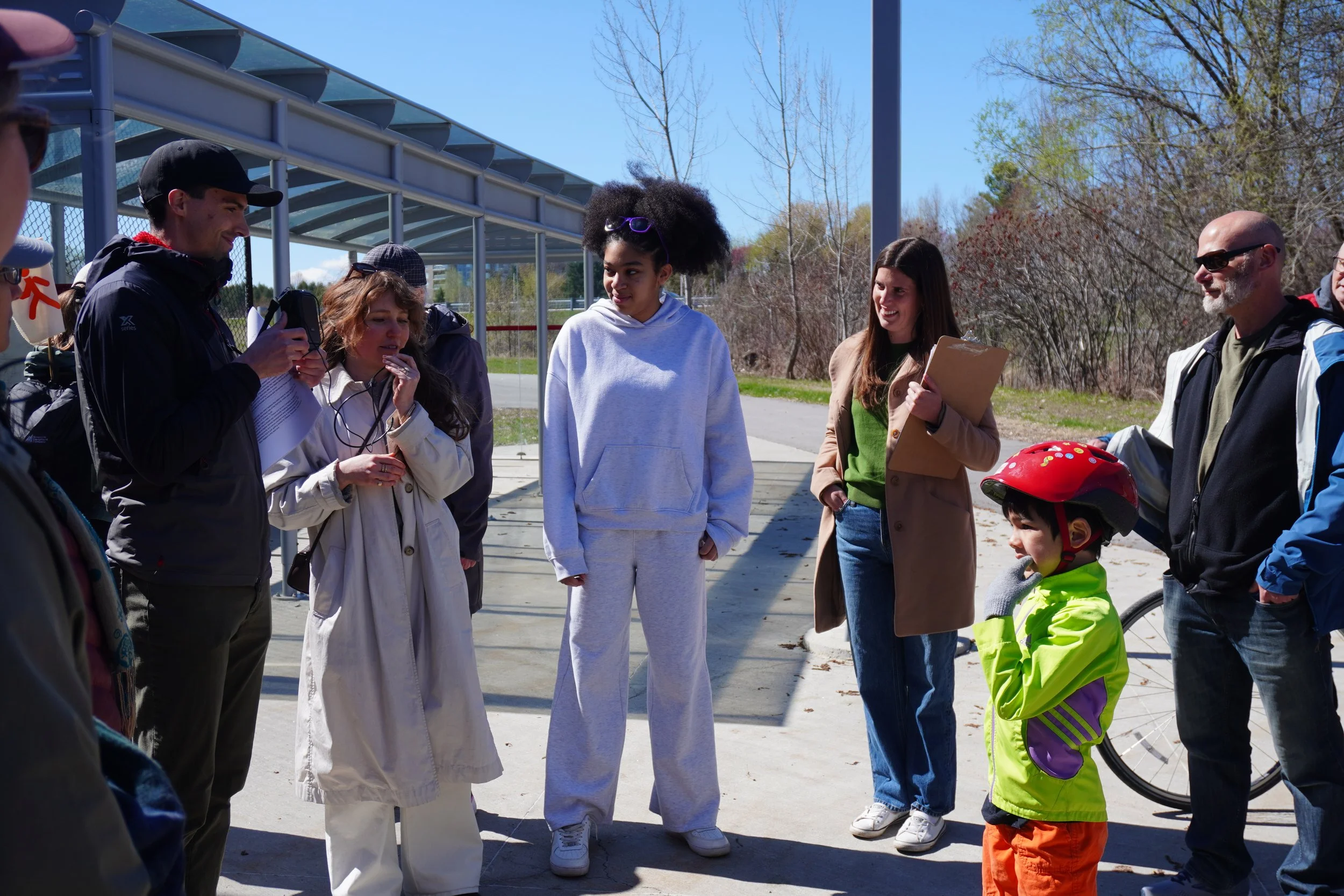
Local coordinator and artist sharing good news of an upcoming mural at the station. Photo taken by Sahara Shrestha at Ottawa, ON.
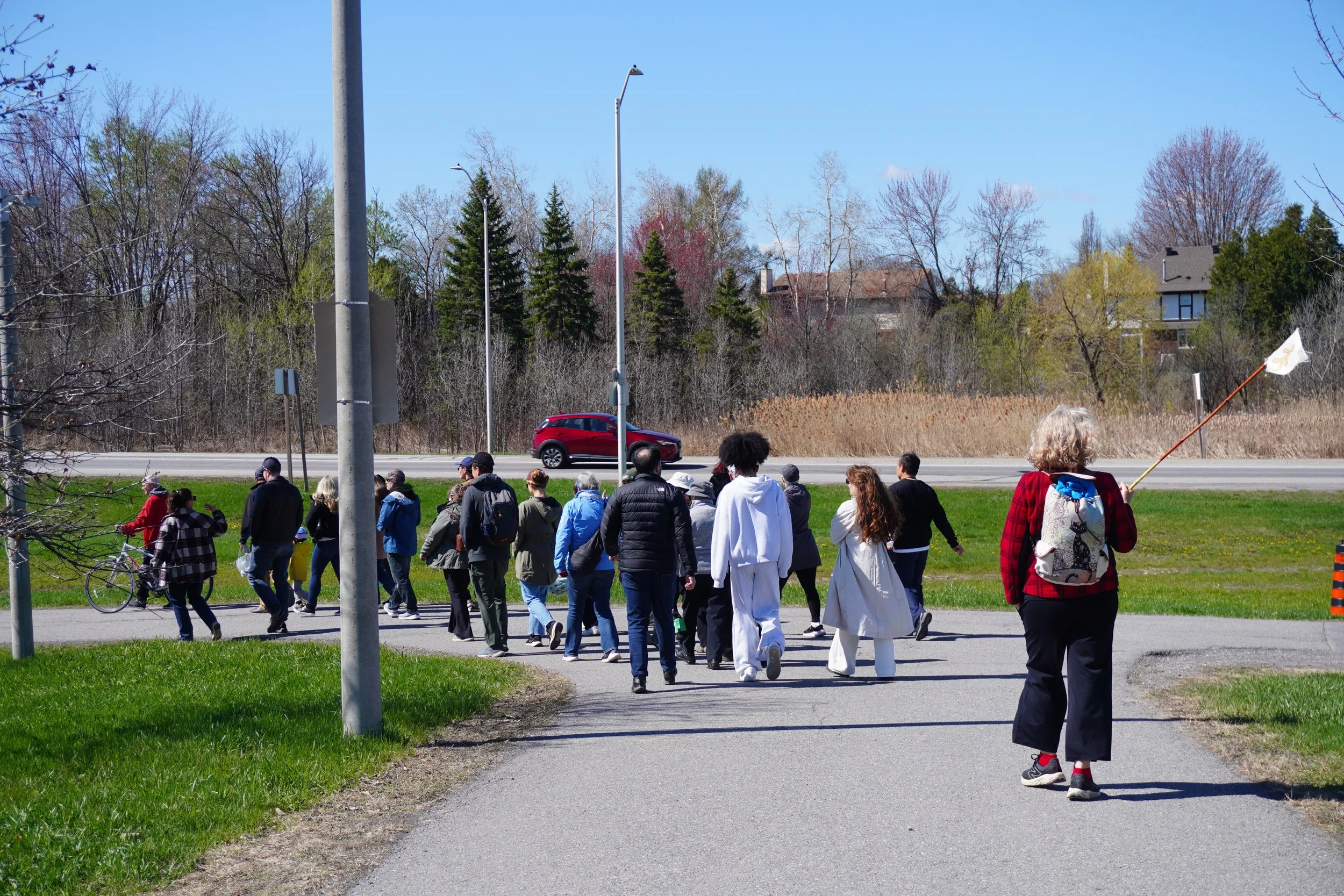
Participants walking back to the South Keys Shopping Centre parking lot. Photo taken by Sahara Shrestha at Ottawa, ON.
While the excitement was palpable, many attendees critically reflected on what they would like to see in the future such as affordable housing, accessibility to public transit, playgrounds, bicycle lanes, and places for gathering as a community. Folks were left with a positive outlook on key project priorities such as potentially larger 3-bedroom housing units that move away from conventional approaches that favour nuclear, heteronormative family structures.
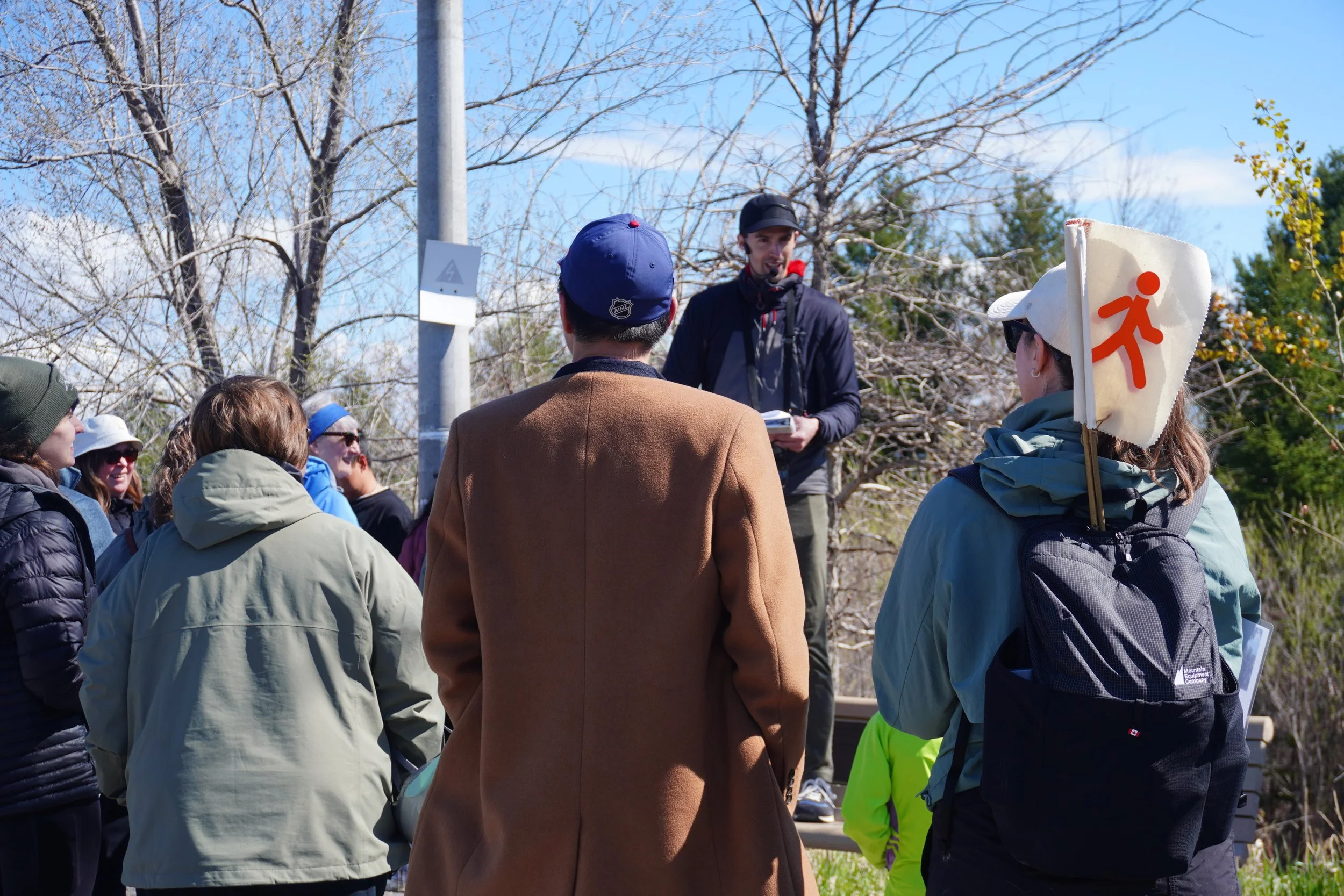
Walk leader Matt Pinder sharing the importance of community-led planning in the city. Photo taken by Sahara Shrestha at Ottawa, ON.
Ottawa: The Sociology of Third Spaces
Sahara Shrestha & Firdous Nizar
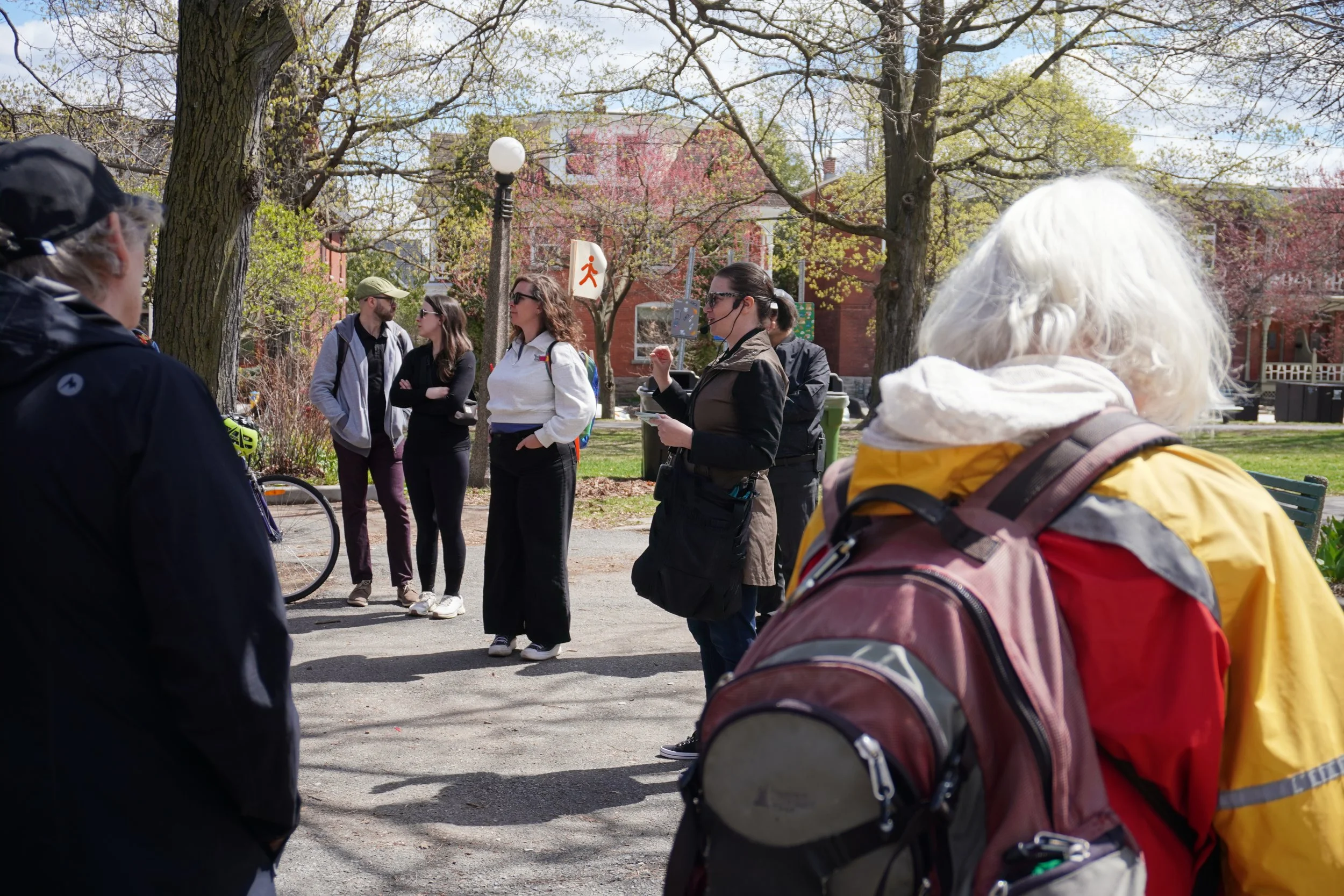
Walk leader Sarah Gelbard sharing the history of Dundonald Park to participants. Photo taken by Sahara Shrestha at Ottawa, ON.
Sahara: The title of the walk immediately caught my attention, and I shared with Firdous in hopes that we can attend together. I was especially curious because the meeting point was Dundonald park ,a place I pass by often but had never taken the time to learn more about.
Our second Jane’s Walk of the day shifted the conversation from future development plans into something equally important but often overlooked: the social spaces that bring people together. Titled “The Sociology of Third Spaces”, the walk explored the role of informal gathering places in fostering connection, belonging and community life. Led by Sarah Gelbard, adjunct professor and spatial justice expert at University of Ottawa, we started our walk gathered at Dundonald park, which has been around for more than a hundred years, with a recently upgraded splash pad making spaces for kids to play. This green space is the oasis in the busy centertown street. We could see people of various demography and understand the stakes they have in preserving this third space for people from all walks of life.
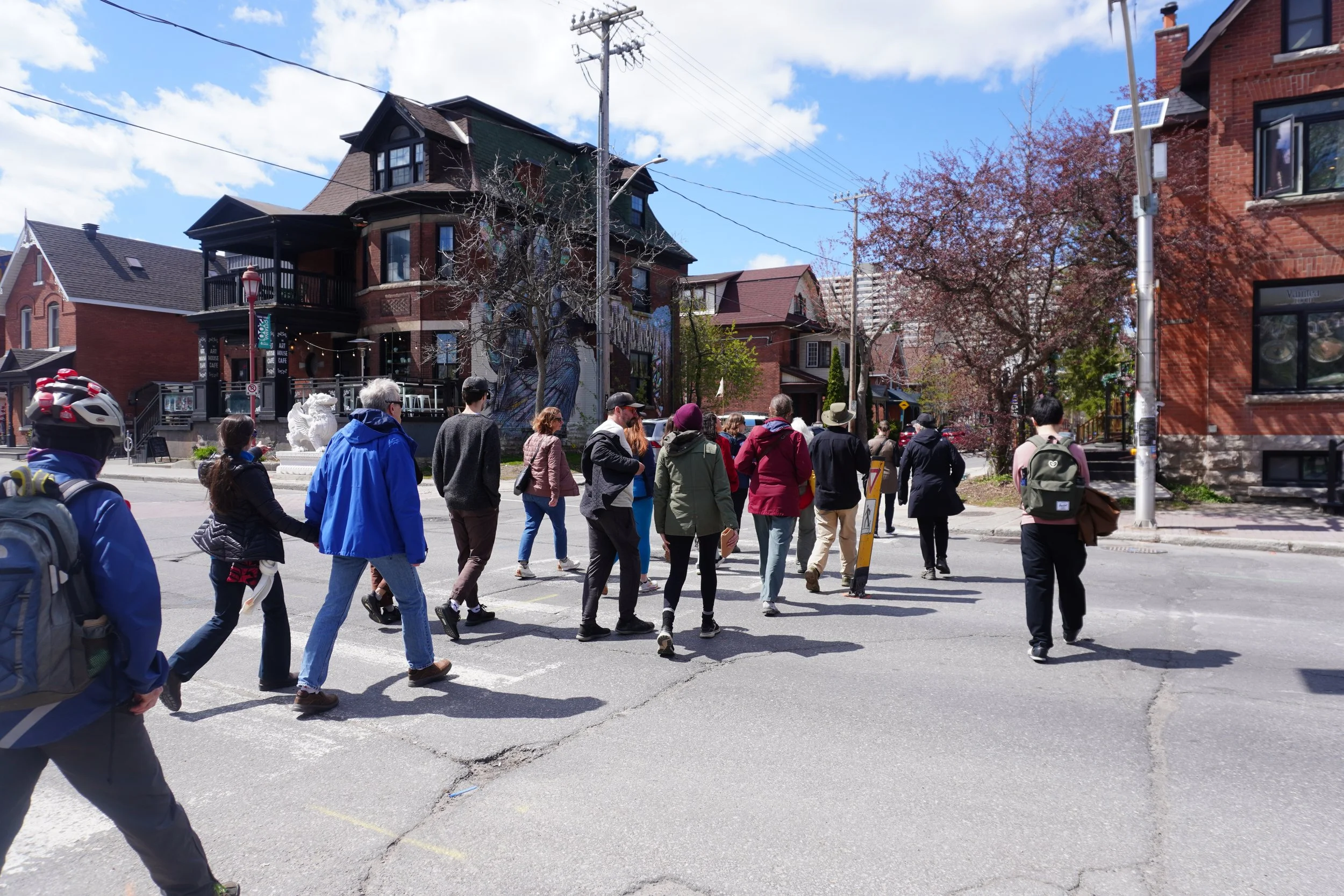
Participants crossing Somerset St toward the next stop of the walk. Photo taken by Sahara Shrestha at Ottawa, ON.
Grounded in the book, Ottawology by Tonya Davidson, the walk encouraged participants to look at the hidden sociological layers of seemingly neutral public spaces and infrastructure built by institutions with varying degrees of power and control over who gets to occupy such spaces. What started as a casual walk along this historical park quickly turned into a critical reflection on collective ownership of much-needed third spaces in the city that have otherwise strictly prescribed uses governed by shifting priorities and markets. We then walked along Somerset St to the next stop of the walk, the Rideau Curling Club. Here, we were given a walk down memory lane on the significant role curling has played in the neighbourhood, bringing people together and forging connections far beyond the sport. While clubs are typically exclusionary in nature, this particular establishment also doubles as a convention hall for events such as weddings and dance parties. This brought into question the need for third spaces that are unassuming (save for the noise complaints from nearby residents!) and yet integral to the social fabric of the city.
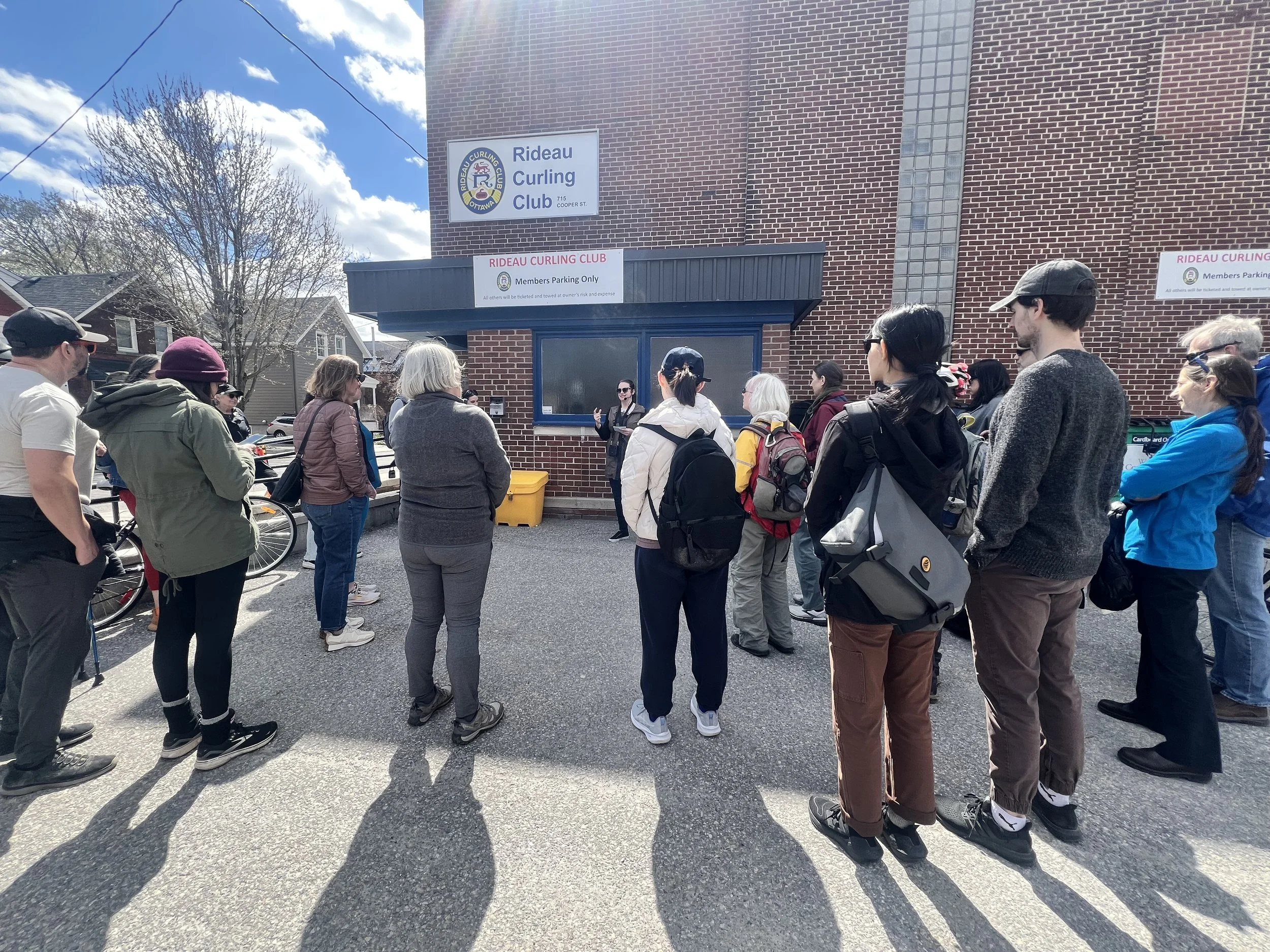
Walk leader Sarah Gelbard highlighting the need for third spaces for communities, such as the Rideau Curling Club. Photo taken by Sahara Shrestha at Ottawa, ON.
We then walked over to the Bronson Centre which has been the proud venue of many renowned musicians and artists over the years. The building stays standing as a prime example of adaptive reuse, going from a busy high school in the heart of the city to a space for community and charity. Although we didn’t enter the building, we discussed the importance of community-led mobilization of resources toward revitalization projects that continue to sustain the very cultural landscape of the city. Next stop was the Nanny Goat Hill Community Garden that started a few decades ago and now features over a hundred plots. It was interesting to know that the residents are actively using the plots for vegetable gardening and very keen to keeping the site for gardening instead of another development. We also visited the Tech Wall Dog Park, which is nestled between new developments and adaptive reuse projects. The discussion focused on the role of public art in shaping vibrant and memorable spaces, highlighting how creative interventions can strengthen local identity, foster community connections and bring life to public spaces.
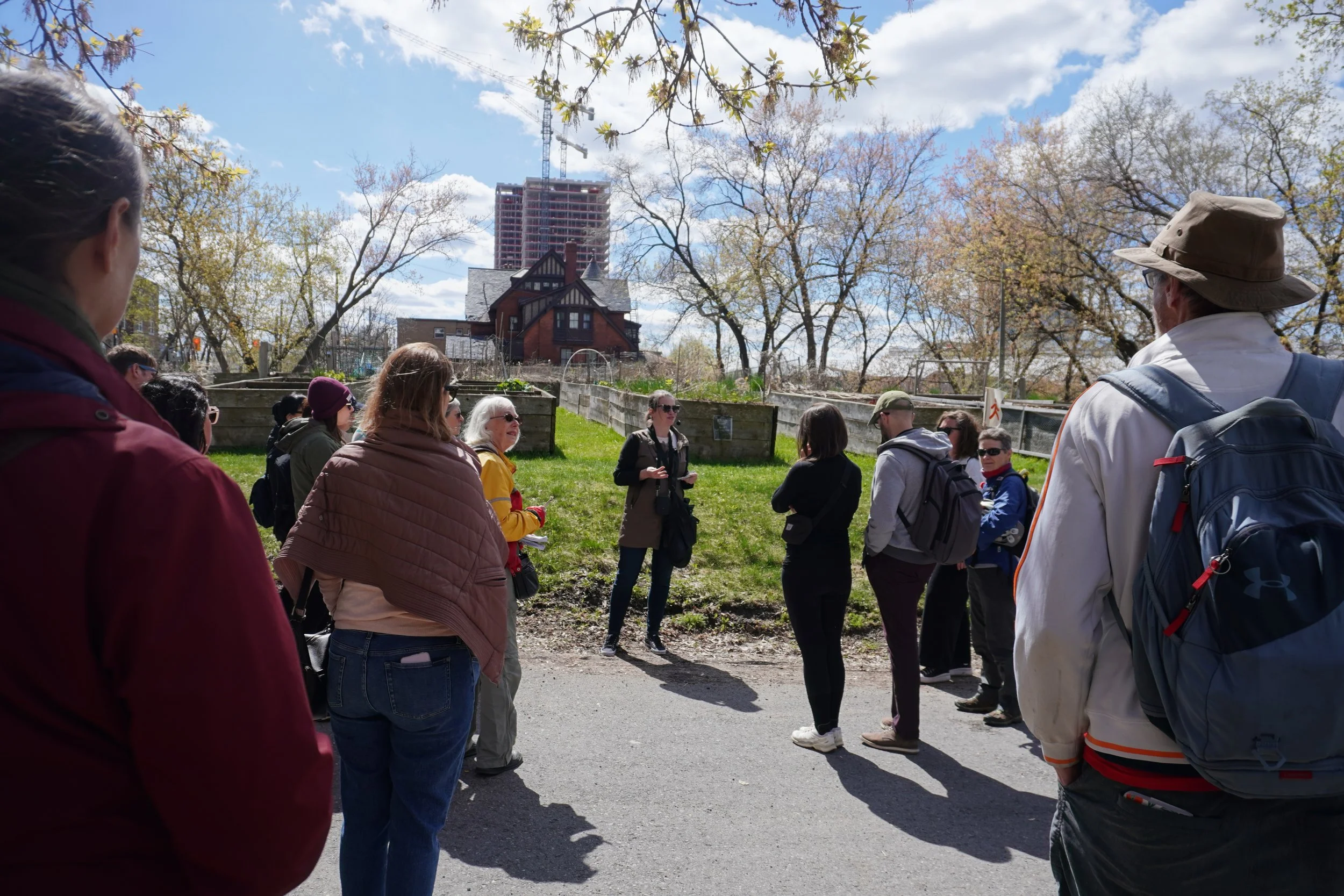
Participants reflecting on the importance of community gardens such as the Nanny Goat Hill Community Garden. Photo taken by Sahara Shrestha at Ottawa, ON.
The walk concluded at two parks: Bronson Park, which is hidden between high-rise residential apartments, and the Garden of the Provinces and Territories, which features memorial monuments, and flags of provinces, overlooking the Library and Archives Canada and similar institutional buildings in the city. As told by the speaker, this park is very popular for skateboarding and is well used by the local residents. While one space acts a microcosm of greenery and urban tranquility, the other symbolizes national aspirations to unite diverse provinces and their people under one collective identity.
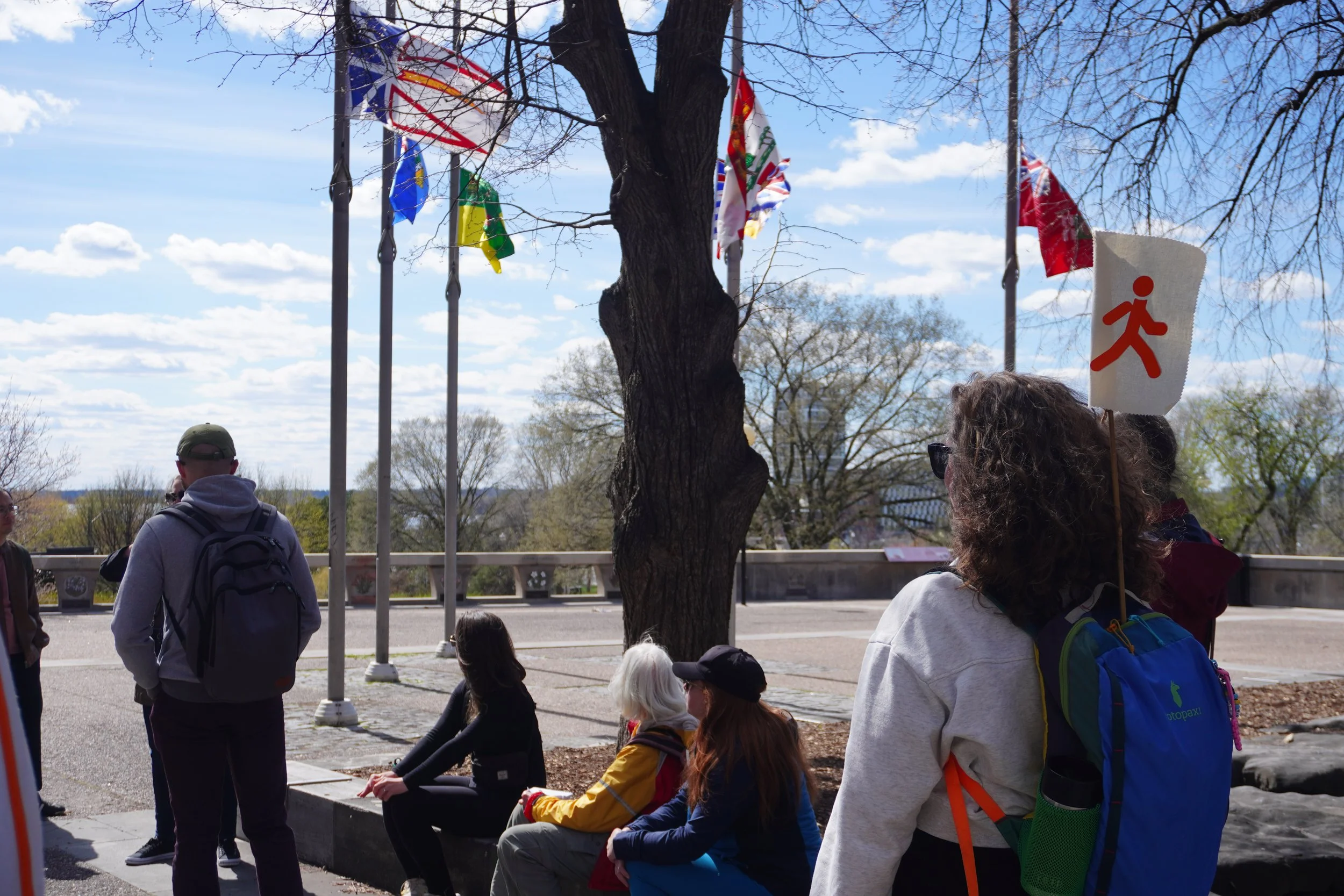
Jane’s walk attendees reflecting on third spaces at the Garden of Provinces and Territories. Photo taken by Sahara Shrestha at Ottawa, ON.
A walk in progress
Across these four cities and four very different walks, we see the same themes emerge. Whether Whyte Ave or South Keys, we confront the issue of car-centric sprawl and keep returning to the same question: what would these places look like if they were built around people instead of vehicles? In Kitchener's preserved worker row houses and Ottawa's conservation of the Bronson Centre, we see heritage as a form of resistance — a way to hold space for the people and communities that weave the social and cultural fabric of our cities. And in the walks centring redevelopment projects, we are reminded that public space isn't neutral and that it’s shaped by who gets to be there, who gets to decide, and who gets left out.
Beyond the theories of feminist urbanism, these patterns showed up in the form of cobblestones, sidewalks, row houses, curling clubs, community gardens, and more.
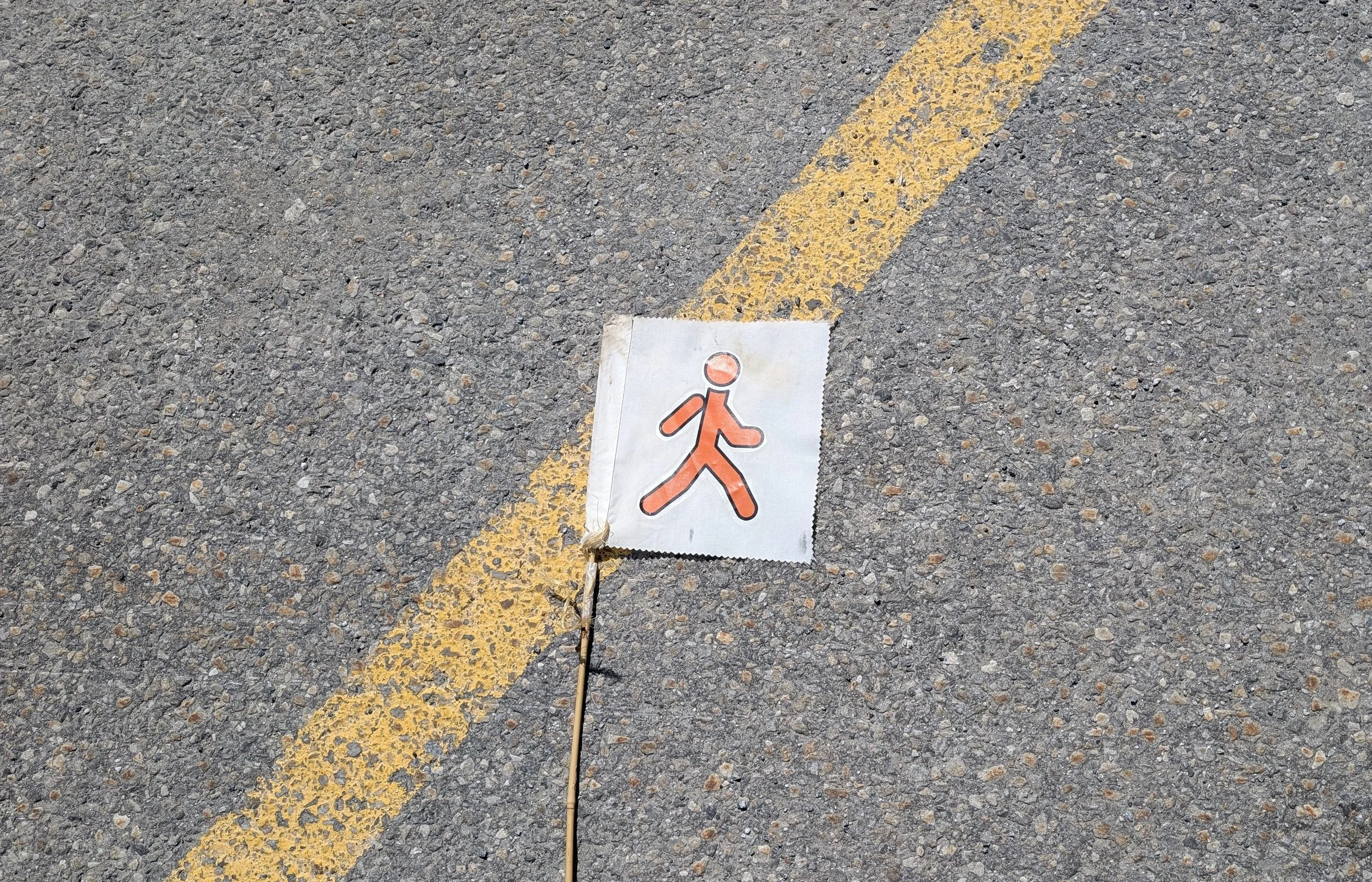
Jane’s Walk flag on the ground of a parking lot of one of the third spaces visited by Sahara and Firdous. Photo taken by Firdous Nizar at Ottawa, ON.
And that’s the power of Jane's Walk. It makes us reflect collectively on the questions that planning documents can't quite capture. It activates the city into a classroom where neighbours teach neighbours on what matters the most.
We came away inspired — and a little impatient — to keep walking, keep listening, and keep showing up for the cities we want to live in.
Until next walk!