We Been Here
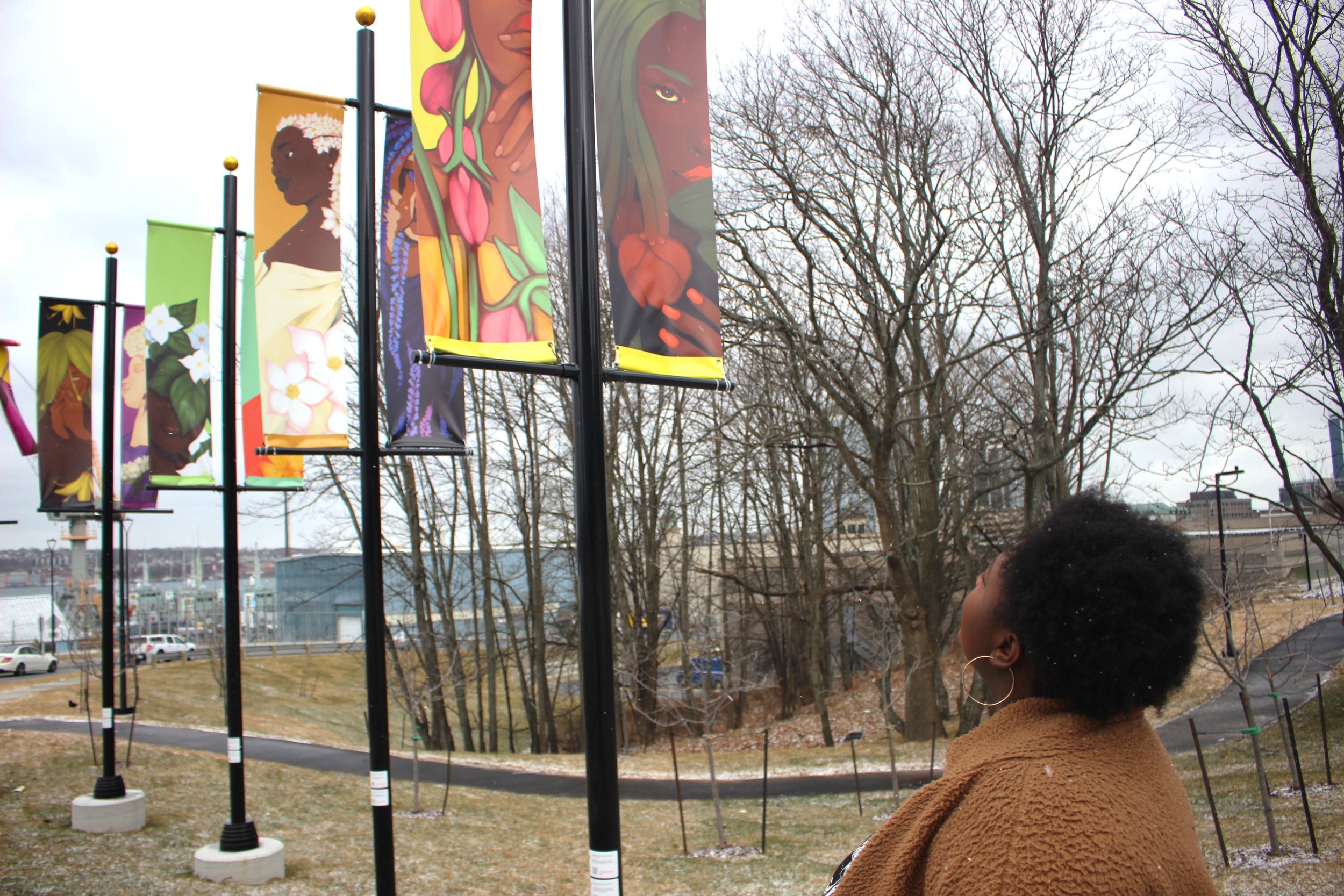
Carmahn McCalla gazes at one of her installations- the woman on the front right banner has tulips in her hair. (Photo taken by Ally Lord at Halifax, Nova Scotia).
It’s a chilly January day when Carmahn McCalla picks me up. So cold, I can see my breath swirl through the air as I exhale. We’re driving downtown to see 15 women with flowers in their hair. The women are 7 feet tall and move with the wind.
These people are part of Carmahn’s art installation Home Grown, a new program of temporary public artworks within the redeveloped Cogswell District titled InterCHANGE. McCalla’s work consists of 15 vinyl banners mounted on lightposts in downtown Halifax. The women featured in these installations are each seen with a Nova Scotian plant or flower in their hair. Mayflowers and Golden Rod flow down shoulders, while lupins are woven into braids. McCalla’s installation touches on memory, place, Black identity, and feminism, all in a very visceral way. The vinyl banners are a powerful juxtaposition next to ordinary urban objects such as street signs and construction, bringing beauty to an otherwise transitory scene of urban “development” and rubble.
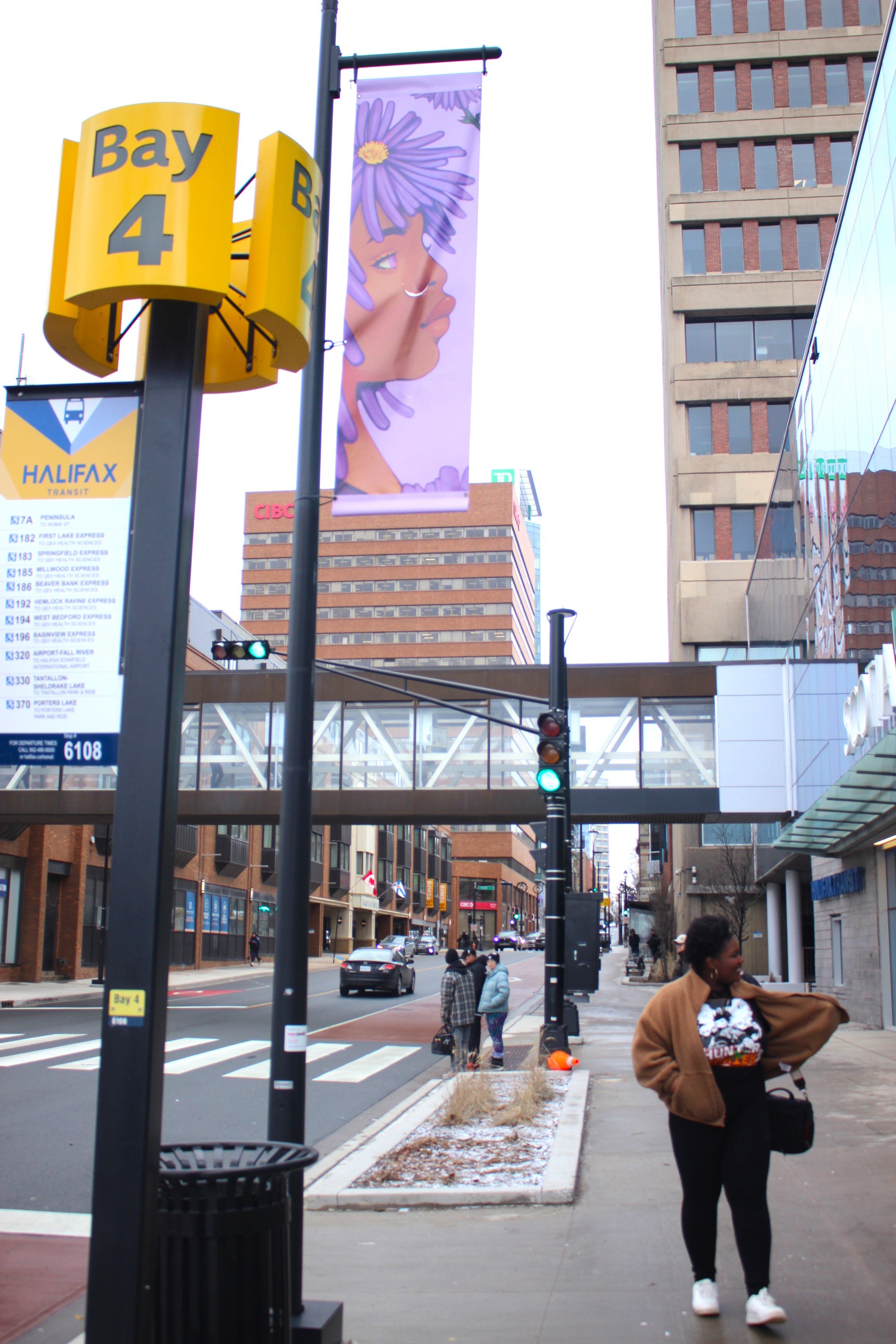
McCalla walks North down Barrington Street. Her work brings light and freshness to a city in flux. (Photo taken by Ally Lord at Halifax, Nova Scotia).
“I wanted to share how something as simple as a flower can hold deep emotional and cultural meaning,” McCalla shares with me, as we stroll south down Barrington St. “In my installation, Native Nova Scotian plant species are paired with common Black hairstyles. Homegrown is a reflection of how African Nova Scotians, like these flowers, are deeply planted in this land.”
As a young artist, barely scratching 24 years old at the time of the project’s installation, Carmahn has a message to share.
“I want to use my art to tell people’s stories,” says McCalla. “And one of my main messages is, We Been Here. I wanted to honor my community, my childhood. A lot of these flowers are ones I saw while I was growing up, lining the highways, and blooming between the cracks in the asphalt.”
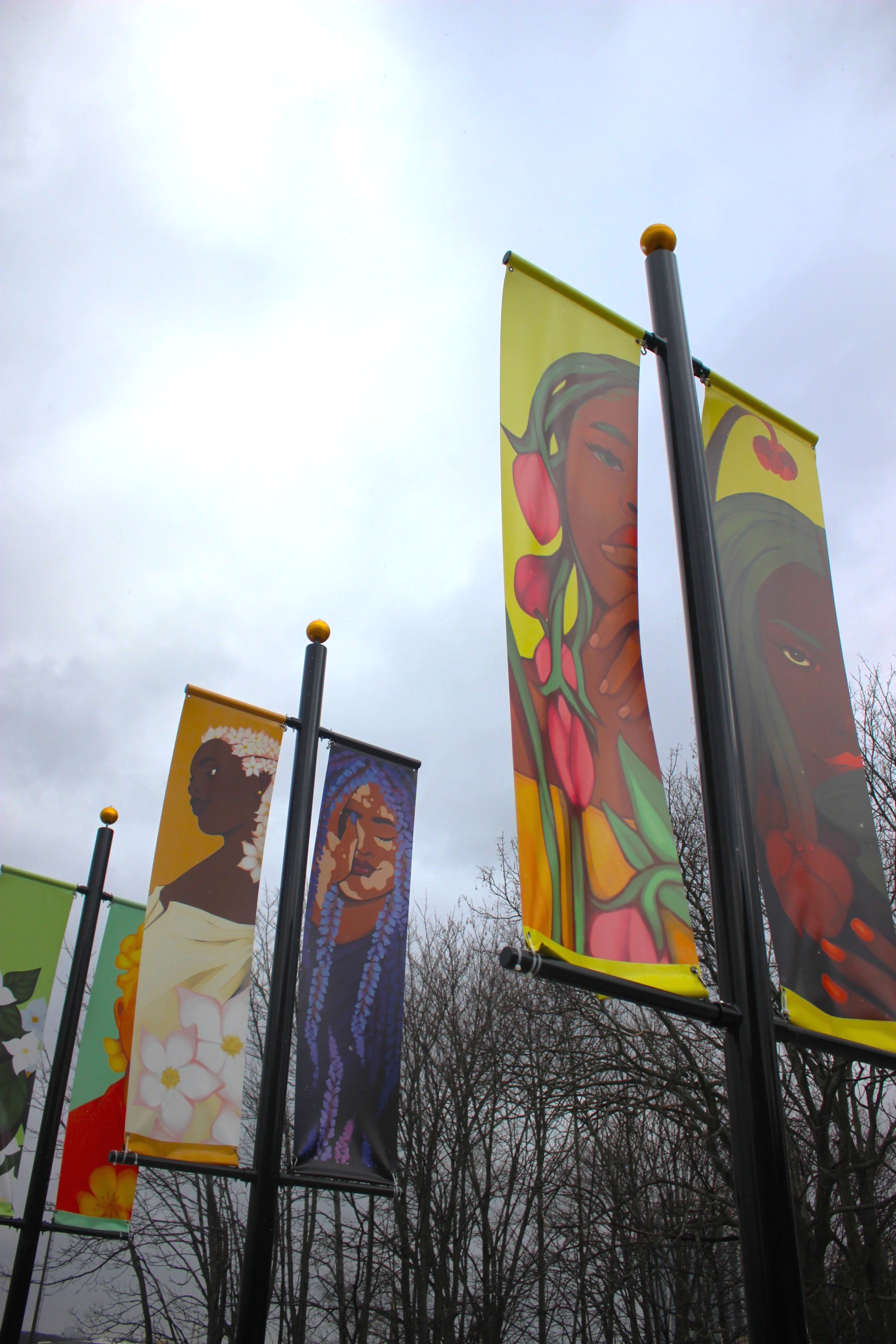
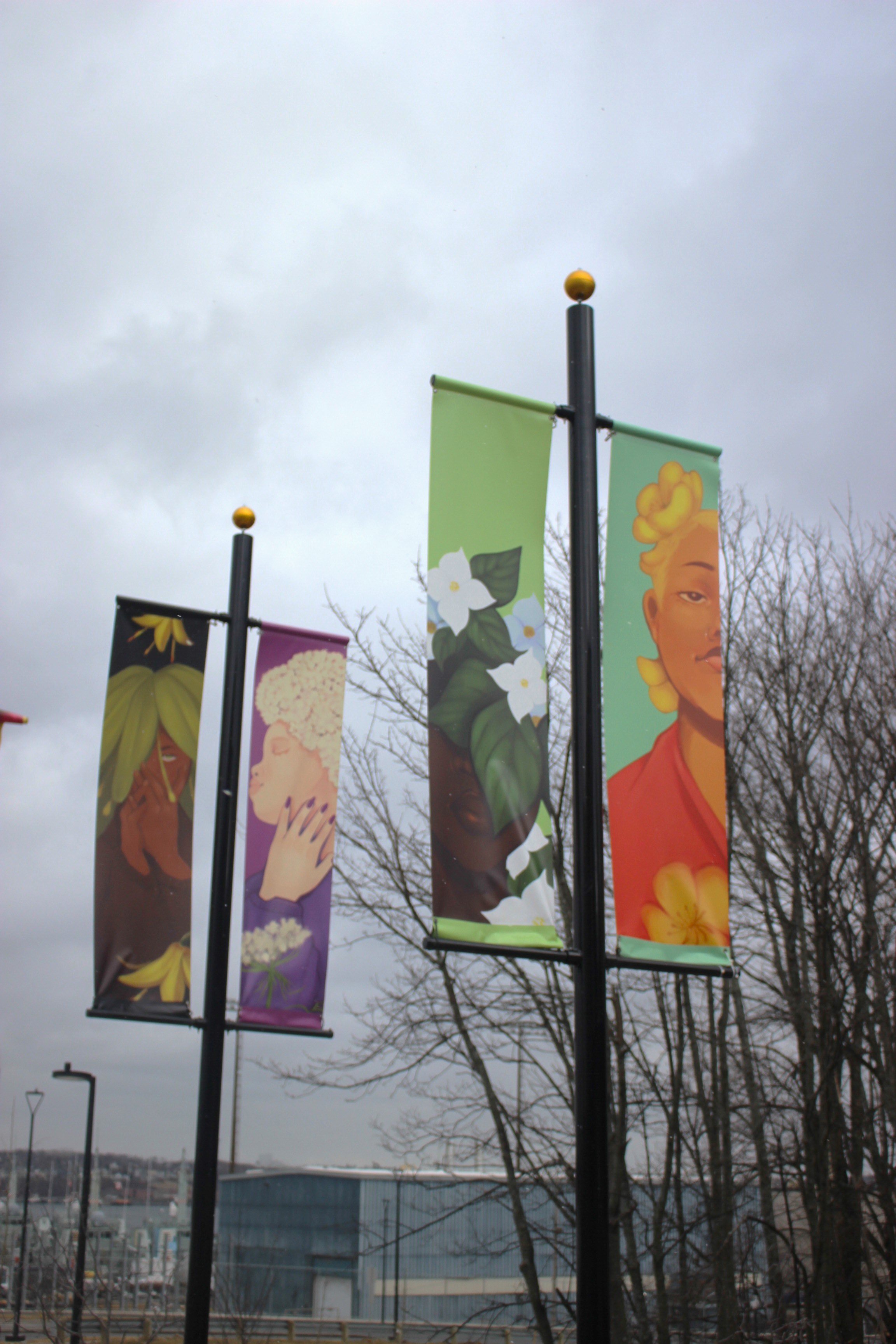
“When you’re Black in the diaspora, having a culture, a country, and a language tied to you lends more legitimacy. What I want people to know is that as Black women in Nova Scotia, we do have a culture. We know this land, we know what’s good, we know how to farm, how to till the land, how to interact with plants and nature.” With over 400 years of history here in Nova Scotia, and 52 historical Black communities, Black folks are part of Nova Scotia's deep connection to African heritage and resilience.
Despite the deep connection African Nova Scotian’s hold to the land, community members are being displaced through gentrification–violently pulling them further away from their roots.
The North End of Halifax, where McCalla’s installations begin, is traditionally a hub for the Black community. According to Statistics Canada the proportion of residents identifying as Black in the North End area fell from 61% in 2006 to 44% in 2016, and further to 32% in 2021. This is a nearly 50% proportional decline over 15 years. This decline in the Black population share coincides with rising incomes, escalating rents, and redevelopment in the North End. These patterns are widely recognized as indicators of gentrification.
This installation of Black bodies through art–and women, at that, is a powerful physical reminder of whose land we are on. African Nova Scotians are a distinct people whose histories, legacies and contributions have enriched this part of Mi'kma'ki, known as Nova Scotia, for hundreds of centuries.
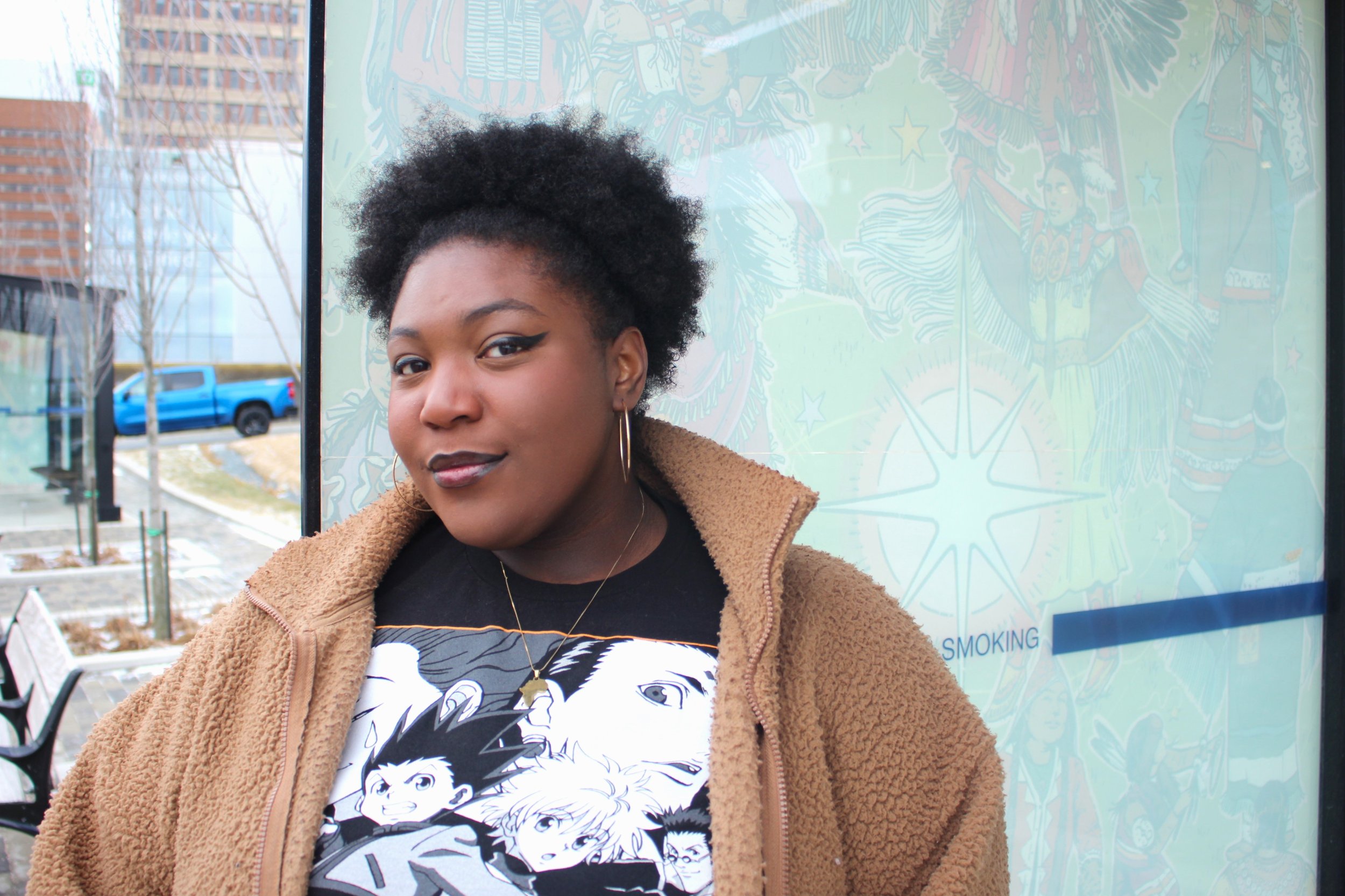
Carmahn McCalla, a 24-year-old artist in Halifax, NS, aims to inspire and create dialogue with her art. (Photo taken by Ally Lord at Halifax, Nova Scotia).
As we make our way onto the Cogswell interchange, I ask Carmahn if she has any last messages she wants HomeGrown to instill, any last seeds she wants to plant.
“Enjoy the view, the flowers, the faces, but think of how you can give back. February is a hot time (Black History Month), but after? Crickets. We’re here all year. We’re black all year. If organizations and people aren’t maintaining effort all year, it’s performative.”
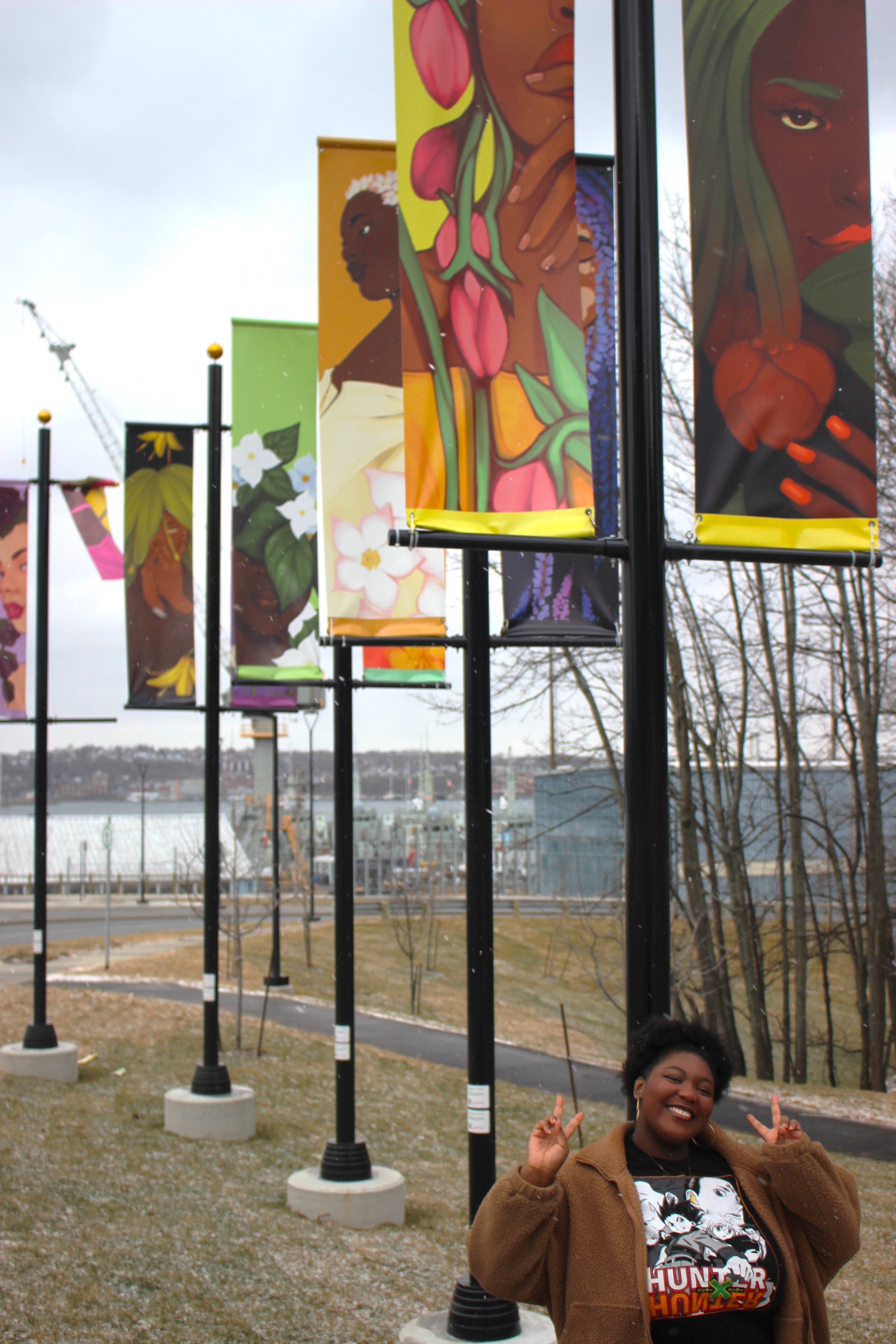
“This experience has allowed me to see myself as an artist. I want to honour my community. My childhood. My people.” (Photo taken by Ally Lord at Halifax, Nova Scotia).
Heading back towards the car, one of the installations flaps against the maritime breeze. The ocean is a few hundred metres away, and you can feel it in the air. Although the woman on the banner appears pensive, you could swear that for a brief moment she was smiling.
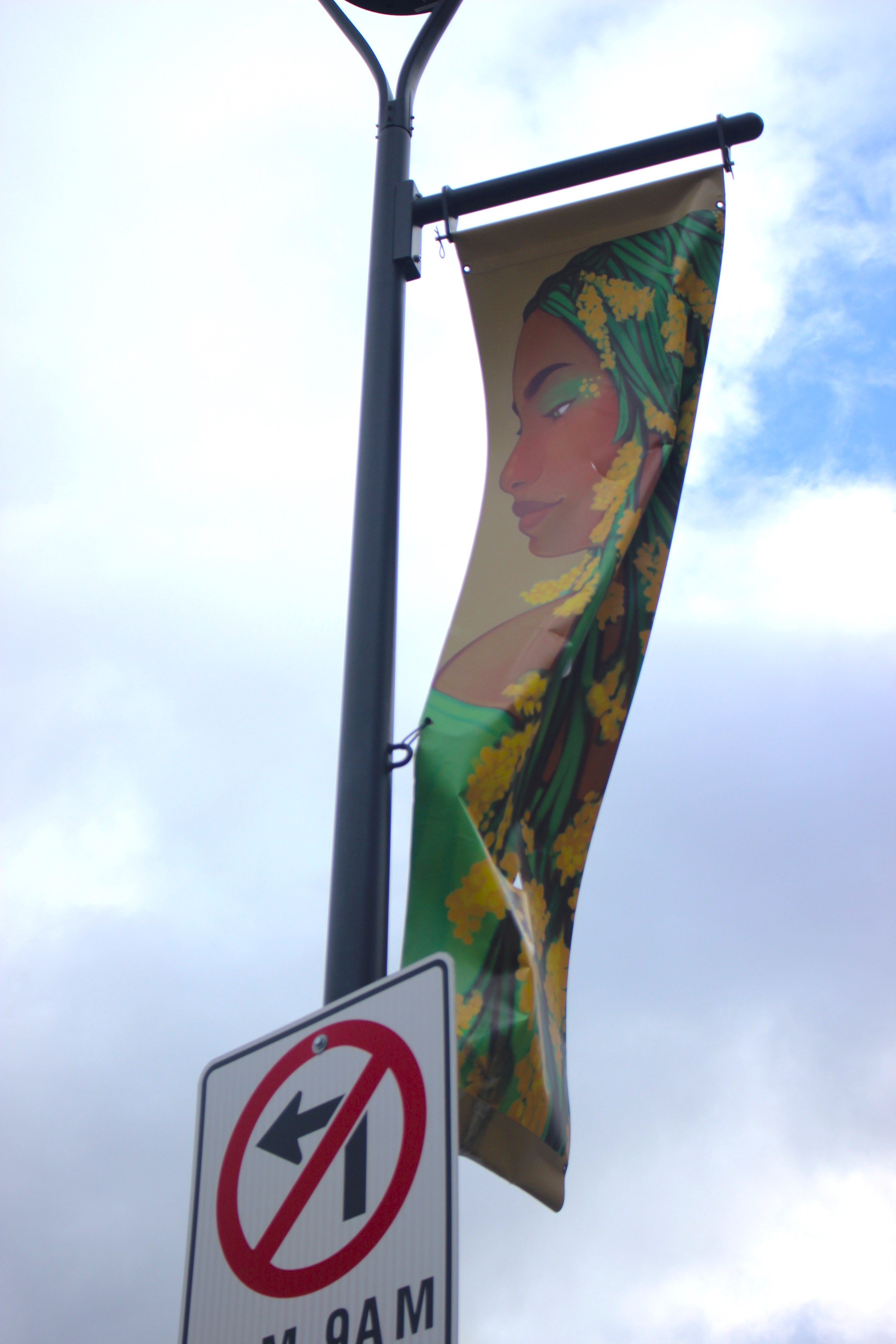
The pensive muse in question. (Photo taken by Ally Lord at Halifax, Nova Scotia).
Artist Bio
Carmahn McCalla (@carmahnm.art) is an African Nova Scotian and Jamaican visual artist whose work explores Black identity, nature, and gender. Rooted in digital illustration, her multidisciplinary practice spans animation, painting, graphic design, and web design. Largely self-taught with formal studies at Dalhousie University, NSCAD, Athabasca University, and OC Art Studios, Carmahn has exhibited work in festivals, businesses, and public projects. Her illustrations and animations appear in books, theatre, and murals, all reflecting a commitment to celebrating underrepresented voices. https://carmahnart.com
Resources
InterCHANGE: Temporary Art Gallery at Cogswell by IOTA - Halifax Regional Municipality.