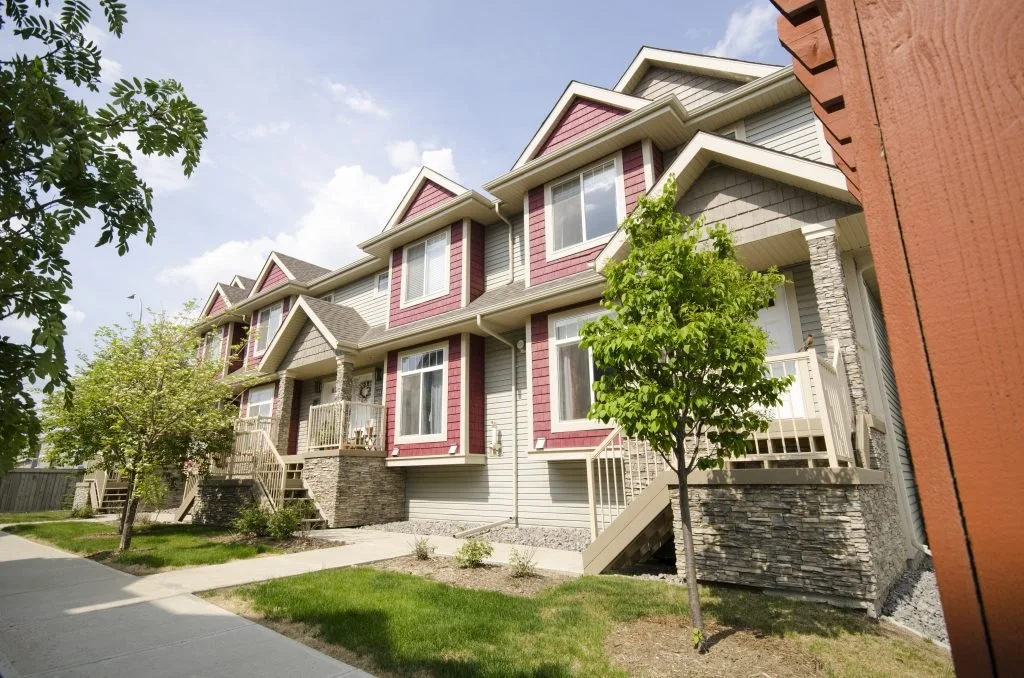
Multi Residence Row Summer. Source: City of Edmonton.
A home is more than just a built structure. It’s where families care for one another, where newcomers establish roots, and where people build the stability they need to actively participate in their communities.
At first glance, zoning may seem like a technical matter, best left to urban planners and developers, but in reality it shapes how people interact with their communities everyday. That is why the Alberta government’s decision to roll back Edmonton’s Zoning Bylaw renewal deserves a closer look. Not only as a debate but a question of equity.
On October 8th, the provincial government announced that Edmonton would be required to return to its pre-2024 rules for resident infill development and reinstate earlier minimum parking requirements. The province has directed the city to amend its bylaw within three months.
Zoning determines what kind of homes can be built, where they can be located, and how easily neighbourhoods can adapt to changing needs. Edmonton’s updated bylaw, which came into effect in January 2024, was designed in part to enable a broader range of housing types to face the housing crisis we are seeing across the country and the world.
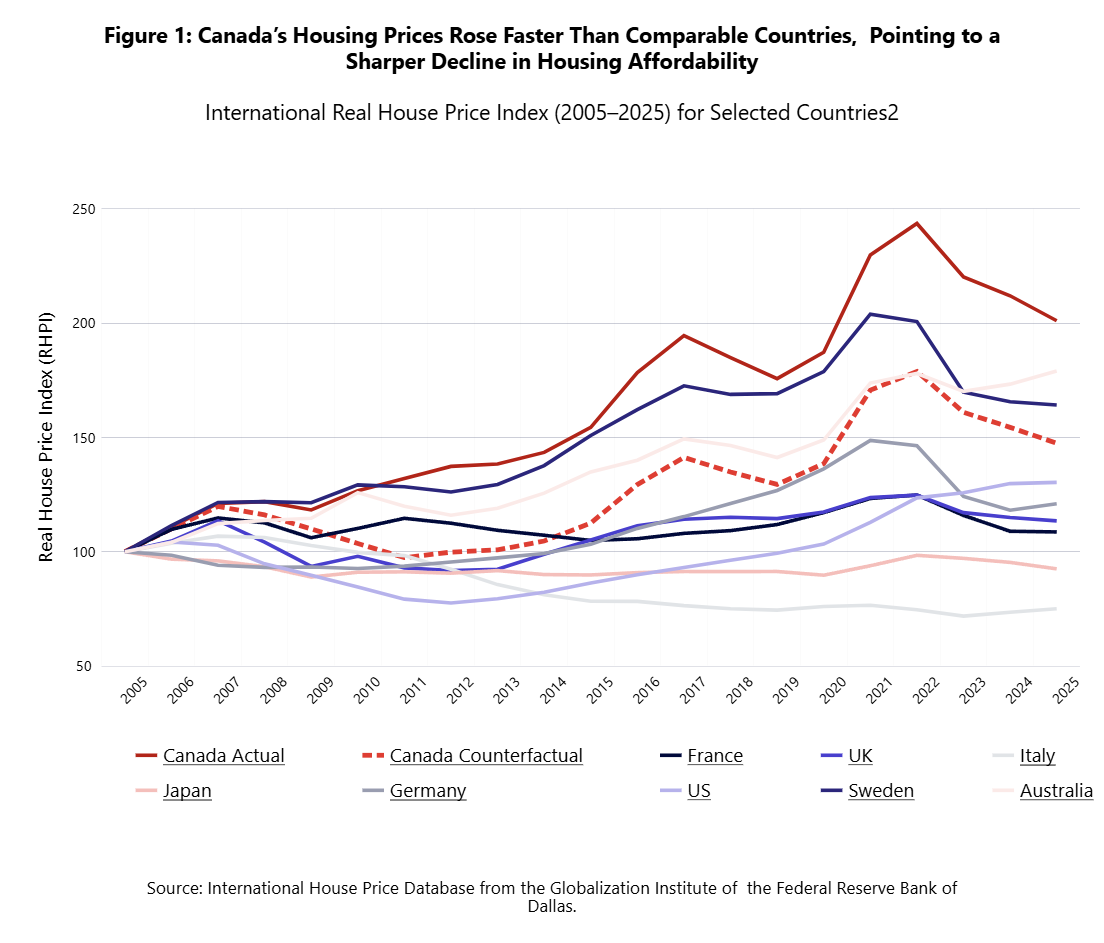
Canada’s housing prices rose faster than comparable countries, pointing to a sharper decline in housing affordability. Source: International Housing Price Database for the Globalization Institute of the Federal Reserve Bank of Dallas.
Seeing this unravel now we’re left to ask: What happens when a city’s housing framework becomes less responsive to the people who need housing choices the most?
Zoning shapes housing affordability
While zoning is not the only factor that affects housing affordability, zoning influences how much housing can be built and what forms it can take. Edmonton’s Zoning Bylaw Renewal sought to make room for a greater variety of housing, including row houses, courtyard housing, and small apartment buildings in neighbourhoods where such options had been restricted.
Allowing more housing types can create opportunities for smaller, more attainable homes and provide alternatives to increasingly expensive detached homes.
The provincial rollback threatens to narrow that flexibility by returning to earlier rules governing housing types, density, and building heights. Reinstating parking minimums may also increase development costs, adding to the cost of delivering new housing.
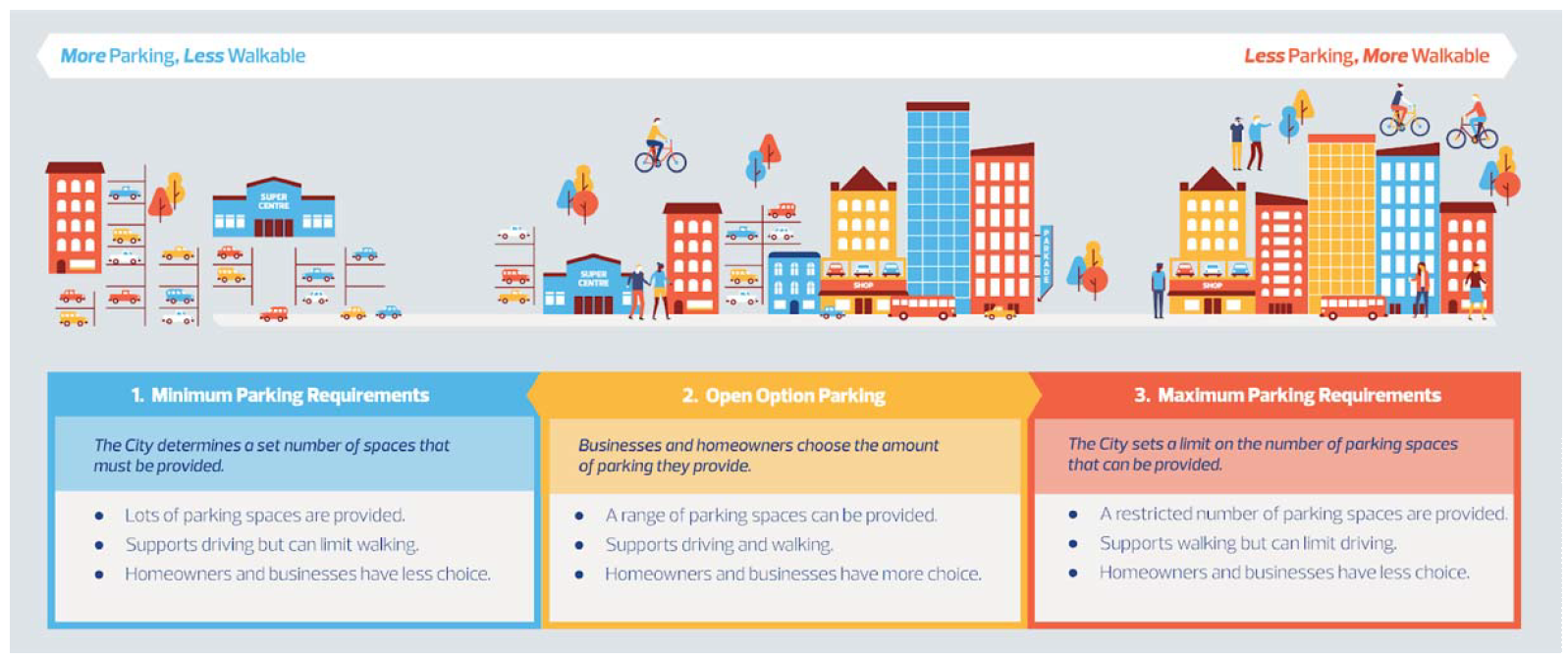
Parking recommendations for the City of Edmonton. Source: Cut & Paste Design Inc. (2019) Parking Requirements Spectrum, City of Edmonton.
These changes do not automatically mean rents will rise or that every proposed home will disappear. However, restricting the types and amounts of housing will significantly limit the supply of housing options, and make it harder for the market to respond to affordability challenges.
When neighbourhoods predominately accommodate detached homes, people who cannot afford to purchase or maintain those properties will have fewer opportunities to live in established neighbourhoods. They will instead face difficult choices such as moving to more distant neighbourhoods, accepting less suitable accommodations, or competing for a limited supply of lower-cost housing.
Housing insecurity does not impact everyone equally. Women’s housing needs are shaped by persistent income inequalities, unpaid caregiving responsibility, and family dynamics.
Housing affordability is not just about building more homes. It is about ensuring that people have access to a range of housing options at different price points, in every neighborhood to accommodate all stages of their lives. This change to the zoning bylaw determines whether those choices are even possible anymore.
Proximity to essential services makes all the difference

Family walking on platform at the Muttart LRT Station, City of Edmonton. Source: why.edmonton.ca.
Living near schools, public transit, healthcare, childcare, and support networks can make all the difference between a manageable routine and an exhausting daily struggle.
A wider range of housing options—including duplexes, rowhouses, secondary suites, and smaller multi-unit buildings—can create more possibilities for women to find housing that fits their household, income, and caregiving responsibilities. For women providing care to children, aging parents, or relatives with disabilities, proximity matters. Housing costs compete with other necessities, including childcare, food, transportation, and education.
The implications are especially important for women facing multiple barriers. Including students, Indigenous women, racialized women, women with disabilities, and women who are newcomers to Canada. These groups are not homogenous, but face overlapping forms of economic and social exclusion that can compound housing insecurity.
When housing policy limits choice, the burden often falls hardest on those with the least financial flexibility.
Making room for multigenerational living
For newcomers, finding housing is often one of the first and most consequential steps toward establishing a life in Canada.
Newcomers may arrive with limited savings, uncertain employment, unfamiliarity with the local rental market, or no established support network. Some experience barriers related to discrimination, language or difficulty of establishing Canada credit and rental histories.
Housing that is affordable, appropriately sized, and located near employment, school, transportation, and community services helps families settle and thrive. Housing diversity matters because households do not all look alike.
Historical zoning assumptions from decades ago often reflect the previous narrow ideas of family and household structure. More flexible zoning can help make room for homes that support extended families, independent living, and different household arrangements.
While every zoning restriction does not directly harm newcomers, or suggests that zoning reform alone can eliminate housing discrimination, it highlights the importance of designing flexible housing policy around the diversity of people who actually live in our cities today.
Our cities cannot credibly celebrate diversity while limiting its ability to accommodate diverse households.
The Future of Our Neighbourhoods
If our neighbourhoods are unable to make room for the people who need them, who are we building them for?
The Alberta government’s rollback of Edmonton’s Zoning Bylaw Renewal is about more than just how many units can fit on a residential lot. We’re now faced with broader questions on the kind of city Edmonton wants to become, and who will be able to afford a place in it.
It’s also worth noting that within planning debates, the voices that carry weight are often people with more time, financial resources, established community connections, and familiarity with municipal processes who may find it easier to influence decisions than renters, newcomers, caregivers, and lower-income residents. From what we’ve seen in Edmonton, from heated Facebook group debates, townhalls, and local protests, is that to even engage in the conversation has fractured trust, connection, and a sense of belonging.
The choice should not be between preserving neighbourhoods and welcoming new neighbours. It should be about building neighbourhoods that can do both, and withstand the challenges ahead.
For women balancing caregiving and a full time job, housing options can influence their routine and financial independence. For newcomers, suitable housing shapes their ability to settle, access services, and build community. For families, housing diversity can determine whether they can find a home that meets their needs as their needs evolve.
A city’s success should not be measured solely by property value, the preservation of existing built forms, or the number of homes it builds. It should also be measured by whether people at different income levels, in different household structures, and at different stages of life can find a place to belong. Housing diversity is about more than just buildings—it’s about dignity, opportunity, and the right to participate in the life of a city.
As my hometown considers what comes next, women, newcomers, renters, seniors, people with disabilities, the 2SLGBTQIA+ community, and people facing housing insecurity need to be considered in the conversation as people whose lives are directly affected by these decisions.
Resources
Edmonton infill: city must return to pre-2024 zoning bylaw - City News
Checking in with Edmonton’s zoning bylaw - Alberta Land Institute
Questions linger over Edmonton infill after special city council meeting - Edmonton - Globalnews.ca
Province clarifies infill expectations for Edmonton amid developer, city confusion
Edmonton Zoning By Law: Residential Land Use & Zoning Matrix - City of Edmonton