
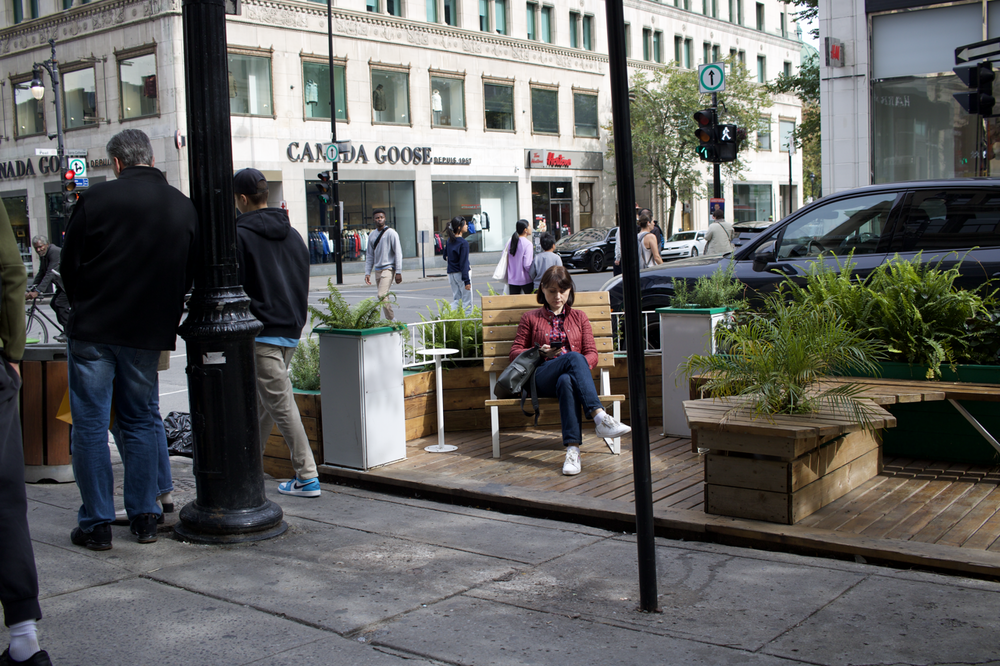
Woman relaxing in a parklet in downtown Montreal. Photo taken by Nicole Roach in Montreal, QC.
In cities around the world, public spaces often fail to reflect the needs and experiences of half of the population: women. From transit systems to parks, urban infrastructure has historically been designed by and for typically male, able-bodied and economically-privileged populations. Every corner of the city carries the imprint of decisions made mostly by men, and vital perspectives of women’s experiences and needs have been overlooked. As a result, women of all ages and identities face a range of barriers and vulnerabilities in navigating urban environments.
Placemaking refers to a collaborative process that centres community voices in shaping public spaces that are safe, accessible, inclusive, and vibrant. It is a powerful approach to urban design that shapes public space to foster community, well-being, and connection. Placemaking for women applies a gender lens to understand who is included, how they experience space, and what barriers exist to participation.
Why Placemaking needs a Gender lens
Women perceive and experience cities differently from men and use public spaces in distinct ways. Their daily roles often involve care work and multitasking trips and time constraints shaped by social roles. Think of a mother with a stroller or a caregiver pushing a wheelchair to navigate a park. When women and their unique needs are prioritized in placemaking conversations, cities become more equitable for everyone.
In a webinar Women + Place, organized by Placemaking US, when asked about the first word that comes to mind when you think about women’s experiences in public space, words like cautious, uncomfortable, and safety were highlighted. This shows that women’s experiences in public space are often shaped by concern and vigilance rather than comfort or enjoyment. The prominence of these words highlights how safety remains a dominant factor in reshaping how women navigates public spaces.
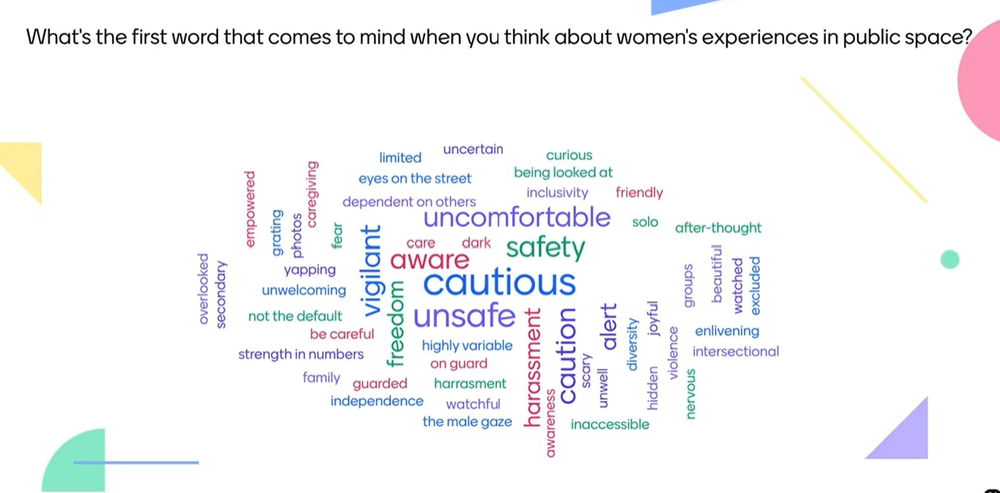
Word cloud from the mentimeter survey during the webinar Women+Place organized by Placemaking US.
Cities have complex relationships with gender. Their planning, layout, management, and mobility services can undermine different people’s abilities to effectively experience the space. In cities across the world, women of all ages and identities face a range of barriers and vulnerabilities. As a result, billions of women are underserved by the urban environments in which they live and work.
What does Placemaking for Women look like
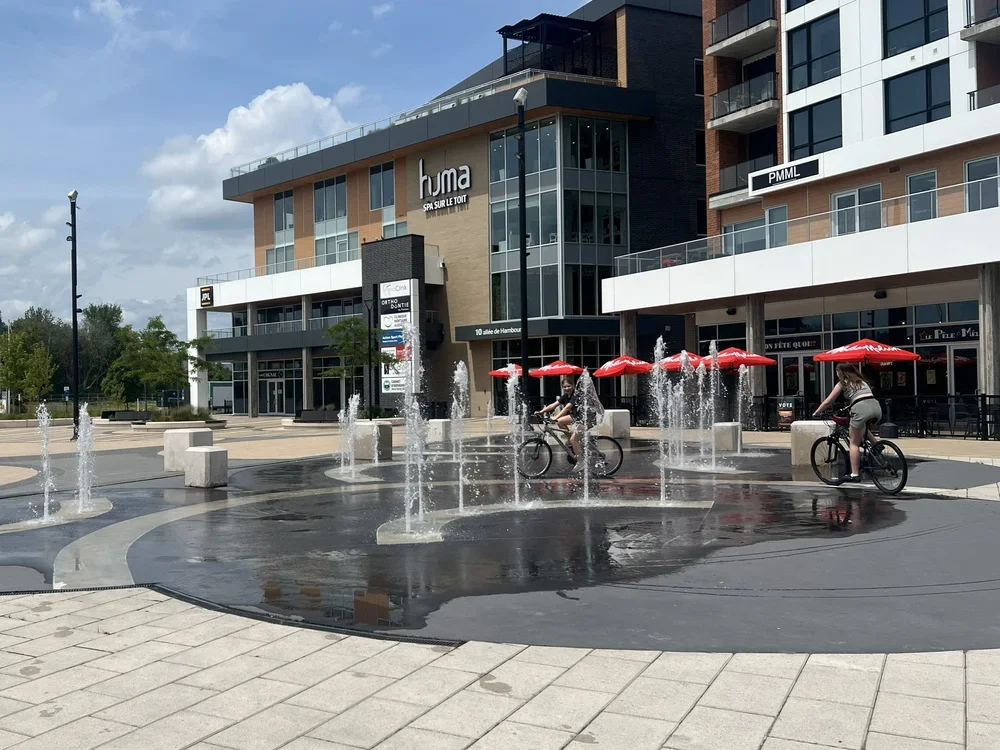
Teen girls cycling around a water fountain. Photo taken by Sahara Shrestha in Gatineau, QC.
Placemaking for women means addressing these issues head on. It is not about creating “women-only” spaces, but about ensuring that all spaces are designed inclusively with attention to their diverse lived experiences.
In a roundtable discussion on Placemaking for Women in Global Placemaking Summit in Toronto in June 2025, the discussion streamed around lack of safe and accessible spaces that are inclusive, challenges in integrating diverse experiences and needs of women in planning processes and implementing socially and economically equitable urban development.
For instance, participants highlighted the absence of a comfortable third space for women in the city that requires comprehensive measures to ensure inclusivity in urban development. There is a lack of space that can provide women a safe space to experience and linger. These include poorly-maintained public realm, restricting women’s mobility, inaccessible washrooms and parks without clear sightlines.
Key Principles for Gender Inclusive Placemaking
Safety Beyond Surveillance
Just having a CCTV camera doesn’t ensure the safety of women, especially in dark alleys. For many women and girls around the world, just passing through a public space, a market, a crowded street or riding the bus, is cause for great anxiety. The threat of sexual harassment can be terrifying and can have lingering psychological impacts and consequences. They often experience feelings of insecurity and vulnerability when navigating public spaces, particularly at night. To address this, public spaces such as pathways, parks, and transit stops should have ample lighting. Clear sightlines should be maintained with open visibility to reduce hidden corners. The Women after Dark series by The Gendered City explores behaviour of women, highlighting tactics employed to keep themselves safe, as well as interactions with their surroundings. It serves as a design guide in shaping practical interventions, which can have a meaningful and positive impact on the lives of women traveling at night.
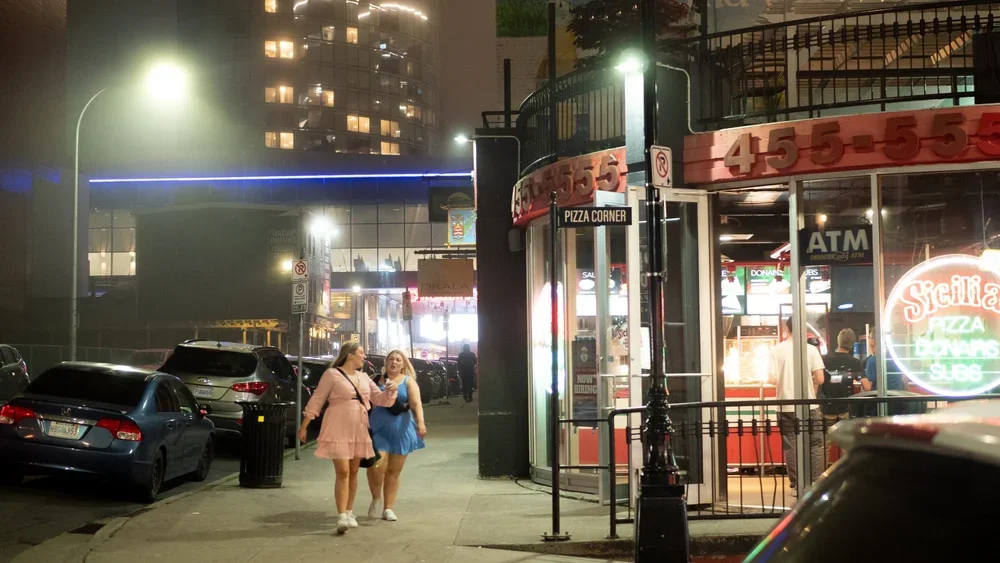
Women walking on a well-lit sidewalk during night time. Photo taken by Lilit Houlder in Halifax, NS.
Addressing Unique Needs
Women have unique needs when it comes to public space. Women are often caregivers in their families. A mother experiences difficulties in navigating cities with their children. Public space should reflect those needs and be functional. Providing child-friendly amenities such as diaper-changing stations, playgrounds, and stroller-friendly routes is vital. Public spaces such as parks, and urban streets need to have rest areas for pregnant people, elderly, and caregivers.
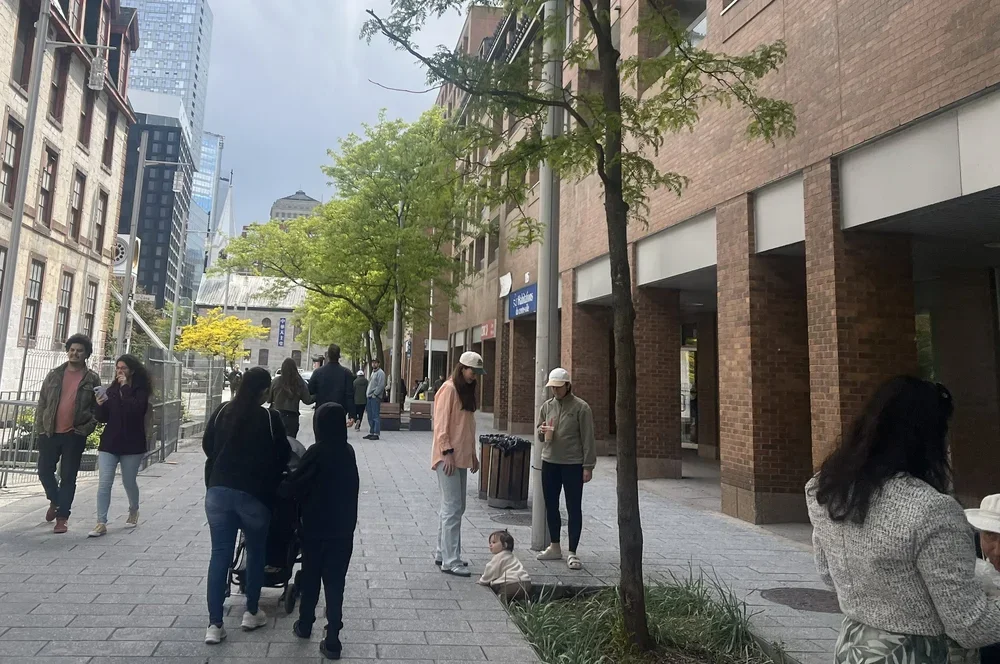
Parents navigating public space with their children. Photo taken by Sahara Shrestha in Montreal, QC.
Gender-Sensitive Mobility
It is said that women travel more in public transit than men. Public transit needs to be safe and reliable to address women’s needs as its primary users. Altering the design of transit systems, vehicles, and stops can create feelings of safety for women. This includes strong transportation connections, pedestrian-friendly local routes, good lighting in and around bus stops, platforms, parking lots, and streets, and the placement of bus stops that offer surveillance by bystanders.
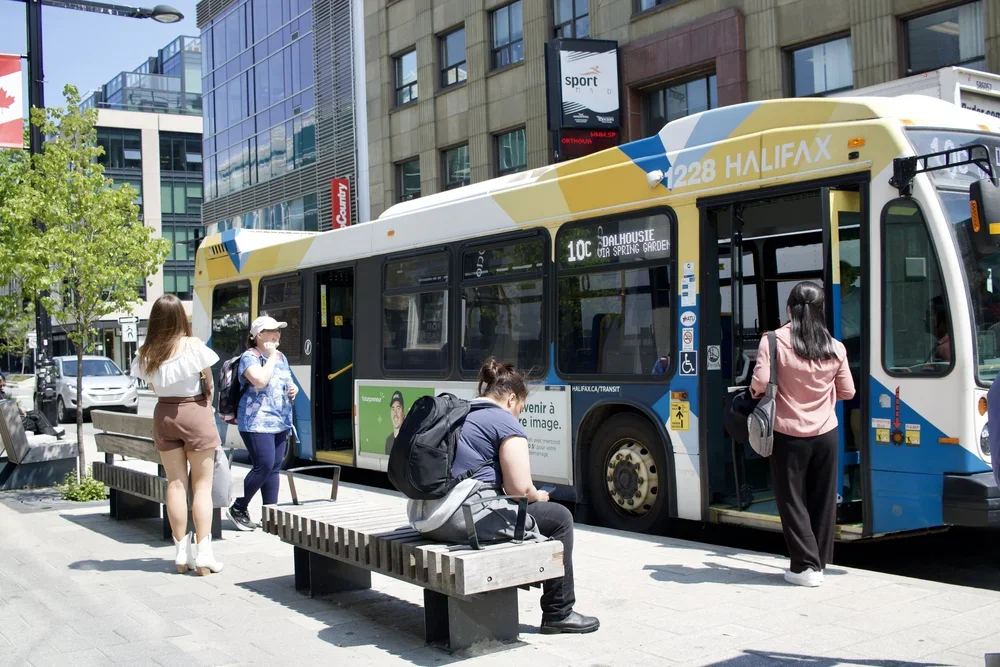
Women waiting for public transit. Photo taken by Nicole Roach in Halifax, NS.
Inclusive Planning
No one can better understand the needs of women than women themselves. It is imperative that women are included in the public planning process and their voice be heard. Engaging diverse voices—women of different races, class, ages, and abilities—to reflect on women’s cultural, social, and economic needs. There are various examples of women-led placemaking practices that have been successful. For instance, Safer cities: Her city in New South Wales, Australia, Safetipin, India etc.
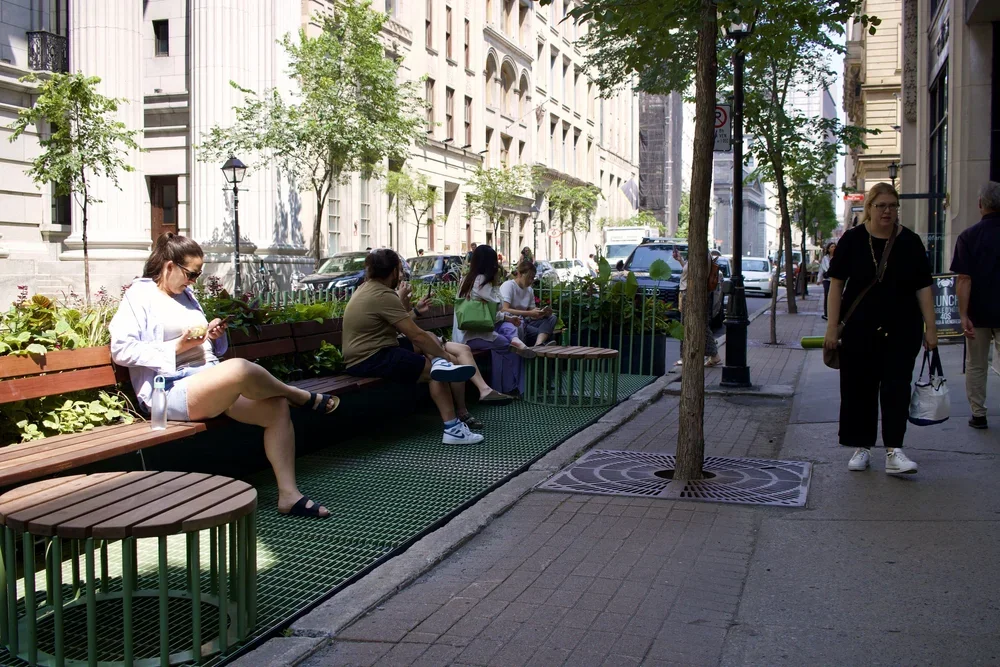
Women taking a pause in a parklet. Photo taken by Nicole Roach in Montreal, QC.
These principles help to understand the need of designing public space from the perspective of women. Creating safer cities for women requires moving beyond and addressing how public spaces are actually experienced.
Urban design has always been aligned with the work and life patterns of men. This means our cities often make women unsafe, fail to provide for their basic needs, and restrict their social and economic opportunities. Placemaking for women is not a niche practice, it’s the foundation of equitable urbanism. It starts with empathy, grows through dialogue, thrives in collaboration and provides opportunities to address the needs of women in public places.
Resources
Does CCTV Footage Help or Hinder the Reduction of Violence Against Women? | The Conversation
How Can Placemaking Help Create Safer Cities for Women? | Project for Public Space
Navigating Motherhood in the City | Women in Urbanism Canada
Gender Differences in Active Travel in Major Cities Around the World
Next Stop: Improving Bus Safety for Women | Women in Urbanism Canada
Feminist Cities are Cities for Everyone | Women in Urbanism Canada
